

The Falconer's Legacy
Documentary
Overview
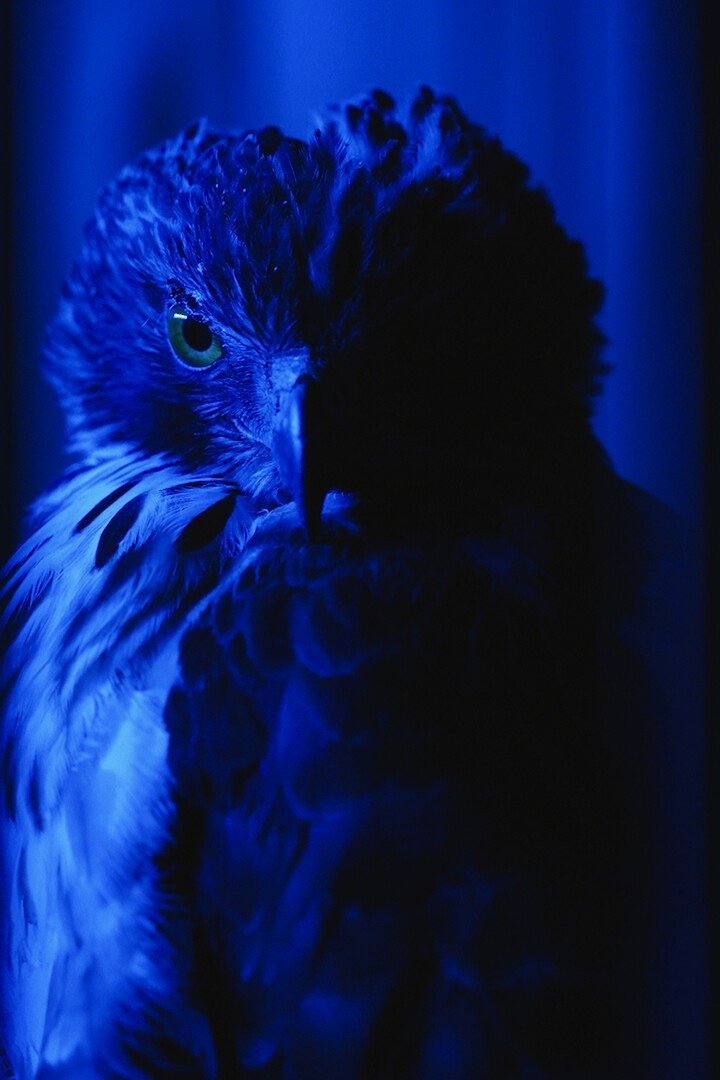
Matsubara Hidetoshi, one of Japan's last traditional falconers, resides in rural Tohoku with only the company of his birds. A high school student requests to become the apprentice of falconer Matsubara, who resolves to pass on his knowledge in recognition of her enthusiasm. Matsubara and his apprentice train on Mt. Gassan, a site of religious pilgrimages that over centuries has been the hunting grounds for many falconers and their birds. The two struggle to control a hawk that never misses them. A sudden request by a young city-dweller may be key to retaining his legacy. It depicts the forgotten lives in modern times that are deeply connected to the nature around us.




No cast information.
Similar Movies

This is the true account of one of the most surprising and remarkable love stories in the history of New York. It begins in 1993, when a young man from Belgium looking to change his life has an unexpected encounter in Central Park. He meets a hawk. Not just any hawk, but a wild Redtail, a fierce predator that has not lived in the City for almost a hundred years. Compelled to follow this extraordinary creature, he buys a video camera and sets out to track the hawk.

In March 2011, Japan was struck by a catastrophic earthquake, with the devastating tsunami that followed causing a meltdown at the Fukushima nuclear power station that sent ripples of discontent throughout the country. Director Iwai Shunji's Friends after 3.11 (2011) is a deeply personal documentary which uses the statements of some of his closest friends to express the views of a society in a state of political despondency.
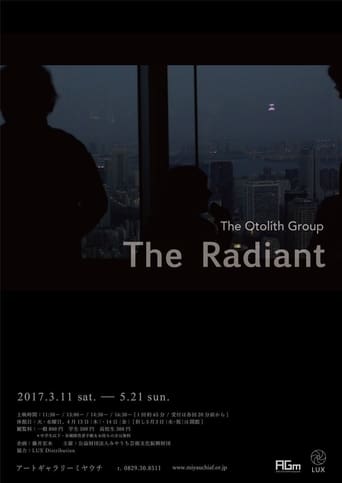
The Radiant explores the aftermath of March 11, 2011, when the Tohoku earthquake triggered a tsunami that killed many thousands and caused the partial meltdown of the Fukushima Daiichi nuclear power plant on the east coast of Japan. Burdened by the difficult task of representing the invisible aftermath of nuclear fallout, The Radiant travels through time and space to invoke the historical promises of nuclear energy and the threats of radiation that converge in Japan in the months immediately following the disaster.
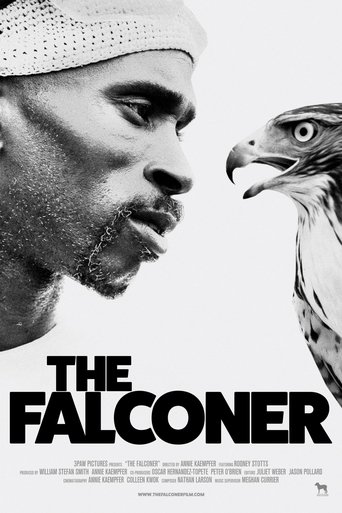
This intimate portrait film follows master falconer Rodney Stotts on his mission to build a bird sanctuary and to provide access to nature for his stressed community. The Falconer weaves his present-day mission with the story of his past, both of which are deeply rooted in issues of social and environmental injustice. Stotts’s worldview in a nutshell: nature heals. In a forgotten corner of our nation’s capital, he takes the time to break through to those too often dismissed as “hard to reach.” This is a story of second chances: for injured birds of prey, for an abandoned plot of land, for a group of teenagers who have dropped out of high school, and for the falconer himself.
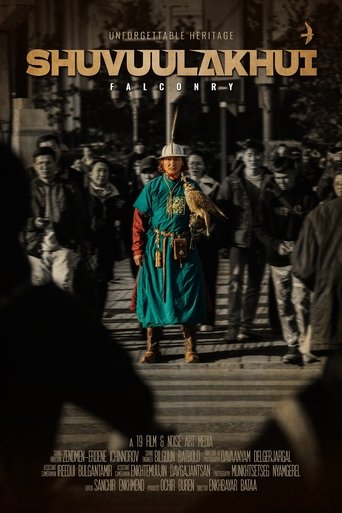
Batbileg lives in a ger district of Ulaanbaatar with his wife and two children, making a living by training falcons for hunting and showing them to tourists. Every year, at the beginning of summer, he captures and trains the hawks, and at the start of winter, he releases them back into the wild. One of his recurring endeavors begins with training a hawk named “Andgai.”(Oath). However, laws and regulations on bird training are lacking, and the densely populated urban environment, crowded with people and buildings, is far from suitable. Batbileg aims to revive Mongolia’s ancient falconry culture, raise public awareness of the value of falcons, and pass on conservation ideals to the younger generation. Yet, in the face of the many challenges before him, he is forced to confront a dilemma: should he comply with the law, or remain faithful to his ancestral tradition?
The film follows Sam, a falconer and naturalist living on the North Mountain of the Annapolis Valley in Nova Scotia. Through performance and documentary, Tetrault conducted interviews with Sam on the relationship a falconer has with a bird of prey, and the possibility for over-identification and projection onto the bird.