

Your Chance to Live: Pollution
Documentary
Overview
A surrealistic look at the future if man does not learn to control pollution.

No cast information.
Similar Movies
Takes viewers inside the homes of people seriously affected by increasingly ferocious floods hitting the UK. With one in six British homes now at risk of flooding, residents across the country count the cost, both financial and mental, to their communities affected by flooding over the last decade.
In June 2010, French actress Marion Cotillard spent a week in the heart of the tropical forests of the Democratic Republic of Congo with members of Greenpeace France and Greenpeace Africa. She delivers in video a strong testimony on the looting of Congolese forests which benefits a few industrial groups, often European.
Discover the "character" of one of Missouri's oldest tie and lumber operations through this archival black-and-white film that documents one of the last railroad tie drives on the Black River made by the T.J. Moss Tie Company of St. Louis in the 1920s. Thanks to release of the film by the Kerr-McGee Chemical Corporation, the rare footage in "Stamp of Character" takes us through the entire process of making railroad ties, at a time when forests covered almost two-thirds of the state. The original silent motion picture was shown in movie theaters as an advertisement by the T.J. Moss Tie Company. Using digitally edited narration and realistic sound effects, this video makes the past live again.
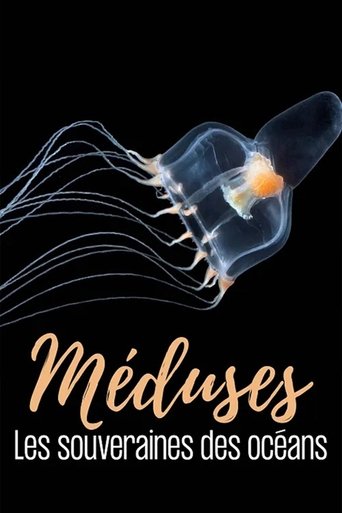
Jellyfish blooms are making headlines around the world. This is due to the damage they cause to tourism, fishing and our health. How can these creatures, which are over 98% water and have no shell, skeleton or brain, expand so rapidly? Although this is a normal stage in the life cycle of these gelatinous animals, we have to admit that blooms have become much more frequent and massive in recent decades. We're even witnessing jellyfish populations appearing in more and more regions where fish have been replaced by them, such as off the coast of Namibia, in the Black Sea, in the Sea of Japan and in certain areas of the Baltic Sea. What causes this? Why has the role of jellyfish in the ocean been underestimated, even though they outlived the dinosaurs? Are jellyfish on their way to dominating the oceans as they once did? What if they were to be the only ones left?
Keeping Country Strong is a new documentary by Country Needs People From the heart of the desert to the islands and estuaries of Sea Country, Indigenous Protected Areas span over 110 million hectares of land and sea and now cover over 54% of Australia’s reserves on land. Indigenous Rangers are on the frontline. Working in some of the most remote corners of the planet they are safeguarding endangered species, fighting wildfires and invasive species, and practising culture in the face of a changing climate. FEATURING Indigenous Rangers and Traditional Owners from Budj Bim IPA, Gaagal Wajaarr Proposed Sea Country IPA, Ngururrpa IPA, Tiwi Islands Proposed IPA, Anangu Tjutaku IPA, Lungtalanana IPA, Mayala IPA & SE Arnhem Land IPA.
The decision to move to Holland doesn't sound like a wise idea. Why move to a country that could be flooded at any moment? For the last 25 years, the political climate has shifted. The public debate on migration has become harsher, more heated, and polarized. What would have been considered right-wing xenophobia back then, is now considered mainstream. Populists simplify complex realities into good and evil, victims and perpetrators: ‘us’ versus ‘them’. Their rhetoric often consists of dehumanizing words and metaphors. One of these is ‘water’. In reality, water is not an immediate threat to the average Dutch person; but it is a huge threat to the thousands trying to reach the Netherlands. People trying to survive the Mediterranean Sea in rubber boats. Trying to survive winter on the Aegean coast in primitive tents. To them, water really is deadly.

Photographer and visual artist Sammy Baloji’s fascinating film essay explores the Democratic Republic of Congo’s colonial history and its ecological significance. Drawing on research from the 1930s, the film highlights the Congo Basin’s vital role in consuming carbon dioxide and shaping global environmental balance over a century.
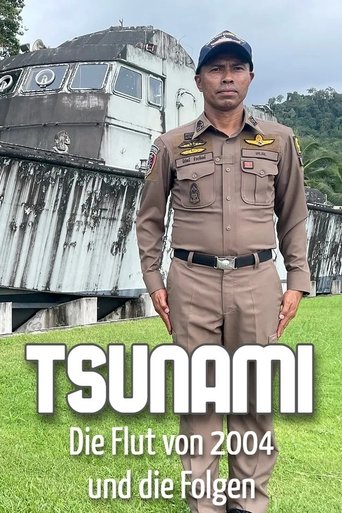
It was one of the greatest natural disasters of all time. On the morning of Boxing Day 2004, a massive tsunami hit the coast of the Indian Ocean. More than 230,000 people died, including many holidaymakers from Germany and France. On the occasion of the 20th anniversary, survivors tell their stories. How has the disaster affected their lives to this day?