

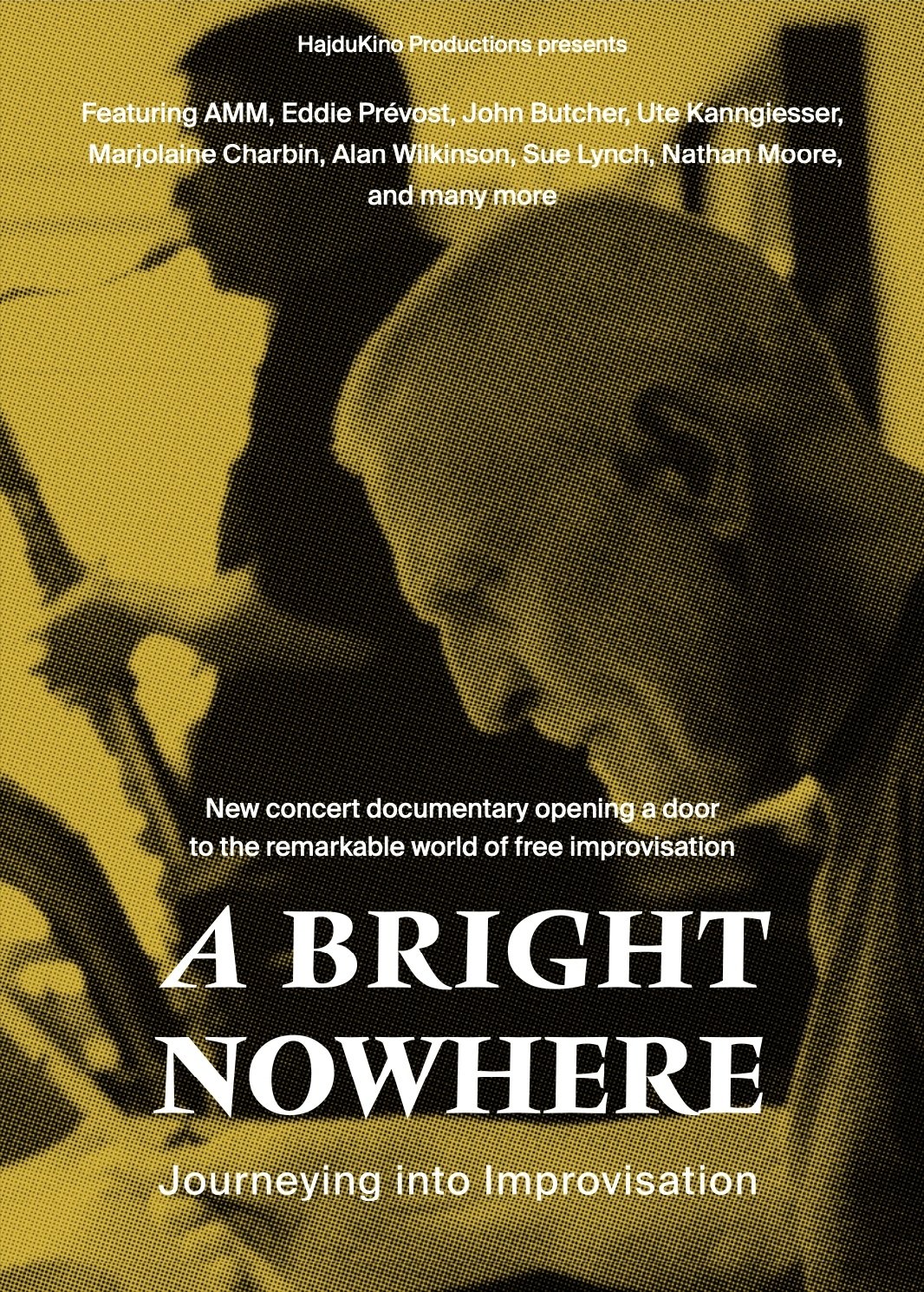
A Bright Nowhere: Journeying Into Improvisation
Documentary · Music
Overview
An important audio-visual record of a landmark series of four concerts staged in London in 2022 when more than 30 musicians joined improviser, percussionist and animateur Eddie Prévost to mark his 80th birthday. The film takes a close look at improvisers who create music in the moment, free from the authority of a composer, score or conductor. Ranging from profound delicacy to subversive atonality, the “awkward wealth” of this music raises vital questions about artistic freedom, individual responsibility and what it means for people to make music together in the 21st Century. Featuring performances by John Butcher, Sue Lynch, Ute Kanngiesser, Marjolaine Charbin, Nathan Moore, Seymour Wright, Veryan Weston, Alan Wilkinson, John Tilbury and Eddie Prévost amongst others. Plus readings by musician and author David Toop. The film includes the last ever concert by AMM, the pioneering improvising group co-founded by Eddie Prévost in the mid-1960s.
Top Cast





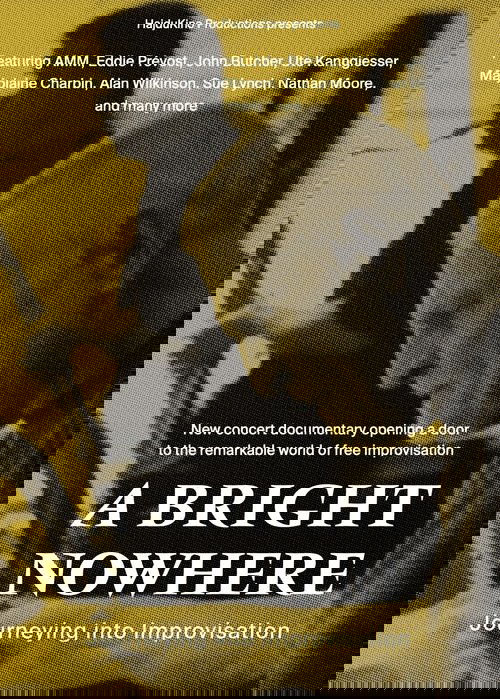
Eddie Prévost
Eddie Prévost
Eddie Prévost
Sue Lynch
Sue Lynch
Sue Lynch
Ute Kanngiesser
Ute Kanngiesser
Ute Kanngiesser
John Butcher
John Butcher
John Butcher
Marjolaine Charbin
Marjolaine Charbin
Marjolaine Charbin
Nathan Moore
Nathan Moore
Nathan Moore
Seymour Wright
Seymour Wright
Seymour Wright
Veryan Weston
Veryan Weston
Veryan Weston
Alan Wilkinson
Alan Wilkinson
Alan Wilkinson
John Tilbury
John Tilbury
John Tilbury
Similar Movies
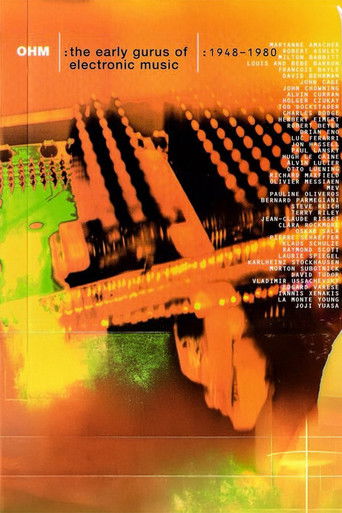
Drawing on rare performances, interviews, animations, and experimental film, this documentary surveys the formative years of electronic music from 1948 to 1980. Featuring pioneering composers and inventors—including Milton Babbitt and Leon Theremin—the film explores the experimental technologies, academic laboratories, and creative struggles that shaped the early evolution of electronic sound.
The Hypergaussian Wars is an AI-generated feature-length audiovisual work exploring algorithmic warfare, obsolete media and the transformation of images through repetition, saturation and collapse. Built from thousands of generated images, synthetic landscapes and references to 14th–16th century painting, the film stages a continuous conflict between historical visual culture and contemporary computational systems. Fragments of obsolete video games, ruined architectures, military simulations and post-human figures circulate through increasingly unstable environments. Rather than telling a linear story, the film operates as an image system in which visual excess progressively erodes meaning. The Hypergaussian Wars reflects on memory, obsolescence, artificial intelligence and the persistence of images after their original function has disappeared.
After concluding the now-legendary public access TV series, The Pain Factory, Michael Nine embarked on a new and more subversive public access endeavor: a collaboration with Scott Arford called Fuck TV. Whereas The Pain Factory predominantly revolved around experimental music performances, Fuck TV was a comprehensive and experiential audio-visual presentation. Aired to a passive and unsuspecting audience on San Francisco’s public access channel from 1997 to 1998, each episode of Fuck TV was dedicated to a specific topic, combining video collage and cut-up techniques set to a harsh electronic soundtrack. The resultant overload of processed imagery and visceral sound was unlike anything presented on television before or since. EPISODES: Yule Bible, Cults, Riots, Animals, Executions, Static, Media, Haterella (edited version), Self Annihilation Live, Electricity.
Orson Welles presents a proposed film project to prospective investors in Spain. Speaking to an audience of wealthy arts patrons, Welles outlines his vision for an improvised, documentary-style fiction set in the world of bullfighting, centered on a solitary, existential matador who stands apart from his peers. As he expounds on cinema, performance, and the ritualized spectacle of death, the film captures a project that would ultimately remain unrealized.
After I had already begun to conduct my first cinematographic experiments in 2015, I shot between 2016 and 2019 (during my time as a student in Rostock) exclusively for this "No Budget Feature-Length Experimental Film", now titled "Transfragmentation", which was originally conceived to last three hours, based on Werner Fritsch's "Faust Sonnengesang" (2011), but now has a running time of approximately two hours. In 2015, I also began my correspondence with the Brussels-based Sound-Artist Unenthüllte, who eventually composed four twenty-minute pieces for this work and has to be regarded as my sole artistic collaborator in this sense. My cinematographic concept was clearly outlined from the beginning: The duration of each shot is exactly 1 minute. Only two elements diverge from this primary premise: The Seventeen Minute Prelude, Created In Post-Production (2020-2022), And The Slow Motion Sequences Involving My Voice-Over, Which Linger In The Heart And At The End Of The Work.