

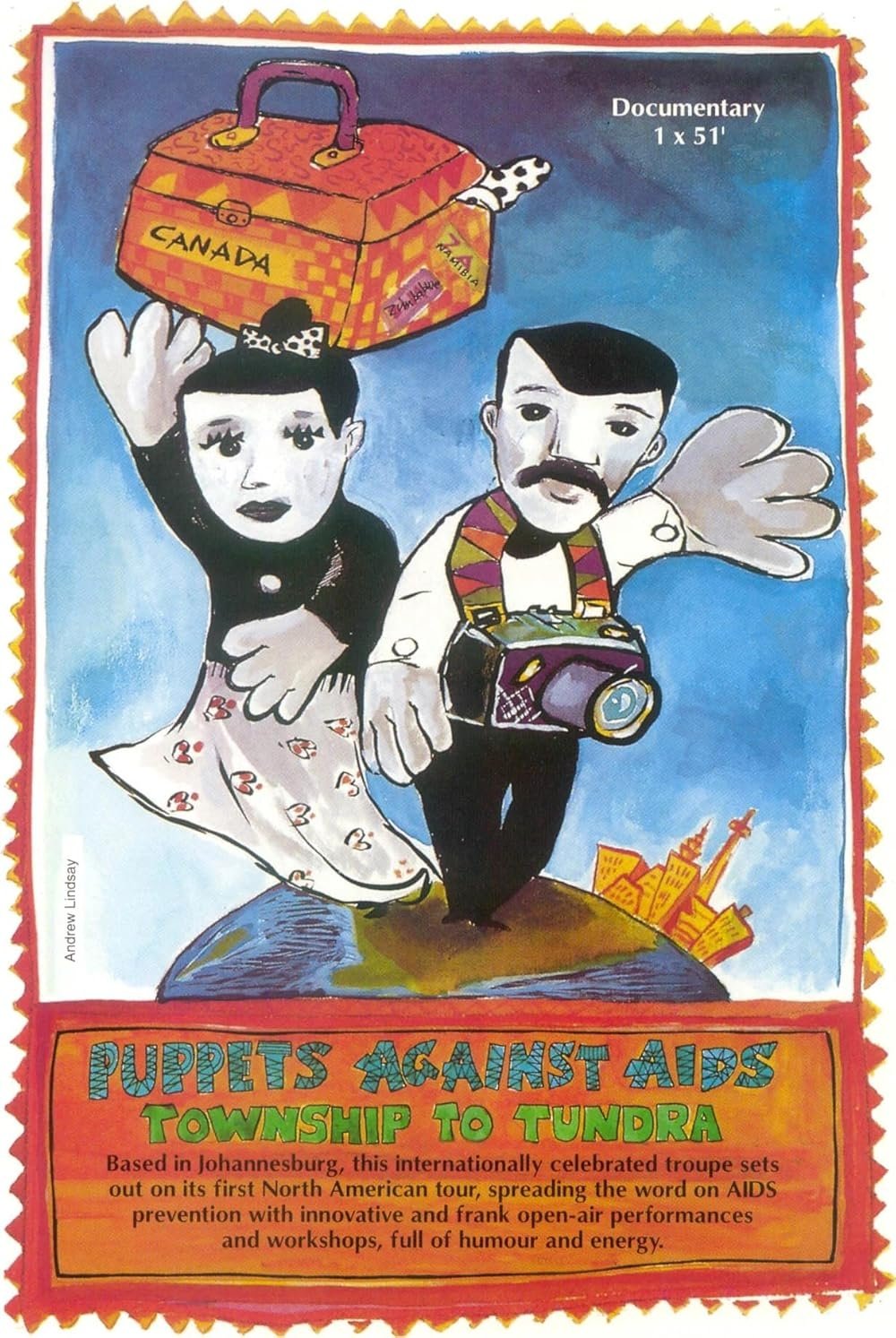
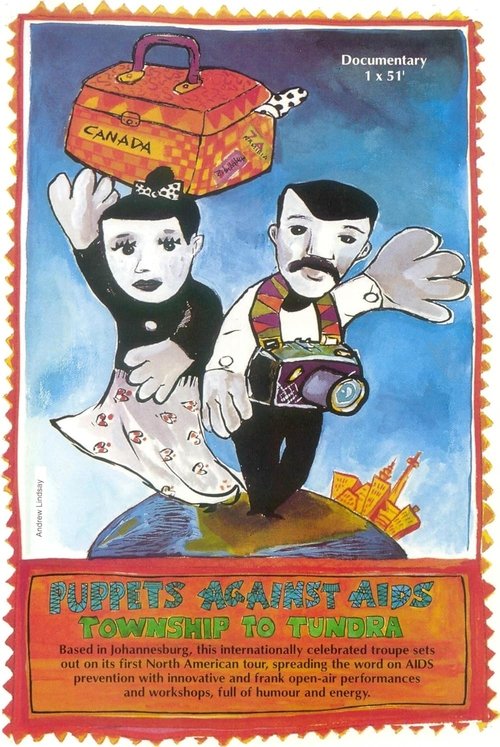
Puppets Against Aids - Township to Tundra
Documentary
Overview
In 1992, an independent South African puppetry group, the African Research and Educational Puppetry Program, were invited by OXFAM (Canada) to bring their highly successful educational program 'Puppets Against Aids' to tour rural and regional Canada for twelve weeks. This is the one-hour documentary that was produced from their Canadian Tour.








No cast information.
Similar Movies

After a quarter-century of political denial and social stigma, of stunning scientific breakthroughs, bitter policy battles and inadequate prevention campaigns, HIV/AIDS continues to spread rapidly throughout much of the world. Through interviews with AIDS researchers, world leaders, activists, and patients, FRONTLINE investigates the science, politics, and human cost of this fateful disease and asks: What are the lessons of the past, and what can be done to stop AIDS?
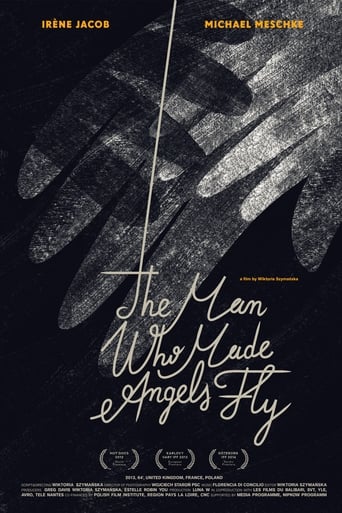
When the lights dim and the stage is revealed, Meschke channels life through the strings of his puppets, triggering the spiritual connection between the creator and his alter-egos: the charismatic Don Quixote, the loving Penelope, the inquisitive Baptiste, or the mysterious Antigone. THE MAN WHO MADE ANGELS FLY is a poetic story about a master of his craft that has inspired audiences to reflect upon common issues of suffering and the mortal coil. Visionary and un-biographic, imaginary tribute to the puppeteer.
German iconoclast filmmaker and gay-rights activist Rosa vonPraunheim examines his own life and career in the documentary Phooey Rosa! With a quickly paced editing style, the film is a mix of personal banter, candid interviews, and clips from his filmography. It also includes footage from his early film Bed Sausage to his later work Neurosia. At the age of 60, vonPraunheim reveals intimate details about his past relationships and his childhood growing up after WWII. He also implicates some of his friends and inspirations, including Luzi Kryn and Rainer Kranach.
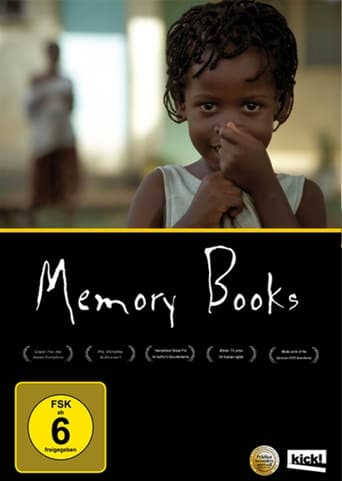
In Uganda, AIDS-infected mothers have begun writing what they call Memory Books for their children. Aware of the illness, it is a way for the family to come to terms with the inevitable death that it faces. Hopelessness and desperation are confronted through the collaborative effort of remembering and recording, a process that inspires unexpected strength and even solace in the face of death.