

The Sinking of the Belgrano
Documentary
Overview
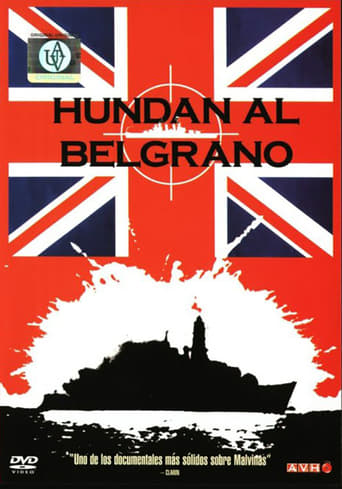
During the Falklands war England's attack on the ARA Belgrano outside of the conflict zone is reviewed 20 years later by a team of National Geographic hoping to find the ship and shed more light into what happened that night.



No cast information.
Similar Movies
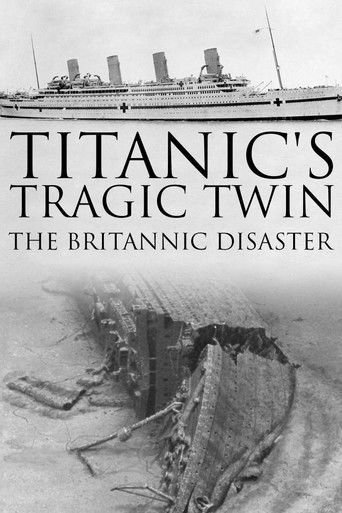
Documentary about the sinking of the Britannic during the First World War, examining how she ultimately came to suffer the same fate as her sister ship, the Titanic. The Titanic sank in April 1912, and her sister ship, the Britannic, ultimately suffered the fate, sinking in 1916 due to an explosion caused by an underwater mine. In the wake of the Titanic disaster, Britannic was re-engineered to be even stronger. And yet she sank in just 55 minutes - three times faster than Titanic. It's one of Britain's greatest untold disaster stories. Now on the 100th anniversary, presenters Kate Humble and Andy Torbet piece together exactly what happened in those 55 minutes. While Andy makes a dangerous dive to the wreck, Kate speaks to descendants of the survivors. The characters she uncovers include Violet 'Miss Unsinkable' Jessops, who survived both Titanic and Britannic, Captain 'Iceberg Charlie' Bartlett and lookout Archie Jewell, who miraculously survived while those around him died.

Zimbabwean landmine clearers Shame and Cosimas, as well as medic Previous have been traveling to the other side of the world for years to clear mines in the British Falkland Islands. In the subpolar cold, between sand dunes and penguins, they defuse and blow up the legacies of a forgotten war.
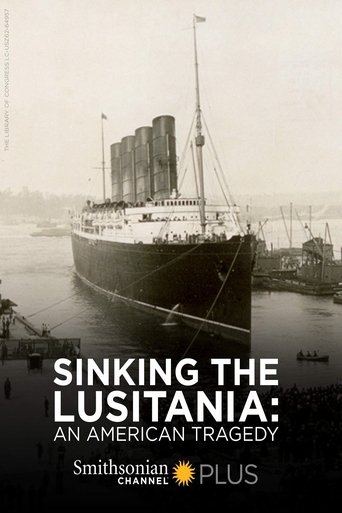
The sinking of the Lusitania and the impact it had in determining the fate of World War I is widely known. But few know the stories of the passengers and crew aboard the doomed luxury liner, or the German commander who ordered the deadly attack on May 7, 1915. Follow the final voyage of the massive ship, from her celebrated exit from New York's Pier 54 to her 18-minute plummet off the coast of Ireland. Through firsthand accounts, meet the men, women, and children who rode the "Greyhound of the Seas" into a war zone, and into history.

Five years after the war in the Falklands between Britain and Argentina, many facts were still wrapped in red tape. Many of the key figures had remained silent. No-one had been to Argentina to tell the other side of the story. For the majority of the British people, the war was another glorious chapter in their history. With flags waving and bands playing, British troops had sailed away to repel the invaders. Patriotic emotions were stirred as they returned victorious. Government MPs tried to get the film banned, but Yorkshire TV's telephones were jammed with messages of support from wives and mothers of those who died in the conflict. Called 'the documentary to end all documentaries about the Falklands War' in the British press, it was also described as 'more poem than polemic - a hymn against war'.
For many, the name Malvinas/Falklands evokes an absurd war between England and Argentina in 1982. For Julieta Vitullo, the protagonist of this film, this tragic history becomes deeply personal 25 years later when she suffers a loss associated with her search to uncover that past, unfolding into a life-affirming struggle for renewal and rebirth. This film tells the story of two trips, one made in 2006 and the other in 2010. In the space between one trip and the next, between past and present, between the public and the private, between what can and cannot be told, the movie reflects on the possibilities of conveying extreme life experiences, presenting landscapes and sounds that suggest subtle contours of that shape, 'The Exact Shape of the Islands.'

The story of the relatives of the 649 Argentine fallen in the Malvinas War, who as soon as the military conflict ended, found themselves alone with their pain and prevented from approaching the grave of their loved ones, either because their bodies were left in the Cemetery of Darwin, in the Malvinas, or because they disappeared without being identified.

A single female voice sings of waiting in her garden for her ‘dark-eyed sailor’ to return from war, bearing the other half of their token, a gimmel ring. Three veterans pass on the road as she waits, and she asks them: “When you were fighting in distant lands, did you think of the home you left?” In reply the veterans relate their recollections. The garden images in the accompanying film represent ‘home’, but also stand for a more general possibility of redemption, of the potential of the past to return at any time, disguised and changed, to renew the present: “Each moment of time is a garden gate,” the song goes, “Through it my love may walk.”