


Letter to My Tribe
Documentary
Overview
Letter to My Tribe started with a question: Why don’t more Jews and Israelis speak out about Palestine? Over many years my mother, who represents a more messianic perspective, and I have had numerous arguments, some recorded, some not. These form the backbone of this video essay in which Israelis and Jews, journalists, activists and a rabbi are interviewed, and in which documentation of actions on the ground, in the West Bank, are woven with more personal family histories and journeys to Iraq and to Poland.
Top Cast





b.h. Yael
b.h. Yael
Self
b.h. Yael
Self
Yaara Benger Alaluf
Yaara Benger Alaluf
Self
Yaara Benger Alaluf
Self
Daria Carmon
Daria Carmon
Self
Daria Carmon
Self
Omri Eran Vardi
Omri Eran Vardi
Self
Omri Eran Vardi
Self
Similar Movies
Homo Cinematographicus is a human species whose unit of measurement and point of reference is the cinema and its derivative, television. Filmed at the 1998 Cannes Film Festival, the film offers an unspecified number of statements, talking about memories and a thousand fragments of stories, titles and film scenes, the warp of a gigantic collective Chanson de geste.
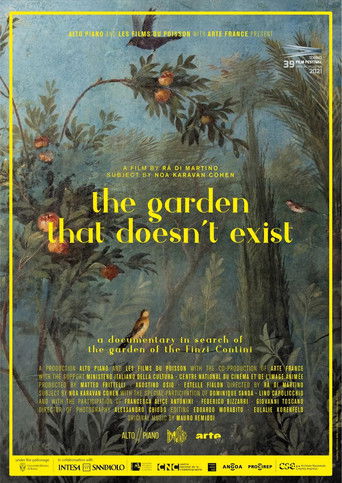
Once upon a time there was a garden, a refuge, a safe haven - 'The Garden of the Finzi Continis'. It came to life in Giorgio Bassani's 1962 semi-autobiographical novel recounting an unfulfilled love story between two young Jews in Ferrara, while fascism was raging in Italy in the late 1930's. In 1972, Vittorio De Sica's film adaptation of the book won the Oscar for Best Foreign Language Film. Since then, the fictional space of the garden became so tangible that people from all over the world come to Ferrara to look for it. Fifty years after winning the Oscar, reality and fiction come together once more, as we walk through an imaginary garden and bring to life the book, its author, its main protagonists, history, love, friendships and betrayals.
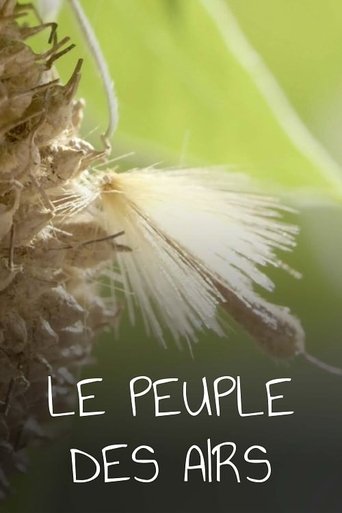
Bacteria, viruses, but also fungi, algae, pollen, and even insects: micro-organisms thrive and circulate constantly in our sky. How can so many living beings find their way into the air and circulate? How do they survive? And what influence do they have on our lives and the living world? Biodiversity, health, climate: it is only recently that scientists have begun to understand how this discreet aerial "plankton" affects our lives and our ecosystem. But despite their many virtues, some of these micro-organisms are now threatened by human activities. With the help of experts and 3D models, this scientific investigation plunges us into the heart of a still mysterious world, and reveals the diversity and fragility of the air we breathe.
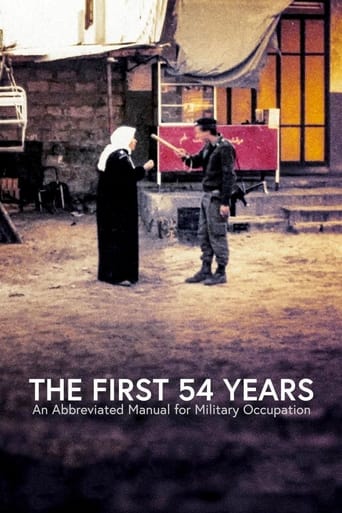
An exhaustive explanation of how the military occupation of an invaded territory occurs and its consequences, using as a paradigmatic example the recent history of Israel and the Palestinian territories, the West Bank and the Gaza Strip, from 1967, when the Six-Day War took place, to the present day; an account by filmmaker Avi Mograbi enriched by the testimonies of Israeli army veterans.
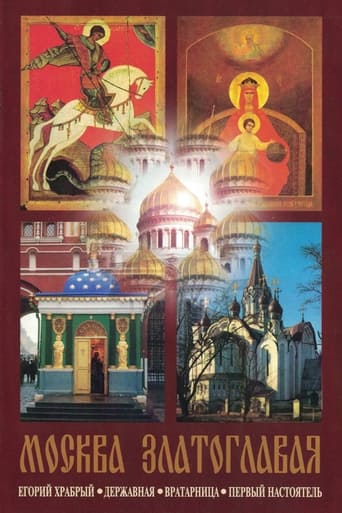
The collection "Moscow Golden-Domed" includes documentaries from the history of the capital. "Egoriy the Brave" about the Holy Great Martyr George the Victorious, whose image has adorned temples, princely and royal coats of arms, and banners of Russian troops since ancient times. The film "Reigning" tells about the appearance in Rus' in 1917, on the day of the abdication of Nicholas II, a new icon of the Reigning Mother of God. "Vratarnitsa" is a film about a chapel where Muscovites from time immemorial worshiped the icon of the Mother of God of Iberia. "The First Dean" - a story about the Church of the Resurrection of Christ in Sokolniki - one of the most remarkable in Moscow. The parishioners still remember the builder and first rector of the temple, Father John Kedrov. Filmed from 1993 to 1996.
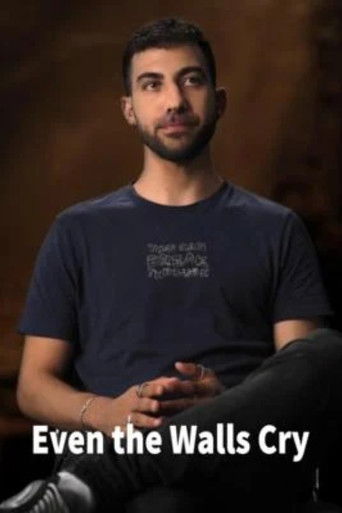
October 7, 2023 was one of the deadliest days of fighting ever in Israel, with around 1,200 people killed after Hamas launched its attack and 250 taken hostage – many of whom have either died in captivity or not yet released. The project features testimony from four victims and first responders, who witnessed the massacre and its aftermath: a farmer who helped rescue young people, a young survivor of the Nova music festival who took refuge in a shelter only to witness friends being murdered, an ultra-orthodox musician who volunteered to identify victims, and a mother whose son was kidnapped and taken to Gaza. A sentence uttered by the musician, who had seen 100 dead bodies in a single day, was the inspiration behind the title.