

Měsíční údolí
Drama
Overview
The common denominator of the five stories, preceded by a brief prologue by Artem Benki, is the setting of a giant open-pit mine in the Podkrušnohoří region in northwestern Bohemia and its surroundings, including the dominant feature of the landscape, the ruined Jezeří Castle.
Top Cast
Bohuslav Ličman
Blind Jirka (segment "Prolog")
Milan Červeňák
Gejza (segment "Kulaté ruiny" and "Zvláštní příležitost")
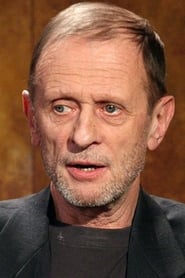
Michal Pavlata
Gejza (segment "Kulaté ruiny") (voice)
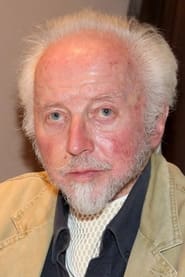
Stanislav Fišer
Miner (segement "Kulaté ruiny") (voice)
Karel Krejčí
(segment "Poslední Vánoce mého domu")

Mirko Musil
Karel (segment "Zvláštní příležitost")

Jakub Wehrenberg
Ecologist (segment "Zvláštní příležitost")
Daniel Heyna Větrovský
Reporter (segment "Zvláštní příležitost")
Ivan Gübel
Vašek (segment "Zvláštní příležitost")
Jaroslav Stejný
(segment "Zámek")

Serge Avédikian
Nehrbáč (segment "Nehrbáčova romance")
Georgina Sejkorová
(segment "Nehrbáčova romance")








Bohuslav Ličman
Bohuslav Ličman
Blind Jirka (segment "Prolog")
Bohuslav Ličman
Blind Jirka (segment "Prolog")
Milan Červeňák
Milan Červeňák
Gejza (segment "Kulaté ruiny" and "Zvláštní příležitost")
Milan Červeňák
Gejza (segment "Kulaté ruiny" and "Zvláštní příležitost")
Michal Pavlata
Michal Pavlata
Gejza (segment "Kulaté ruiny") (voice)
Michal Pavlata
Gejza (segment "Kulaté ruiny") (voice)
Stanislav Fišer
Stanislav Fišer
Miner (segement "Kulaté ruiny") (voice)
Stanislav Fišer
Miner (segement "Kulaté ruiny") (voice)
Karel Krejčí
Karel Krejčí
(segment "Poslední Vánoce mého domu")
Karel Krejčí
(segment "Poslední Vánoce mého domu")
Mirko Musil
Mirko Musil
Karel (segment "Zvláštní příležitost")
Mirko Musil
Karel (segment "Zvláštní příležitost")
Jakub Wehrenberg
Jakub Wehrenberg
Ecologist (segment "Zvláštní příležitost")
Jakub Wehrenberg
Ecologist (segment "Zvláštní příležitost")
Daniel Heyna Větrovský
Daniel Heyna Větrovský
Reporter (segment "Zvláštní příležitost")
Daniel Heyna Větrovský
Reporter (segment "Zvláštní příležitost")
Ivan Gübel
Ivan Gübel
Vašek (segment "Zvláštní příležitost")
Ivan Gübel
Vašek (segment "Zvláštní příležitost")
Jaroslav Stejný
Jaroslav Stejný
(segment "Zámek")
Jaroslav Stejný
(segment "Zámek")
Similar Movies
Three tales of love, ambition, and neurosis unfold in the city that never sleeps. In "Life Lessons" (Martin Scorsese), a tormented painter channels heartbreak into his art. In "Life Without Zoë" (Francis Ford Coppola), a precocious 12-year-old navigates privilege and loneliness in a Manhattan hotel. And in "Oedipus Wrecks" (Woody Allen), a man’s domineering mother literally becomes a looming presence over New York.
This omnibus release consists of three playlets filmed and aired during television's Golden Age, and starring some of the legends of film and television. The collection originally ran as a two-hour segment on December 14, 1959, on the anthology series The Play of the Week, broadcast locally in New York City via the independent radio station WNTA. Each "tale" in the anthology was adapted from a single tale by the inimitable Sholom Aleichem, regarded by many as the "Yiddish Mark Twain". Included are: "A Tale of Chelm" starring Zero Mostel and Nancy Walker in the story of a bookseller attempting to buy a goat; "Bontche Schweig" about a poor man (Jack Gilford) whose recent arrival in Heaven makes the angels cry; and "The High School" about a Jewish merchant (Morris Carnovsky) persuaded by his wife (Gertrude Berg) to let their son attend a particular high school despite the enforcement of quotas for Jewish students.
Covering only the first 22 chapters of the Book of Genesis, vignettes include: Adam and Eve frolicking in the Garden of Eden until their indulgence in the forbidden fruit sees them driven out; Cain murdering his brother Abel; Noah building an ark to preserve the animals of the world from the coming flood; and Abraham making a covenant with God.
A comic study of 20th-century history, reconstructing the life of writer, creator and professional prisoner Tulse Luper. Born in 1911 Newport and last heard of in 1989, Luper’s life is pieced together from the evidence found in 92 suitcases scattered across the globe. In the first of three parts, we follow Luper through three distinct episodes: as a child during the First World War; as an explorer in Mormon Utah; and as a writer in Belgium during the rise of fascism.
A comic study of 20th-century history, reconstructing the life of writer, creator and professional prisoner Tulse Luper. Born in 1911 Newport and last heard of in 1989, Luper’s life is pieced together from the evidence found in 92 suitcases scattered across the globe. In the second of three parts, we follow Luper as he works in a cinema, giving him ample opportunity to cross paths with virtually every artistic device and dramatic character known to man.
A comic study of 20th-century history, reconstructing the life of writer, creator and professional prisoner Tulse Luper. Born in 1911 Newport and last heard of in 1989, Luper’s life is pieced together from the evidence found in 92 suitcases scattered across the globe. In the final installment, Luper continues his adventures as a professional prisoner during the later years of the Second World War and the Cold War.
A comic study of 20th-century history, reconstructing the life of writer, creator and professional prisoner Tulse Luper. Born in 1911 Newport and last heard of in 1989, Luper’s life is pieced together from the evidence found in 92 suitcases scattered across the globe. A Life in Suitcases condenses the six-hour trilogy into a single two-hour feature, and in doing so, accentuates the project as a filmic essay in multiple narratives, listings, sidebars, footnotes, commentaries and anecdotes; a project for an Information Age ready to understand that there never is a phenomenon called History, there can only be Historians, gatekeepers to vested interests.
The film is a high-concept project with five stories exploring the themes of motherhood and pregnancy, directed by women filmmakers from five former Yugoslav republics. “Croatian Story” follows an anguished painter who must decide whether or not to keep one of her unborn twins, diagnosed with Down syndrome. “Serbian Story” finds an expectant mother in the same emergency room with a charming killer. “Bosnia-Herzegovina Story” centers on a financially strapped Sarajevo family whose son?s lover is pregnant. “Macedonian Story” unfolds in a clinic where a drug addict struggles to keep her baby, and “Slovenian Story” ends the omnibus on a humorous note with a nun who finds her own way to immaculate conception.