

Sacred Vessels: Navigating Tradition and Identity in Micronesia
Documentary · History
Overview
A 1997 documentary by Micronesian scholar, Vicente M. Diaz, that follows a new generation of traditional outrigger canoe builders and navigators from Polowat, Central Carolines, Federated States of Micronesia, and Guam in their respective efforts to continue and resuscitate an ancient tradition of outrigger canoe carving and sailing in the late twentieth century. Like the motif of water that flows through the documentary and blurs lines between surface and depth, and between water, land and air, an indefatigable tradition and aesthetic of seafaring is shown to also challenge pat and problematic distinctions between past and present, tradition and modernity, indigenous and Christian religiosity and spirituality, that prevail in conventional understandings of Micronesian culture and history.




No cast information.
Similar Movies
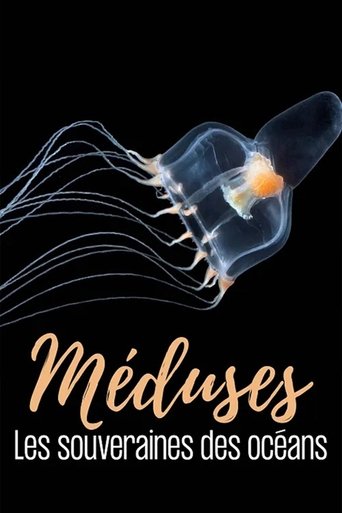
Jellyfish blooms are making headlines around the world. This is due to the damage they cause to tourism, fishing and our health. How can these creatures, which are over 98% water and have no shell, skeleton or brain, expand so rapidly? Although this is a normal stage in the life cycle of these gelatinous animals, we have to admit that blooms have become much more frequent and massive in recent decades. We're even witnessing jellyfish populations appearing in more and more regions where fish have been replaced by them, such as off the coast of Namibia, in the Black Sea, in the Sea of Japan and in certain areas of the Baltic Sea. What causes this? Why has the role of jellyfish in the ocean been underestimated, even though they outlived the dinosaurs? Are jellyfish on their way to dominating the oceans as they once did? What if they were to be the only ones left?

For the 'Are'are people of the Solomon Islands, the most valued music is that of the four types of panpipe ensembles. With the exception of slit drums, all musical instruments are made of bamboo; therefore the general word for instruments and the music performed with them is "bamboo" ('au). This film shows the making of panpipes, from the cutting the bamboo in the forest to the making of the final bindings. The most important part of the work consists in shaping each tube to its necessary length. Most 'Are'are panpipe makers measure the length of old instruments before they shape new tubes. Master musician 'Irisipau, surprisingly, takes the measure using his body, and adjusts the final tuning by ear. For the first time we can see here how the instruments and their artificial equiheptatonic scale-seven equidistant degrees in an octave-are practically tuned.
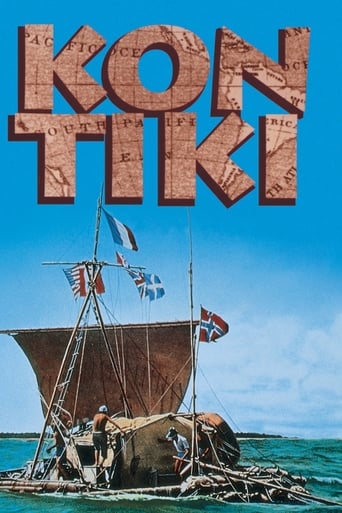
"Kon-Tiki" was the name of a wooden raft used by six Scandinavian scientists, led by Thor Heyerdahl, to make a 101-day journey from South America to the Polynesian Islands. The purpose of the expedition was to prove Heyerdal's theory that the Polynesian Islands were populated from the east- specifically Peru- rather than from the west (Asia) as had been the theory for hundreds of years. Heyerdahl made a study of the winds and tides in the Pacific, and by simulating conditions as closely as possible to those he theorized the Peruvians encountered, set out on the voyage.
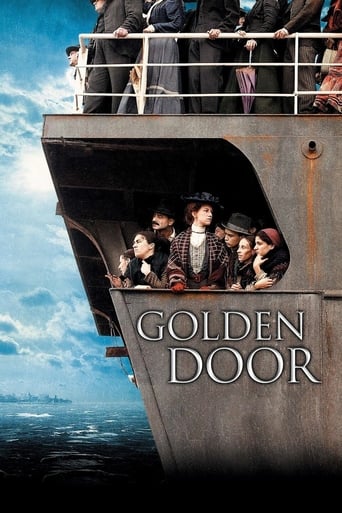
The story is set at the beginning of the 20th century in Sicily. Salvatore, a very poor farmer, and a widower, decides to emigrate to the US with all his family, including his old mother. Before they embark, they meet Lucy. She is supposed to be a British lady and wants to come back to the States. Lucy, or Luce as Salvatore calls her, for unknown reasons wants to marry someone before to arrive to Ellis Island in New York. Salvatore accepts the proposal. Once they arrive in Ellis Island they spend the quarantine period trying to pass the examinations to be admitted to the States. Tests are not so simple for poor farmers coming from Sicily. Their destiny is in the hands of the custom officers.
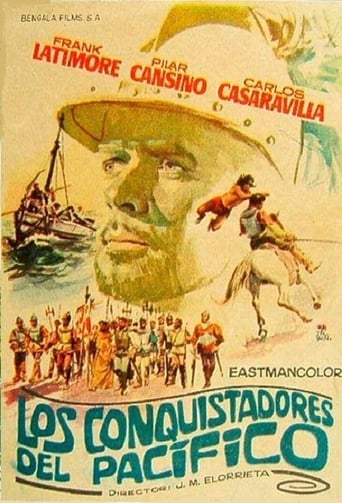
Frank Latimore is cast as Balboa, the heroic Spanish explorer who discovers the Pacific Ocean. Along the way, he must pacify the wrath of his enemies and battle his way through a forest inhabited by savage natives. This one features some really nice battles, stunning ocean photography, and tolerable reconstruction of historic events.
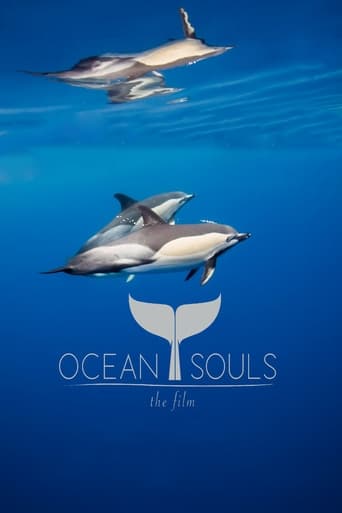
Ocean Souls Films and Wildlife Media unite 100+ filmmakers, scientists, and leading experts to shine a bright, new spotlight on humanity’s closest living relatives - cetaceans (whales, dolphins, and porpoises). New footage and scientific discoveries reveal the extraordinary world beneath the ocean’s surface, where these majestic beings exhibit characteristics not unlike ours in terms of emotions, language, family, intelligence, and human interaction. Directed by Philip Hamilton, this multi-award-winning film inspires people to care and want to protect the oceans.

Hawaii, Pacific Ocean. In this heavenly place, one of the most memorable battles of the Second World War took place 80 years ago. On December 7, 1941, at 7:53 am, a Japanese air squadron struck the American fleet which anchored in the waters of Pearl Harbor. The United States were struck at the heart of their defensive system and entered the conflict the very next day. How Pearl Harbor changed the face of World War II and therefore the face of the world? What are the diplomatic undersides of Pearl Harbor? Was the attack really a surprise attack? Is it really a Japanese victory?