

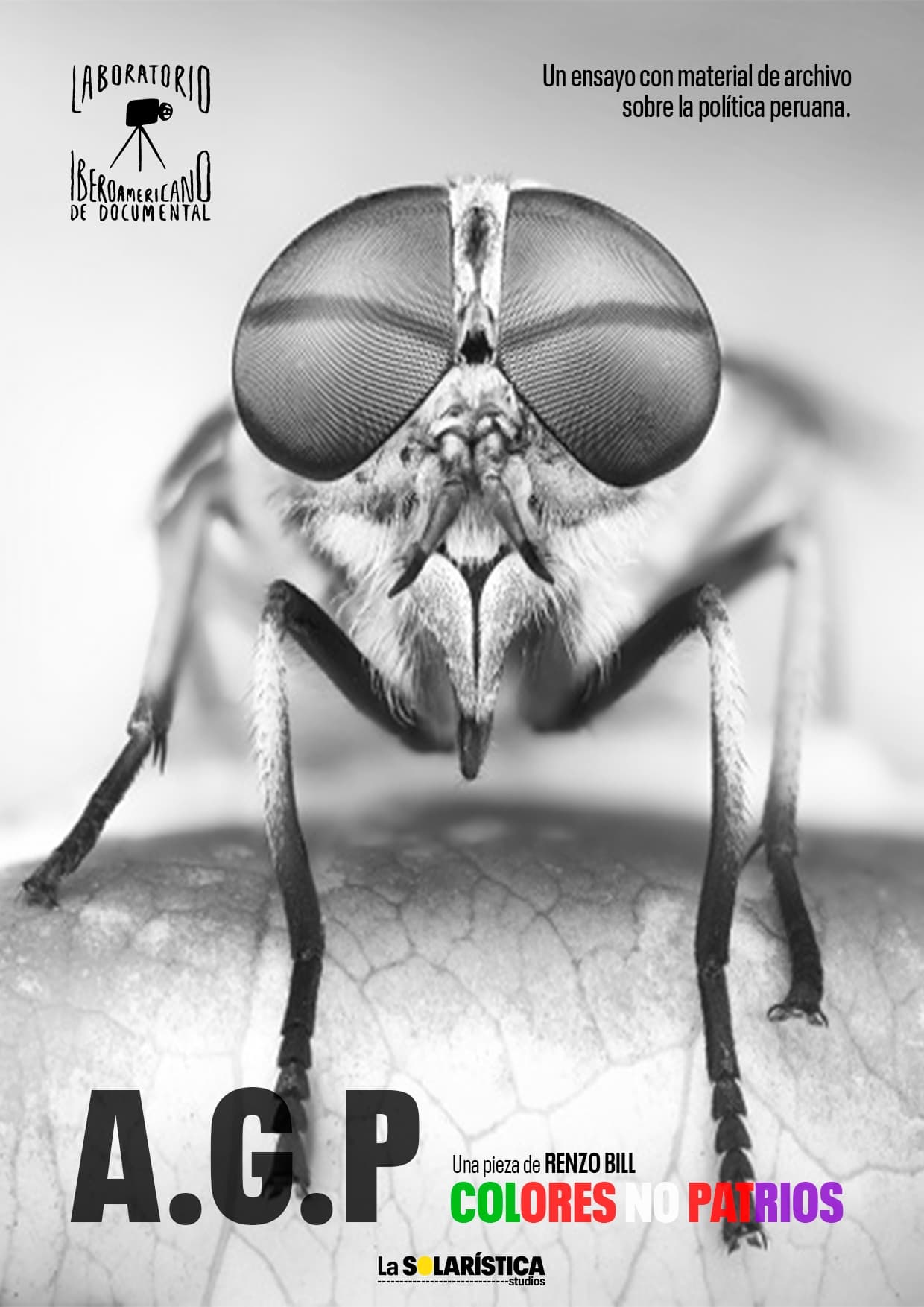
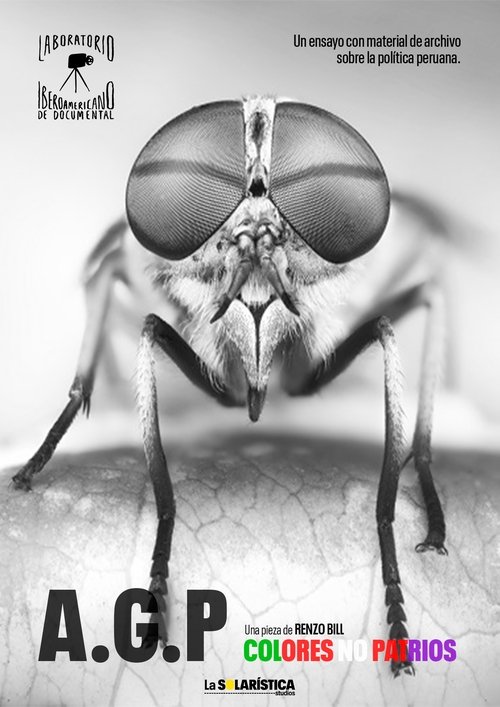
A.G.P Colores No Patrios
Documentary
Top Cast




Fernando Olivera
Fernando Olivera
Fernando Olivera
Fernando Olivera
Fernando Olivera
Alan García
Alan García
Mosca Roja
Alan García
Mosca Roja
Keiko Fujimori
Keiko Fujimori
Mosca Naranja
Keiko Fujimori
Mosca Naranja
Julio Guzmán
Julio Guzmán
Mosca Morada
Julio Guzmán
Mosca Morada
Verónika Mendoza
Verónika Mendoza
Mosca Verde
Verónika Mendoza
Mosca Verde
Similar Movies
Jorge Luna and Ricardo Mendoza, the Peruvian comedians behind the phenomenon that redefined Spanish-language stand-up, face their biggest challenge yet: filling Madison Square Garden. Just as they decide to show the human side of their empire, an emergency threatens to ruin everything. Through interviews, never-before-seen footage, and intimate moments, the film traces a story of friendship, risk, and resilience, from their pandemic-era live streams to their eventful international tour.
The Sacred City of Caral or Caral-Supe is the capital of the Norte Chico Civilization of Supe located in the Supe Valley, 200 km (124 miles) north of Lima. The Sacred City of Caral is the earliest known civilization in the Americas, it dates to the Late Archaic period. Radiocarbon analysis performed by the Caral-Supe Special Archaeological Project (PEACS) dates its development between 3000 to 1800 B.C.. It is believed that this civilization started by the merging of small villages based on trade of agricultural and fishing products. Its importance rests on the success of techniques of domestication of cotton, beans, potatoes, chilis, squash among other products. Success in agriculture was due to the development of water canals, reservoirs and terraces. They used guano, bird excrement, and anchovies as fertilizer.
Jean-Luc Godard brings his firebrand political cinema to the UK, exploring the revolutionary signals in late '60s British society. Constructed as a montage of various disconnected political acts (in line with Godard's then appropriation of Soviet director Dziga Vertov's agitprop techniques), it combines a diverse range of footage, from students discussing The Beatles to the production line at the MG factory in Oxfordshire, burnished with onscreen political sloganeering.
The secrets about unlocking the mysteries of consciousness by plant-drugs. The related chances and risks involved in this shamanism. While filming Blueberry, the Secret Experience, Jan Kounen met the Shipibo healers of the Peruvian Amazon and discovered their sacred plant: Ayahuasca, the spirit vine. Deeply affected by this experience, he decided to return to Peru to shoot a documentary on the plant and the medicinal rites of the shamans. To this end, he filmed the natives but also met neurologists, philosophers, artists, and chemists working on this subject. He notably interviewed Jean Giraud, the illustrator of Blueberry, and Kary Mullis, winner of the 1993 Nobel Prize in Chemistry. More than a traditional documentary, the film is an invitation to travel, a half-open door to another world or another perception of reality. The secrets about unlocking the mysteries of consciousness by plant-drugs. The related chances and risks involved in this shamanism.
One of the world’s greatest ancient enigmas, the Nazca lines are a dense network of criss-crossing lines, geometric shapes, and animal figures etched across 200 square miles of Peruvian desert. Who created them and why? Ever since they were discovered in the 1920s, scholars and enthusiasts have raised countless theories about their purpose. Now, archaeologists have discovered hundreds of long-hidden lines and figures as well as evidence of ancient rituals, offering new clues to the origins and motivations behind the giant desert symbols.
Sacsayhuamán, an ancient citadel amidst the Peruvian Andes, is an architectural marvel. It was built more than 900 years ago, and no living person knows how such large rocks were fitted so perfectly into walls. This documentary takes us on a tour of Sacsayhuamán, offering a brief history of the site, and clues that may help to its understand how it was made. It was edited from photos and video taken in July 2012, when Russian geophysicists conducted soil research there, at the request of Peru's Ministry of Culture.