

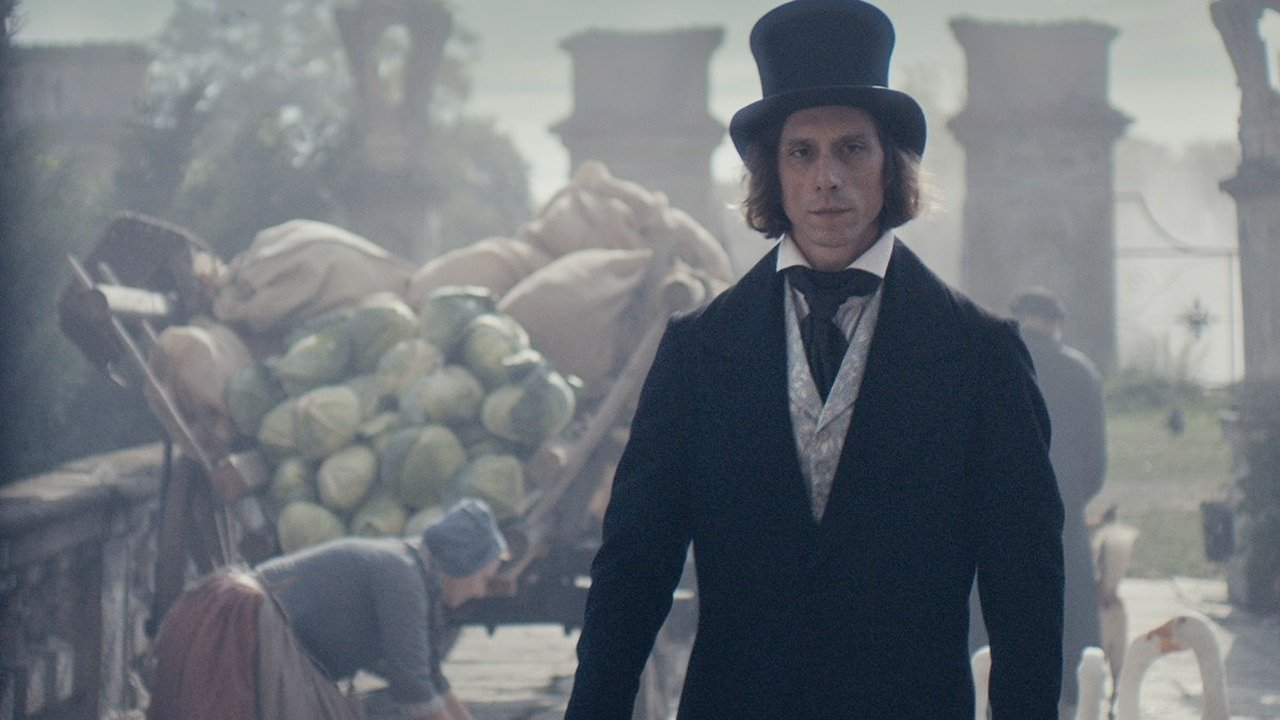

Chopin, a Sonata in Paris
Drama · History · Music
Overview
He is the talk of the town, the most romantic figure of decadent Parisian nights. When his lungs start bleeding, Chopin knows his days are numbered. Composing becomes his only obsession. The ticking clock rushes him to revolutionize music.
Top Cast
Eryk Kulm
Fryderyk Chopin

Joséphine de la Baume
George Sand

Victor Meutelet
Ferenc Liszt
Lambert Wilson
King Louis Philippe
Theo Grundmann Brechet
Carl Fritsch
Przemysław Kowalski
Joseph

Karolina Gruszka
Delfina Potocka
Kamil Szeptycki
Julian Fontana

Michał Pawlik
Jan Matuszyński

Claudia Fortunato
Matuszyńska
Roxane Le Texier
Jane Stirling
Gabriel Raab
Professor Jenssen
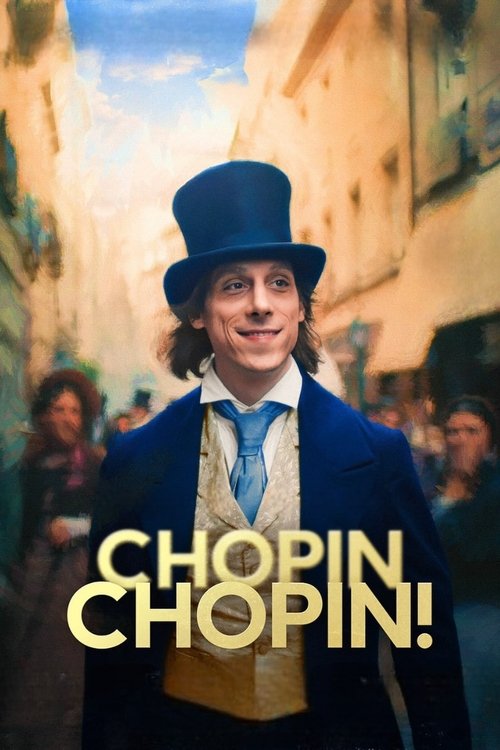
Eryk Kulm
Eryk Kulm
Fryderyk Chopin
Eryk Kulm
Fryderyk Chopin
Joséphine de la Baume
Joséphine de la Baume
George Sand
Joséphine de la Baume
George Sand
Victor Meutelet
Victor Meutelet
Ferenc Liszt
Victor Meutelet
Ferenc Liszt
Lambert Wilson
Lambert Wilson
King Louis Philippe
Lambert Wilson
King Louis Philippe
Theo Grundmann Brechet
Theo Grundmann Brechet
Carl Fritsch
Theo Grundmann Brechet
Carl Fritsch
Przemysław Kowalski
Przemysław Kowalski
Joseph
Przemysław Kowalski
Joseph
Karolina Gruszka
Karolina Gruszka
Delfina Potocka
Karolina Gruszka
Delfina Potocka
Kamil Szeptycki
Kamil Szeptycki
Julian Fontana
Kamil Szeptycki
Julian Fontana
Michał Pawlik
Michał Pawlik
Jan Matuszyński
Michał Pawlik
Jan Matuszyński
Claudia Fortunato
Claudia Fortunato
Matuszyńska
Claudia Fortunato
Matuszyńska
Similar Movies
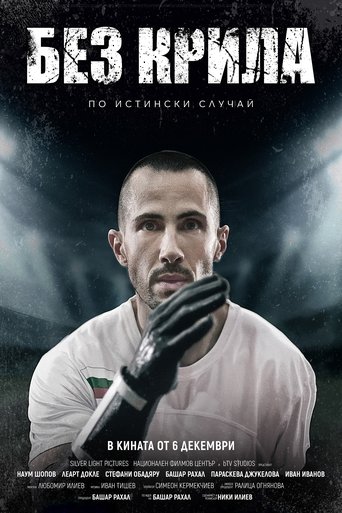
The movie is inspired by the true life story of Bulgarian paralympic ‘Long jump’ triple world champion Mihail Hristov. The film follows Mihail from the moment he loses both his arms in an electric current incident and makes the life-changing decision of becoming a professional athlete as he goes through the catharsis of deciding to start a new life without arms. He goes through a number of difficulties, both on the sports field and in his personal relationships with his parents, his coach, the girl he falls in love with but most of all, the difficulty of accepting what has happened to him. The script traces Mihail's difficult fate from the accident that left him without arms to becoming a triple long jump world champion, inventor of a new type of prosthetics and a motivational speaker.
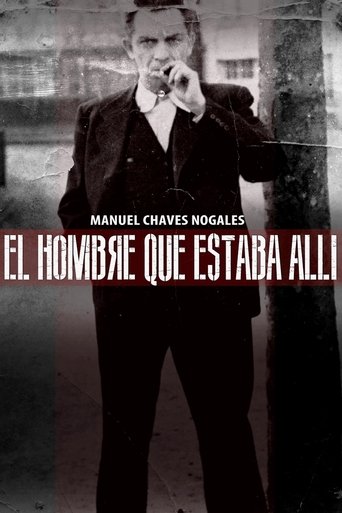
The Spanish journalist Manuel Chaves Nogales (1897-1944) was always there where the news broke out: in the fratricidal Spain of 1936, in Bolshevik Russia, in Fascist Italy, in Nazi Germany, in occupied Paris or in the bombed London of World War II; because his job was to walk, see and tell stories, and thus fight against tyrants, at a time when it was necessary to take sides in order not to be left alone; but he, a man of integrity to the bitter end, never did so.
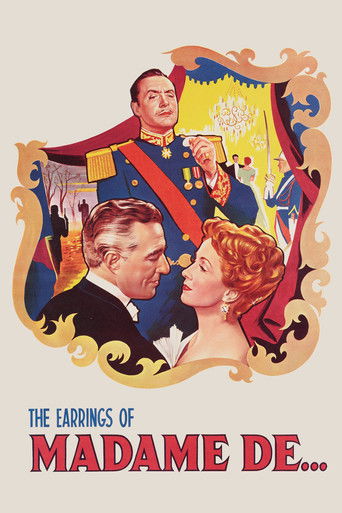
In late 19th century France, the Countess Louise, wife of a wealthy general, sells the earrings her husband gave her on their wedding day to pay off her secret debts, then claims to have lost them. Her husband quickly learns of the deceit, which is the beginning of many tragic misunderstandings, all involving the earrings, the general, the countess, and her new lover, the Italian Baron Donati.
Through the experiences of two women in Paris and London, Ghost Dance offers an analysis of the complexity of our conceptions of ghosts, memory and the past. The film focuses on the French philosopher Jacques Derrida, who observes, 'I think cinema, when it's not boring, is the art of letting ghosts come back.' He also says that 'memory is the past that has never had the form of the present.'