

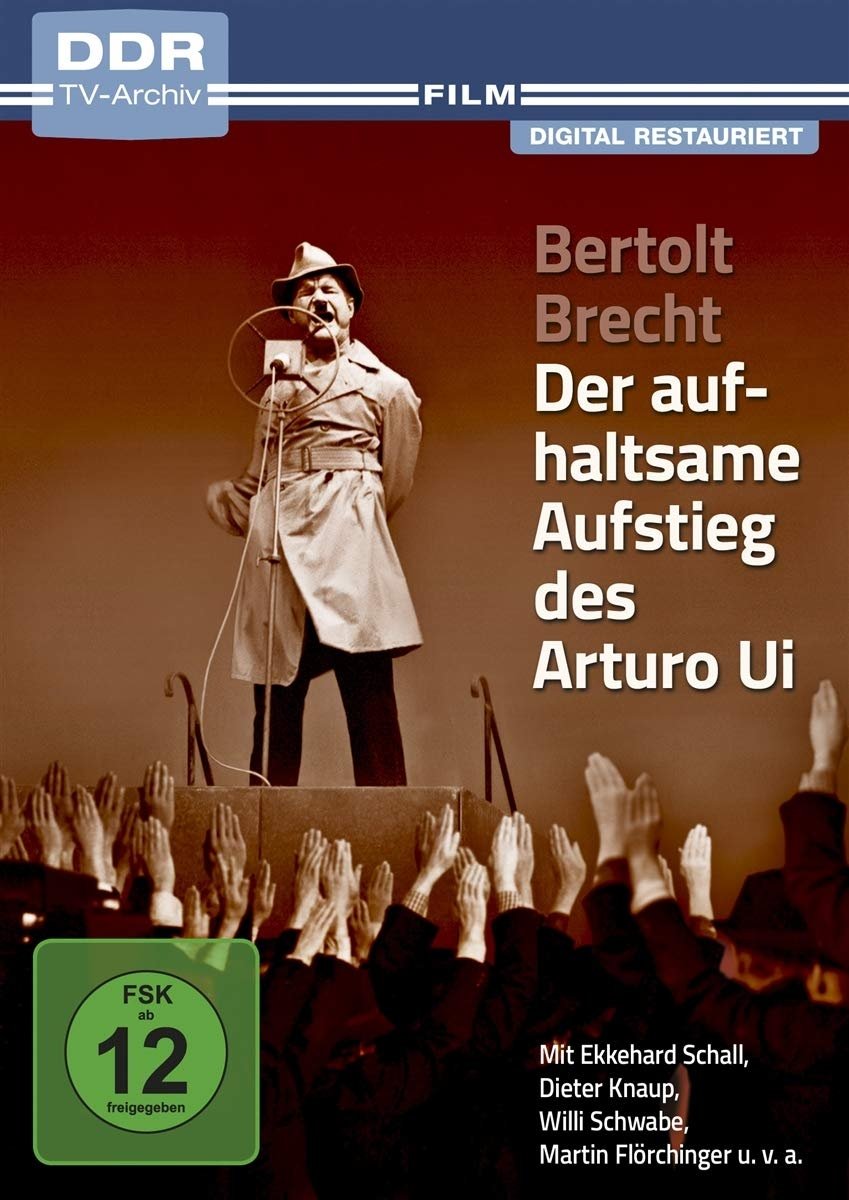
Der aufhaltsame Aufstieg des Arturo Ui
TV Movie
Overview
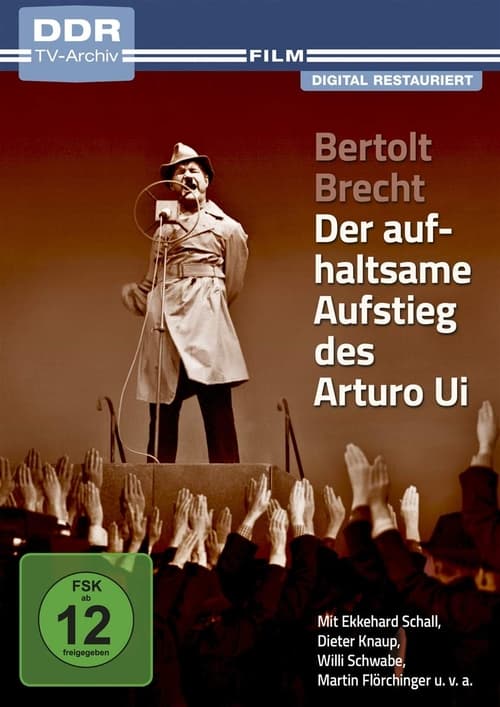
Hitler's seizure of power in 1933 and his rule in the years that followed are transferred to the North American criminal world of the 1930s in a parable. Gangster boss Ui needs the protection of the ruling class to achieve his goals and offers his help to their representatives. They initially hesitate, but join forces after Ui violently gains their respect. His victory is perfect and the people fall silent before the revolvers of their "protectors". Ui takes the raised hands as a sign of approval... Bertolt Brecht wrote the play in 1941 in a Finnish asylum - the premiere only took place in Stuttgart after his death in November 1958. It has been staged at the Berliner Ensemble since 1959 - Ekkehard Schall has played Ui over 500 times since then. On January 13, 1974, the play was shown for the last time, recorded in color by GDR television.
Top Cast


Ekkehard Schall
Ekkehard Schall
Arturo Ui
Ekkehard Schall
Arturo Ui
Dieter Knaup
Dieter Knaup
Clark
Dieter Knaup
Clark
Peter Kalisch
Peter Kalisch
Flake
Peter Kalisch
Flake
Werner Dissel
Werner Dissel
Butcher
Werner Dissel
Butcher
Hermann Hiesgen
Hermann Hiesgen
Mulberry
Hermann Hiesgen
Mulberry
Willi Schwabe
Willi Schwabe
Sheet
Willi Schwabe
Sheet
Erich Haußmann
Erich Haußmann
Bowl
Erich Haußmann
Bowl
Martin Flörchinger
Martin Flörchinger
Dogsborough
Martin Flörchinger
Dogsborough
Rudolf Seiß
Rudolf Seiß
Der junge Dogsborough
Rudolf Seiß
Der junge Dogsborough
Karl-Maria Steffens
Karl-Maria Steffens
Diener/Ankläger
Karl-Maria Steffens
Diener/Ankläger
Similar Movies
The last vestiges of a family that has gone from cherry season to sorrow... Madame Ranevskaya is a spoiled, aging aristocrat who, upon returning from a trip to Paris, must face the loss of her magnificent Cherry Orchard estate after defaulting on her mortgage. In denial, she continues to live in the past, deluding herself and her family, while the magnificent cherry trees are chopped down by the new owner Lopakhin, her former serf, who has his own agenda.
As early as 1920, the journalists of the "Münchener Post" recognized the danger posed by Adolf Hitler. Consistently and boldly they wrote about National Socialism. The brave journalists and their newspaper are almost forgotten today. A single book has been published about them - in Brazil.
Winston Churchill, one of the most revered men of the twentieth century. Adolf Hitler, one of the most hated leaders in contemporary history. Between 1940 and 1945, these two enormously contradictory personalities faced each other in both politics and war. A clash of giants whose story begins in the trenches of the World War I and ends with the debacle of the World War II.
A collaboration in which Robert Wilson and Heiner Müller let Molière die, imagine his death in tableaux with text passages recited by Müller himself. "Cinema watches Death at work." Wilson's actors watch Molière die: their vigil is hard work. Müller's comment: "The poem watches a dying man at work, his name is Molière. The poem is not a film. The film watches an actor playing a dying man called Molière."
They’ve become the human face of inhuman barbarity. Leaders like Hitler, Idi Amin Dada, Stalin, Kim Jong Il, Saddam Hussein, Nicolae Ceausescu, Bokassa, Muammar Kadhafi, Khomeini, Mussolini and Franco governed their countries completely cut off from reality. These paranoid leaders were driven to abuse their power by the pathology of power itself. Dictators are driven by a relentless, thought-out determination to impose themselves as infallible, all-knowing and all-powerful beings. But they are also men ruled by their caprices, uncontrollable impulses, and reckless fits of frenzy, which paradoxically render them as human as anyone else. The abuses they committed were clearly atrocious, yet some of them were as outlandish as the characters portrayed in the film The Dictator. They sunk to depths worthy of Kafka: so incredibly absurd, they are outrageously funny.
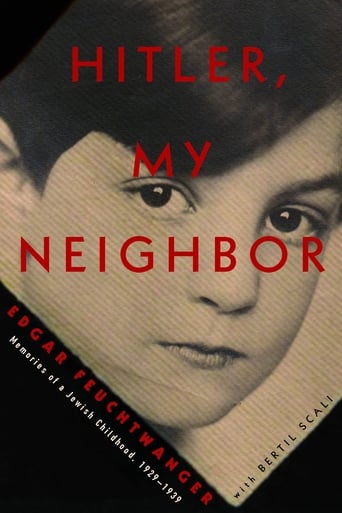
From 1929 to 1939 Edgar Feuchtwanger lived across the street from Adolf Hitler in Munich Germany From his bedroom the young Jewish boy often viewed the Fuumlhrer just across the avenue A schoolboy in Munich at the time Edgar witnessed the rise of Nazism firsthand sharing in the fear and dread felt by all German Jews witnessing the unstoppable ascent of a madman and the start of World War II