

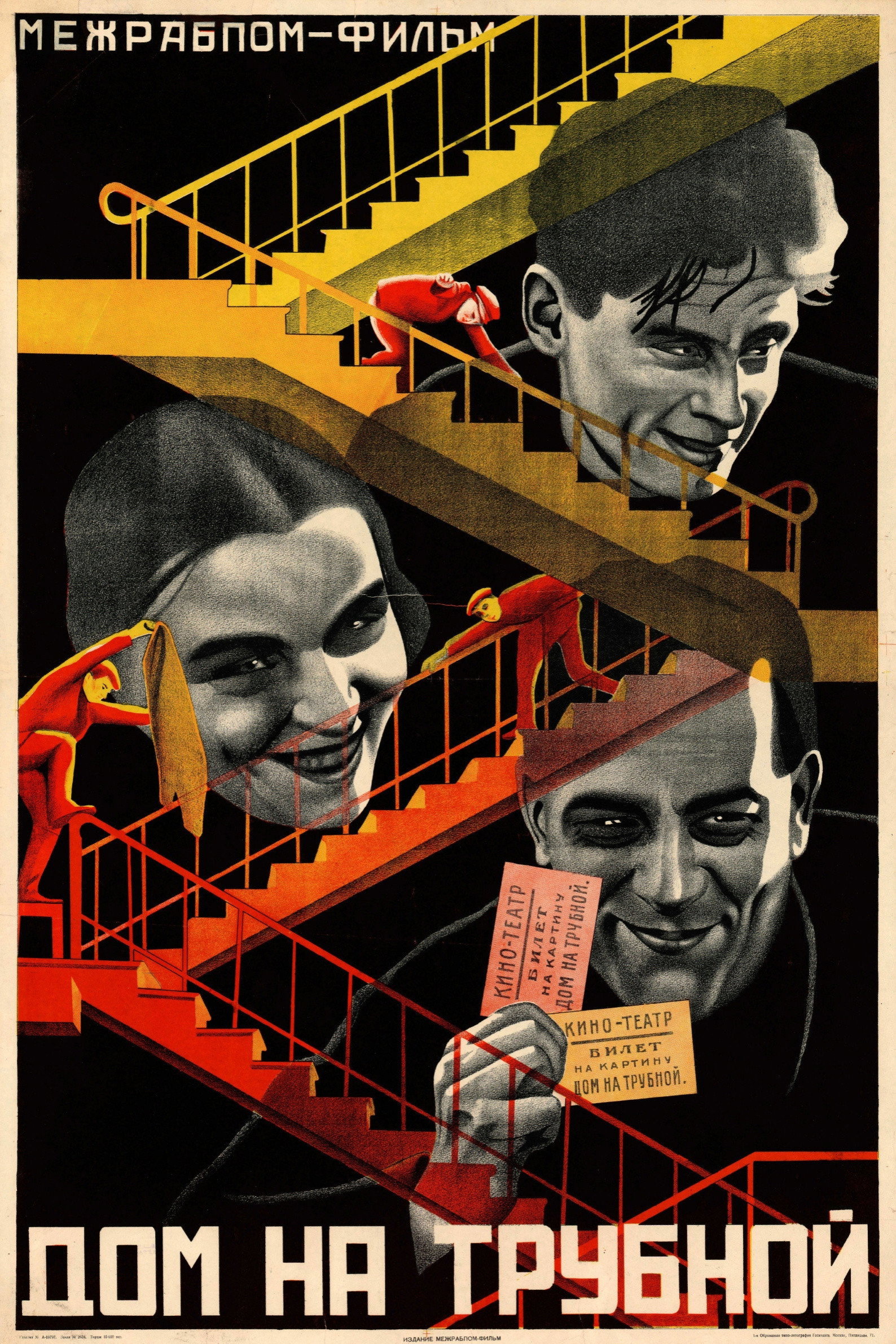
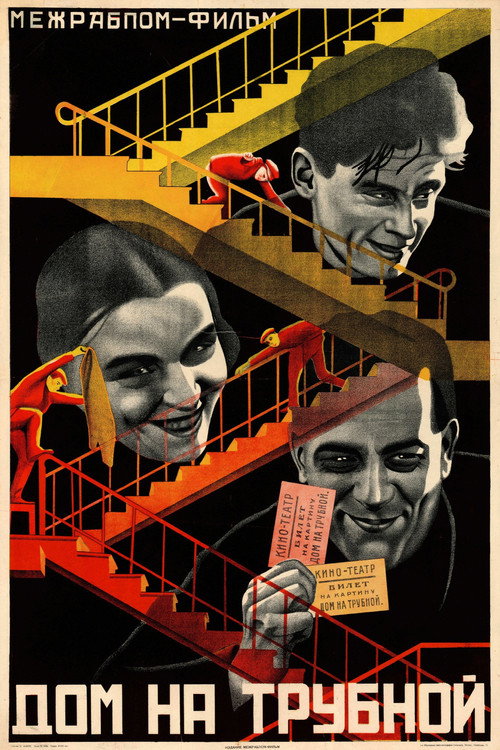
The House on Trubnaya
Comedy
Overview
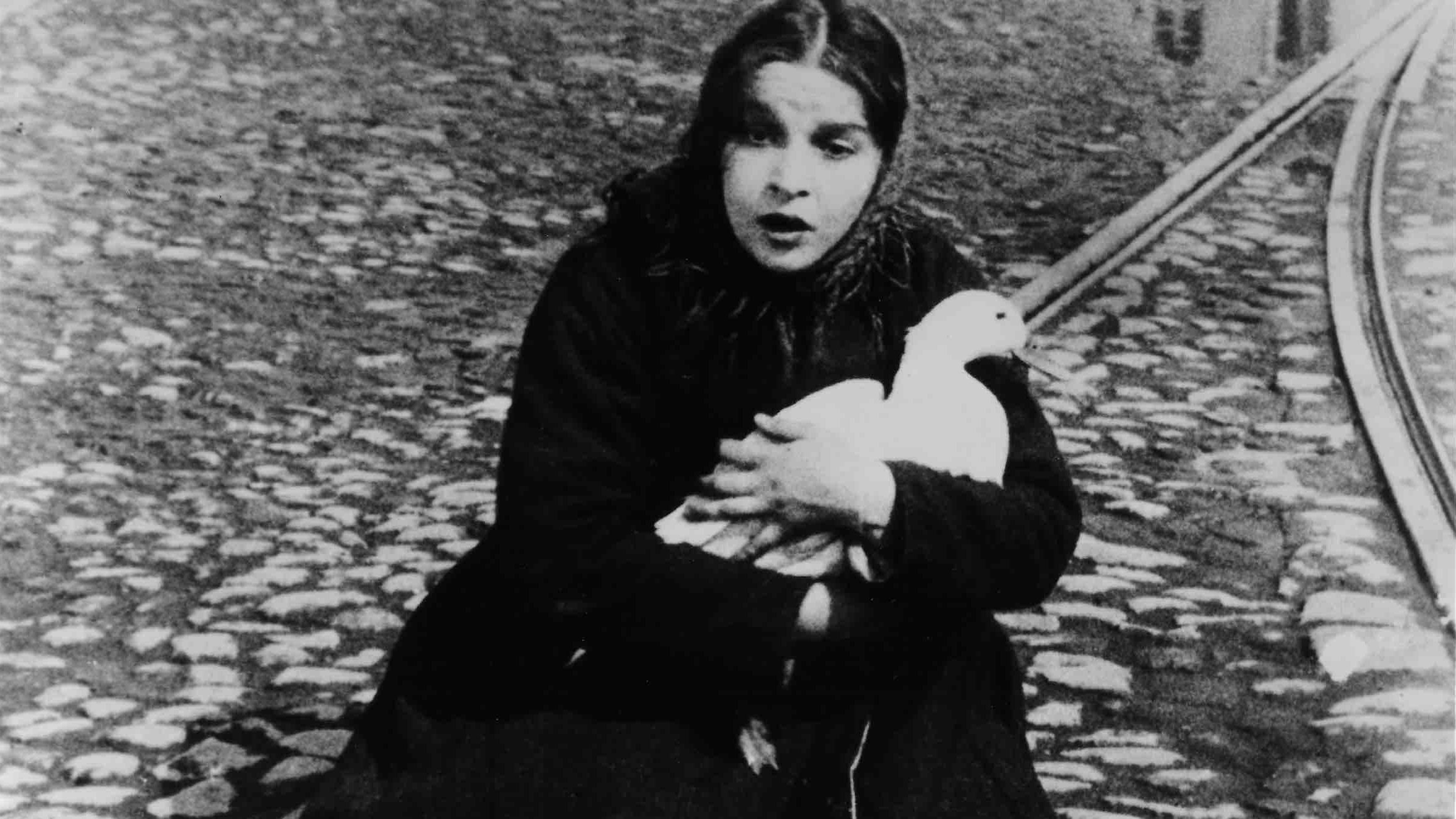
Life is short and full of oppression, but that doesn't mean Parasha can't find love and laughter when she leaves her country home to take a job as a maid in the overcrowded, overworked, and underpaid world in the big city.


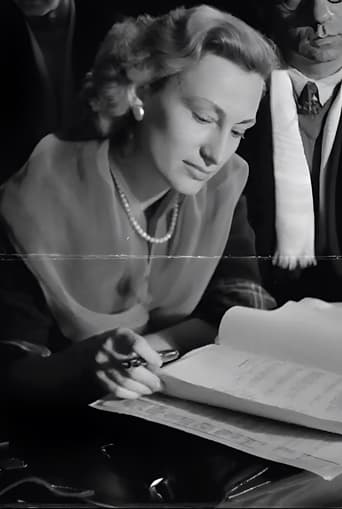








Vera Maretskaya
Vera Maretskaya
Parasha Pitunova
Vera Maretskaya
Parasha Pitunova

Anel Sudakevich
Anel Sudakevich
Marisha
Anel Sudakevich
Marisha

Ada Vojtsik
Ada Vojtsik
Fenya
Ada Vojtsik
Fenya

Vladimir Fogel
Vladimir Fogel
Mr. Golikov
Vladimir Fogel
Mr. Golikov
Yelena Tyapkina
Yelena Tyapkina
Mrs. Golikov
Yelena Tyapkina
Mrs. Golikov
Vladimir Batalov
Vladimir Batalov
Semyon Byvalov
Vladimir Batalov
Semyon Byvalov
Sergei Komarov
Sergei Komarov
Lyadov
Sergei Komarov
Lyadov

Alexandr Gromov
Alexandr Gromov
Uncle Fedya
Alexandr Gromov
Uncle Fedya

Vladimir Uralskiy
Vladimir Uralskiy
head of the club
Vladimir Uralskiy
head of the club

Boris Barnet
Boris Barnet
passerby (uncredited)
Boris Barnet
passerby (uncredited)
Similar Movies
This documentary promoting the joys of life in a Soviet village centers on the activities of the Young Pioneers. These children are constantly busy, pasting propaganda posters on walls, distributing hand bills, exhorting all to "buy from the cooperative" as opposed to the Public Sector, promoting temperance, and helping poor widows. Experimental portions of the film, projected in reverse, feature the un-slaughtering of a bull and the un-baking of bread.
Typically of the heady days of early Soviet cinema, this is constructed according to the fast, sharp editing principles advocated by Eisenstein, complete with symbolic inserts; but in terms of subject matter, it's much less explicitly political than most movies emerging from Russia in the '20s. Chronicling a young sailor's descent into a murky, treacherous underworld of pimps and thieves, after having encountered a Louise Brooks lookalike at a fairground and missed his departing boat, it's a lively moral fable that delights in vivid visual effects and quirky characterisations. If the plot occasionally reveals gaping holes, and the tacked-on ending urging the clearance of the Leningrad slums seems to be rather gratuitous, there's enough going on to keep one attentive and amused.
Made on the occasion of March 8, it presents a series of brief portraits of women, from various professional fields, of different ages and even of different ethnicities, pointing out the benefits that the communist organization had brought to their daily lives. A special emphasis is placed on their status as mothers and on the role of nurseries and socialist kindergartens not only in making their lives easier, but also in giving them the time they need to build a career. Another concern of the filmmaker, starting from the concrete case of one of the protagonists, is to highlight the differences between the happy present and the not-too-distant past in which someone with her social status should have dedicated herself exclusively to raising children, in hygienic and extremely difficult lives.