

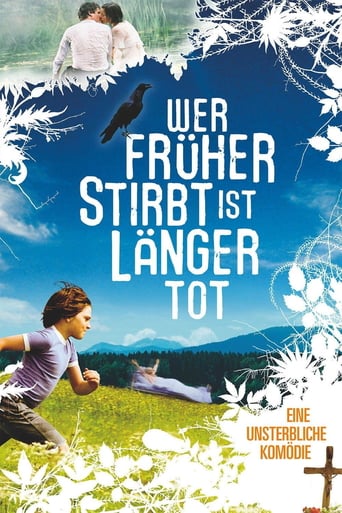
Wer später stirbt ist trotzdem tot
Comedy · Drama
Overview
When the somewhat unsuccessful musician Sebastian returns to his Bavarian hometown, he learns that he is going to be a father. Although he is incredibly happy, he is haunted by the nightly visions of his childhood: in them, his future daughter declares that she does not want to be born! So Sebastian does everything he can to prove to his unborn child that this world is worth living in. Not an easy undertaking...





No cast information.
Similar Movies
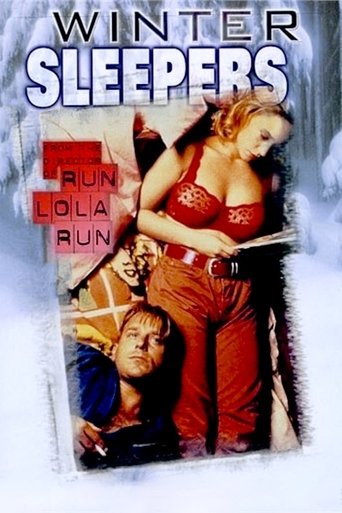
Young blonde translator Rebecca lives with her boyfriend ski instructor Marco in a mountain villa owned by her friend, nurse Laura. Rene, local cinema projectionist, steals Marco's car and gets into a car crash with local Theo, whose daughter, after being in coma for a time, dies. Rene suffers from partial short term memory loss and starts a relationship with Laura. Meanwhile Marco is looking for the man who stole his car and Theo - for the man who killed his daughter...
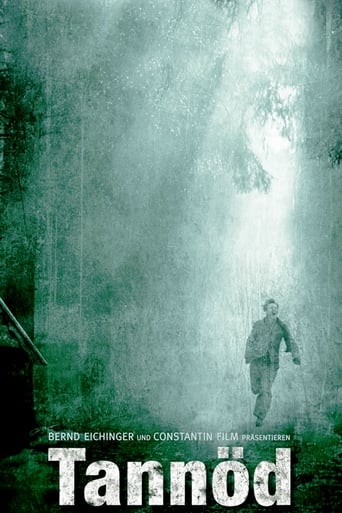
Bavaria, Germany, 1950s. The sudden return of the young Kathrin to the small village where she was born stirs up the feelings of guilt and personal ghosts of its inhabitants, haunted by dark memories related to a multiple murder that happened two years earlier at the Tannöd farm, a hideous crime that remains unsolved.
The planned construction of a railroad line to connect the small town of Dornstein with the wider world. But instead of the shortest and most practicable connection, the route runs through swampy terrain far away from Dornstein. So the mayor goes to Munich to make representations to the ministry. He achieved nothing, but his trip was soon stylized in Dornstein as a campaign against those up there. This leads the magistrate to break off his engagement to the mayor's daughter because of the latter's well-known hostility towards the government. And the people of Dornstein also start to get cold feet ...
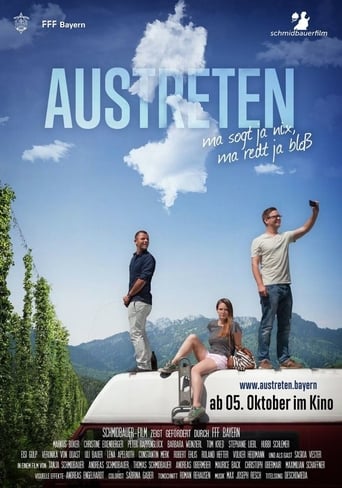
At a press conference, Bavarian Minister President Reitmayer makes an unclear and ill-considered statement about Bavaria's possible withdrawal from the Federal Republic of Germany, sparking a discussion of unimagined proportions in the press and media. The excitement surrounding his words quickly becomes too much for Reitmayer and so he withdraws from the public eye and flees to a remote area in the Bavarian countryside. In doing so, however, he offends his family, to whom he has not revealed his whereabouts: Without further ado, his children Kathi and Martl set off in search of him. In the process, they not only learn a lot about their family, but also about their native Bavaria and its various regions. Meanwhile, the Minister President who has gone into hiding has found happiness, but for better or worse he must return to the public eye in order to calm the still raging debate...
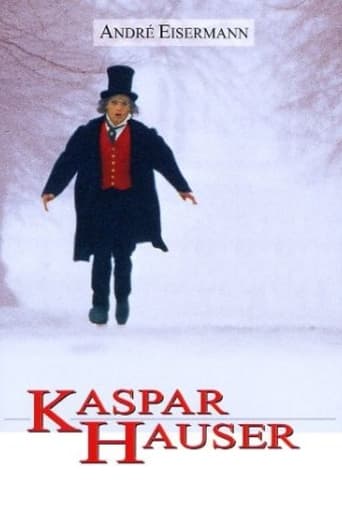
In May 1828, a feral boy aged around 16 was found in Nuremberg. Kaspar Hauser, as he is called, can only speak a few indistinct words and knows nothing about his origins or family. The film depicts the - presumed - circumstances under which Hauser was held captive in complete isolation in a hiding place from infancy onwards. From this emerges the picture of an intrigue involving high circles of aristocratic society. Five years after his liberation, in December 1833, Kaspar Hauser died as a result of a stab wound inflicted by an unknown perpetrator.
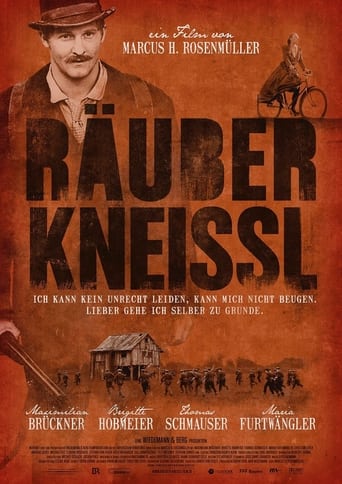
Even today, Mathias Kneißl (1875-1902) is considered a national hero in the collective memory of Bavaria. During his lifetime, he was the most wanted criminal in Bavaria and even Prince Regent Luitpold was reported daily on the hunt for the lawbreaker report. Again and again Kneißl's story has occupied the Bavarian artists: his life was retold in folk songs and murders, sung in ballads, filmed and treated in various plays. In his feature film version, the Bavarian filmmaker Marcus H. Rosenmüller relies on a rapid staging, opulent images and a moving love story.