

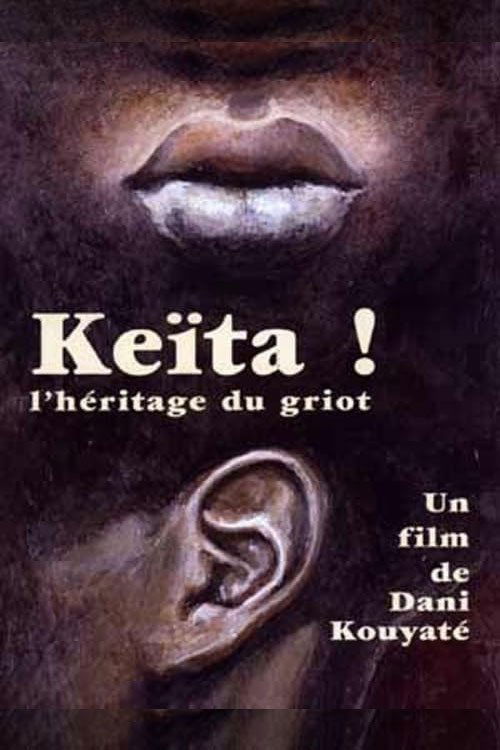
Keita! The Voice of the Griot
Fantasy · Drama
Overview
It is an ordinary afternoon for young Mabo Keïta, at home, in Burkina Faso (West Africa). While his parents are taking a nap, he reads a schoolbook on the front porch when a stranger - an elderly man carrying his own hammock - appears for an unexpected visit. It turns out that the old man is a griot, a West African musician/entertainer whose performances include tribal histories and genealogies. The position of a griot is a time-honored one and passed down from father to son for many generations.
Top Cast
Seydou Boro
Sundjata Keita
Hamed Dicko
Mabo Keïta
Abdoulaye Komboudri
M. Fafana l'instituteur
Sotigui Kouyaté
Djeliba Kouyaté
Claire Sanon
Sitan
Blandine Yaméogo
Sogolon
Seydou Rouamba
Sundjata Keita enfant
Mamadou Sarr
Boicar
Souleymane Koulibali
Maghan Kon Fatta
Adama Kouyaté
Le maître chasseur
Awa Sow
Sassouma Bérété

Seydou Boro
Seydou Boro
Sundjata Keita
Seydou Boro
Sundjata Keita
Hamed Dicko
Hamed Dicko
Mabo Keïta
Hamed Dicko
Mabo Keïta
Abdoulaye Komboudri
Abdoulaye Komboudri
M. Fafana l'instituteur
Abdoulaye Komboudri
M. Fafana l'instituteur
Sotigui Kouyaté
Sotigui Kouyaté
Djeliba Kouyaté
Sotigui Kouyaté
Djeliba Kouyaté
Claire Sanon
Claire Sanon
Sitan
Claire Sanon
Sitan
Blandine Yaméogo
Blandine Yaméogo
Sogolon
Blandine Yaméogo
Sogolon
Seydou Rouamba
Seydou Rouamba
Sundjata Keita enfant
Seydou Rouamba
Sundjata Keita enfant
Mamadou Sarr
Mamadou Sarr
Boicar
Mamadou Sarr
Boicar
Souleymane Koulibali
Souleymane Koulibali
Maghan Kon Fatta
Souleymane Koulibali
Maghan Kon Fatta
Adama Kouyaté
Adama Kouyaté
Le maître chasseur
Adama Kouyaté
Le maître chasseur
Similar Movies
Set in a Burkina Faso organic cotton weaving cooperative, a cacophonous cotton-spinning apparatus eats, digests, and takes a breath. Threads become the organs of a whirling, burping, guzzling machine animated by hands, looms, vats, cogs, and feet. Where does the machine end and the body begin? The weaving cooperative promises equitable remuneration for workers in an industry beholden to its colonial predecessor: today, Burkinabè cotton farmers live in permanent debt to cotton companies financed by European capital. By focusing on the repetitive labor unfolding within a cooperative that claims to serve its workers, Everything Here Holds Its Inverse examines the tension between empowerment and evolving oppressions. Can the ties that bind and define also set free?
October 2014. Ouagadougou, the capital of Burkina Faso, is the scene of an unarmed uprising that ousts the dictator in power since 1987 and later staves off an attempted coup. In 2015, the country votes freely for the first time in its history, yet real change remains allusive, especially regarding ongoing economic exploitation by foreign companies. In one year of struggle and resistance, the film follows the daily life of four Burkinabes: a musician and leader of the revolution, a local political candidate, a miner engaged in the labor movement, and an impoverished mother, all sharing hopes that the elections will change the country’s path.
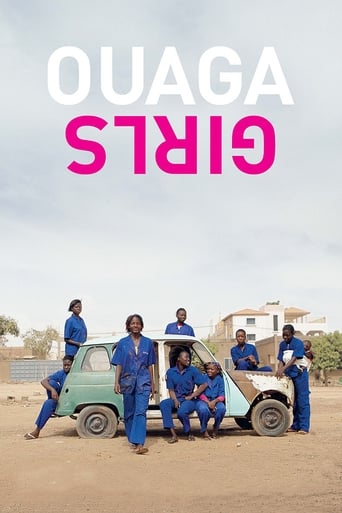
A group of young women from Ouagadougou study at a girl school to become auto mechanics. The classmates become their port of safety, joy and sisterhood, all while they are going through the life changing transition into becoming adults in a country boiling with political changes. In a country with youth unemployment at 52 percent, jobs are a hot issue. The young girls at a mechanics school in Burkina Faso’s capital Ouagadougou are right in the middle of a crucial point in life when their dreams, hopes and courage are confronted with opinions, fears and society’s expectations of what a woman should be. Using interesting narrative solutions, Theresa Traore Dahlberg depicts their last school years and at the same time succeeds in showing the country’s violent past and present. This is a feature-film debut and coming-of-age film with much warmth, laughs, heartbreak and depth.
In a quest to rediscover the spiritual values of his own people, an African filmmaker from the Gourmantche tribe of Burkina Faso visits an Aboriginal band, the Atikamekw of northern Quebec. The resulting documentary is a dialogue between those who divine the future in the sand with those who use snow-encased sweat lodges to reconnect with the spiritual world.
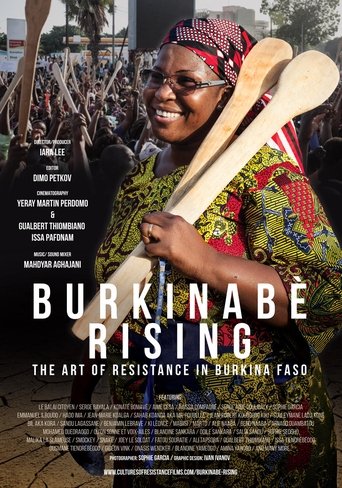
BURKINABÈ RISING: the art of resistnace in Burkina Faso showcases creative nonviolent resistance in Burkina Faso. A small, landlocked country in West Africa, Burkina Faso is home to a vibrant community of artists and engaged citizens, who provide an example of the type of political change that can be achieved when people come together. It is an inspiration, not only to the rest of Africa but also to the rest of the world. Through music, film, ecology, visual art, and architecture, the people featured in this film are carrying on the revolutionary spirit of Thomas Sankara. After assuming the presidency in 1983, Sankara was killed in a 1987 coup d'état led by his friend and close advisor Blaise Compaoré, who subsequently ruled the country as an autocrat for twenty-seven years. In October 2014, a massive popular insurrection led to his removal. Today, the spirit of resistance is mightier than ever in Burkina Faso.

This documentary follows the traces of the French colonization of the country Lobi. In this region of southwestern Burkina Faso, there is not a village, not a family that does not remember the suffering brought by the colonizers. Confronted with the archival documents of the administrators, the oral tradition, through its numerous testimonies, allows us to trace back nearly a century of history, from the arrival of the first Whites until today. This word also testifies to the individual, social or religious consequences of this often painful history. Between the past and the present, between the living words and the writings of the colonists, "Mémoire entre deux rives" is as much a quest for Lobi identity as a reflection on "civilising" France.