

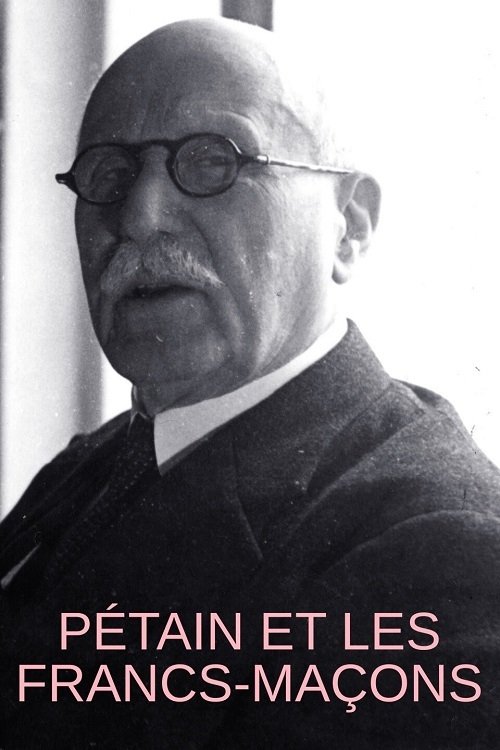
Pétain et les francs-maçons
Documentary




No cast information.
Similar Movies
“Being French in 2024 means being able to serve as Prime Minister while openly gay.” With these words closing his policy speech on January 30, 2024, Gabriel Attal made history. The documentary *Homos en politique: le dire ou pas?* uses this milestone — the appointment and visibility of France’s first openly gay Prime Minister — as a springboard for a broader inquiry. Journalists Jean-Baptiste Marteau and Renaud Saint-Cricq travel across France to meet LGBTQ politicians of all generations, from Paris to rural towns. Eleven years after the protests against same-sex marriage, has France really changed? Through interviews with figures like Bertrand Delanoë, Sarah El Haïry, Jean-Philippe Tanguy, Franck Riester, and others, the film explores how coming out intersects with politics, homophobia, and representation — questioning whether saying “I’m gay” in politics is still an act of courage or simply a sign of the times.
When Allied forces liberated the Nazi concentration camps in 1944-45, their terrible discoveries were recorded by army and newsreel cameramen, revealing for the first time the full horror of what had happened. Making use of British, Soviet and American footage, the Ministry of Information’s Sidney Bernstein (later founder of Granada Television) aimed to create a documentary that would provide lasting, undeniable evidence of the Nazis’ unspeakable crimes. He commissioned a wealth of British talent, including editor Stewart McAllister, writer and future cabinet minister Richard Crossman – and, as treatment advisor, his friend Alfred Hitchcock. Yet, despite initial support from the British and US Governments, the film was shelved, and only now, 70 years on, has it been restored and completed by Imperial War Museums under its original title "German Concentration Camps Factual Survey".
The whole world envies it; it is the symbol of a united France, a source of national pride, almost an idol! The french Social Security system is celebrating its 80th anniversary. But at a time when public accounts are showing a huge deficit and the age pyramid is reversing, its future and its financing are being called into question. How can this jewel be preserved without causing it to lose its lustre? Can the untouchable be touched ? Sacrée Sécu lifts the veil on the history, legends and taboos surrounding a model that is unique in the world.
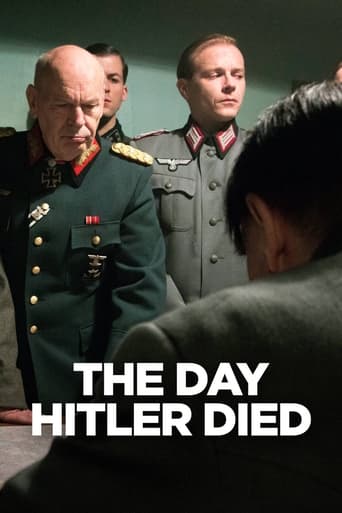
The story of Hitler’s final hours told by people who were there. This special features exclusive forgotten interviews, believed lost for 65 years, with members of Hitler’s inner circle who were trapped with him in his bunker as the Russians fought to take Berlin. These unique interviews from figures such as the leader of the Hitler Youth Artur Axmann and Hitler’s secretary Traudl Junge, have never before been seen outside Germany. Using rarely seen archive footage and dramatic reconstruction, this special tells the story of Adolf Hitler’s final days in his Berlin bunker.
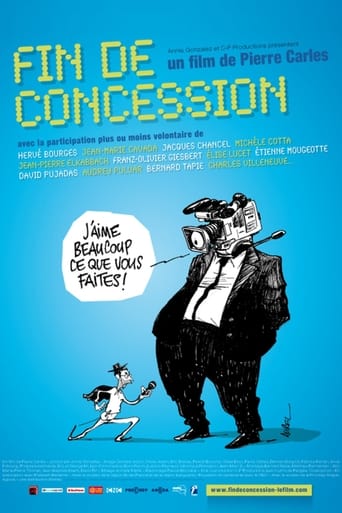
Pierre Carles questions the privatization of the leading French televisions channel : is it not scandalous that the TFI-Bouygues concession has been automatically renewed since 1987 ? Taking up the anti-television fight he initiated with "Pas vu Pas pris", his first film, he confronts the people responsible for the news who have always avoided tackling this taboo subject. But the investigation does not go as planned : the old dinosaurs and young guardians now how to handle this media critic. To find his "fighting spirit" again, Carles calls to arms his friends and changes methods : Henceforth, no more concessions !
Published in Paris in 1954, Story of O was an immediate bestseller and literary scandal: an elegantly written S&M fantasy that had all the hallmarks of being an autobiographical account by the pseudonymous Pauline Réage. In 1994 Dominique Aury, a mild-mannered, dowdy editor for France’s prestigious Gallimard press, revealed her authorship. Pola Rapaport explores Aury's inspiration, recreating the world of '50s literary Paris and setting it against dramatic sequences that bring the infamous book to life. The author as well as various French intellectuals expound on the thorny relationship between sexuality and power, submission and freedom, liberation and non-being.

This powerful and thought provoking film chronicles the compelling events in the Pacific Theater of WWII, from the bombing of Pearl Harbor in 1941 to the American occupation of Japan in 1945. It depicts the strength and courage of America's youth, while examining how these men and women dealt with being thrust into this brutal war. The film includes interviews with war veterans, both American and Japanese, from all branches of the military. It features testimony from medics, nurses, dog handlers, as well as Japanese-Americans who were imprisoned at internment camps in the United States. The film also includes a first hand account of the tragic impact of the atomic bomb on Japanese citizens. Among the veterans who appear is Zenji Abe, a Japanese veteran who flew the mission to bomb Pearl Harbor, and retired General Paul Tibbets who flew the mission to bomb Hiroshima.