

Kyiv Story
Animation · Drama
Overview
Tatiana is forty-two years old and she is a stylist for one of Kyiv’s women’s magazines. She is ironic, self-confident, Tatiana lives in a large house on the suburbs of the Ukrainian capital and she enjoys the freedom that her recent divorce gave her. Her quite successful life is interrupted by the outbreak of the war. Friends and acquaintances come to her house, including her ex-husband and colleague who has a crush on her. Together, they watch how Russia destroys their city. After a few days, almost everyone tries to get out of Kyiv and persuades Tatiana to follow. But she can’t make up her mind.






No cast information.
Similar Movies
Paper cutouts over images of mixed colorful liquids, creating hypnotizing swirls and aesthetic explosions, as well as combining original and futurological sounds. Starting with the relentless hunting of antelopes, the geometric cutouts show the constant struggle between the warring groups. We have been observing it since the primeval times, when the tools of the battles were arches and spears, through the times of the domination of swords, later replaced by firearms. The increasing automation and power of war machines, the emergence of tanks and aircraft, eventually the use of weapons of mass destruction lead to total annihilation
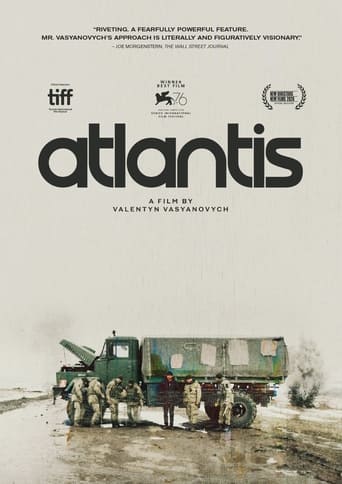
Based on a true story. Two fighters of 'Donbas' Volunteer Battalion get locked inside city of Ilovaysk after regular Russian army enters Ukraine and shells the surrounded divisions of Ukrainian Army in the infamous would-be 'green corridor'. The fighters survive thanks to the help of the locals and manage to break out through the front line to reach the freed territory. Taras Kostanchuk who is playing himself as 'Beshoot' is that same Donbas commander who is the prototype of the story. Half of the actors and extras are real 'Donbas' volunteers who survived the battle.
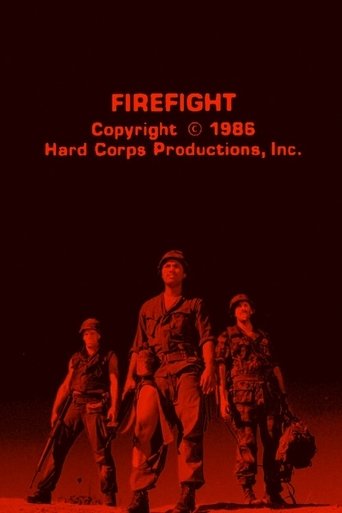
A squad of Marines on a hilltop in Vietnam calls for a Medevac after a sniper wounds one of them. Before the Medevac helicopter can come down for a landing, the Marines are attacked by a large force of Vietcong. After a brutal battle, resulting in more wounded Marines, they're able to repel the attack, but then the helicopter is hesitant to land.
Munich, Germany, 1923. Two years have passed since Edward Elric was dragged from his own world to ours, leaving behind his country, his friends and his younger brother, Alphonse. Stripped of his alchemical powers, he has been all this time researching rocketry together with Alphonse Heiderich, a young man who resembles his own brother, hoping to one day find a way back home. His efforts so far had proven fruitless, but after lending a hand to a troubled gipsy girl, Edward is thrown in a series of events that can wreak havoc in both worlds. Meanwhile, at his own world, Alphonse Elric ventures deeper into the mysteries of alchemy in search for a way to reunite with his older brother.
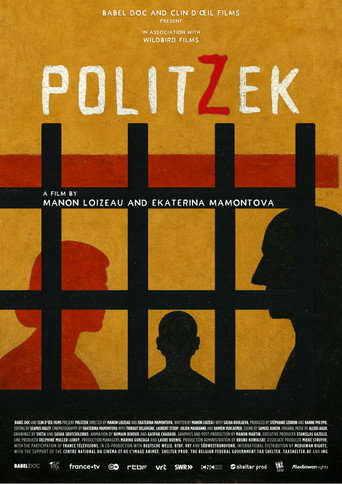
In Russia, criticizing the war in Ukraine or Vladimir Putin’s regime has become a crime. Thousands of ordinary citizens are being arrested, tried, and imprisoned. They are called “Politzek”: political prisoners. Filmed clandestinely over the course of more than a year, Politzek gives a platform to those who, despite the fear, continue to speak out against Putin’s repressive Russia. Through the intersecting stories of a teenager sentenced to five years in prison for criticizing the government on social media, a young artist jailed for placing anti-war stickers, a human rights activist, and two theater directors facing Kafkaesque trials, the film unveils the machinery of state repression in Russia. With rare footage, broken yet unyielding voices, this is a story of silenced resistance.
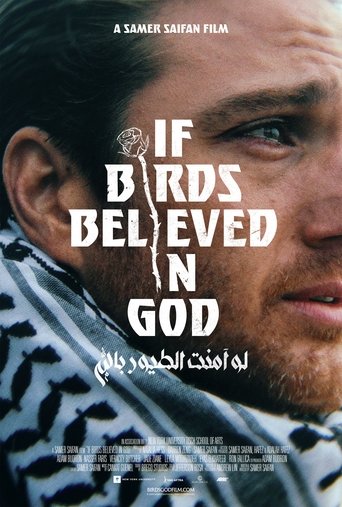
The story follows a day in the life of Ismail, a Palestinian photographer whose American upbringing was shaped by his grandfather’s displacement during the 1948 Palestine Nakba. When Ismail’s mother gifts him his grandfather’s keffiyeh—a traditional Palestinian scarf—it triggers an internal struggle between shame and pride in his cultural identity, all unfolding against the ominous backdrop of rising violence against Palestinians.
A touching story of an Italian book seller of Jewish ancestry who lives in his own little fairy tale. His creative and happy life would come to an abrupt halt when his entire family is deported to a concentration camp during World War II. While locked up he tries to convince his son that the whole thing is just a game.
This film is about what the routine of everyday life can do to the human mind and psyche. It also reflects on the importance of the choices we make and how limited these choices are in the first place. The plot evolves around a family of four. They live in the suburbs, in a strange villa that appears, through a complex game of mirrors, to be more like a piece of installation art than a real house. The main character, who hardly appears on screen, is the son, a man in his thirties. Suffering from asthma and eczema since childhood, he uses his condition to manipulate his parents and his sister. Thus the existence of the terrorized family turns into an endless ritual of attempting to satisfy his whims, and always on the alert for yet another one of his “health crises”. Las Meninas resembles the scattered pieces of a puzzle. It is up to the viewer to assemble them in order to form his very own picture – something that makes the film itself personal and unique.