

O óbvio
Documentary









No cast information.
Similar Movies
Faced with a traumatic injury that renders you permanently disabled; how would you reinvent yourself? Full Circle tells the story of Trevor Kennison and Barry Corbet’s shared resiliency and refusal to let their passion for life be limited by Spinal Cord Injury. It is an unblinking examination of the challenges of Spinal Cord Injury, and a celebration of the growth that such tragedy can catalyze.
Cruelty, psychological and sexual violence, humiliations: reality television seems to have gone mad. His debut in the early 2000s inaugurated a new era in the history of the audio-visual. Fifty years of archives trace the evolution of entertainment: how the staging of intimacy during the 80s opened new territories, how the privatization of the biggest channels has changed the relationship with the spectator. With the contribution of specialists, including philosopher Bernard Stiegler, this documentary demonstrates how emotion has made way for the exacerbation of the most destructive impulses.
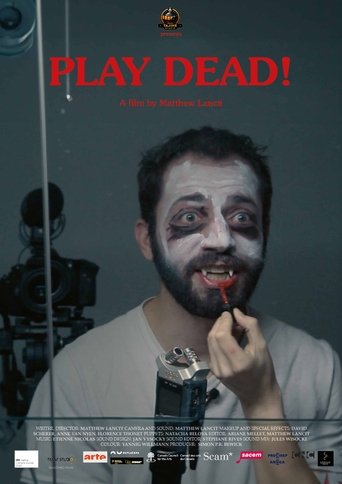
If there is one person Matthew Lancit can’t get out of his mind, it is his uncle Harvey. Dark rings around his eyes, pale, blind, his legs amputated. Like Harvey, the filmmaker also suffers from diabetes. He has the disease under control, but one question is always nagging at him: How much longer? His long-term (self-)observation reliably revolves around fears of infirmity and mutilation. He translates the feared body horror into film, stages himself as a zombie, vampire, a desolate figure. Lancit playfully anticipates his potential decline, serving up a whole arsenal of effects which – as video recordings prove – go back to his youth. It is not for nothing that the “dead” in the title is also reminiscent of “dad.” Because “Play Dead!” also negotiates his own role as a father.
At Milan’s Niguarda public hospital, the unconventional Dr. Bini leads a bold mission overseeing aspiring parents undergoing in vitro fertilization and the journeys of individuals reconciling their bodies with their gender identities. He navigates the constraints set by a conservative government and an aggressive market eager to commodify bodies.
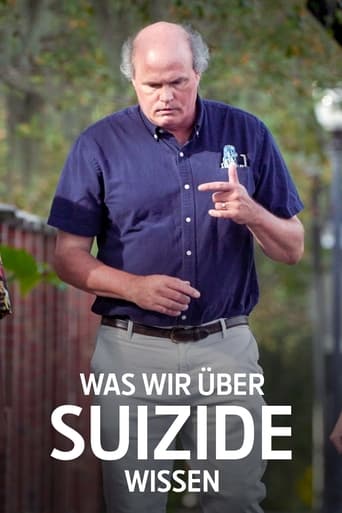
Suicide is one of the world's leading causes of death, with almost 800,000 people taking their own lives every year, not counting those who go unrecorded. What drives people to take their own lives, and how can they be prevented from doing so? This documentary attempts to provide some answers.
Marina Carrère d'Encausse lifts the veil on the intimate questions that preoccupy her as well as society at large: those related to the end of life. The doctor-journalist introduces Antoine, her partner, who is suffering from Charcot's disease, an incurable illness, and who wishes to choose how he ends his life. Is the current law in France sufficient? Should it simply be better enforced, allowing better access to palliative care? Should assisted suicide and euthanasia be legalized? Marina meets with patients concerned about the end of life, caregivers, and politicians in France, as well as in Belgium, Switzerland, and Canada, countries where euthanasia and assisted suicide are legal.