

The Common Sense Farm
Documentary
Overview
‘The Common Sense Farm’ is a documentary short that brings us into the world of the Twelve Tribes, a communal Judeo-Christian religious group often referred to as a cult. Their insulated way of life has led to a fragile relationship with the outside world, sparking controversies, conflicts and misunderstandings on both sides of the fence.



No cast information.
Similar Movies
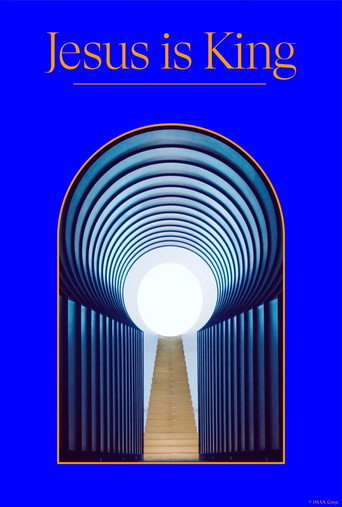
Filmed during summer 2019, Jesus Is King brings Kanye West’s famed Sunday Service to life in the Roden Crater, visionary artist James Turrell’s never-before-seen installation in Arizona’s Painted Desert. This one-of-a-kind experience features songs arranged by West in the gospel tradition along with new music from his forthcoming album.
On January 7th 2005, 29 year old Rick Rodriguez murdered his former nanny and then killed himself on a lonely desert highway. Hours earlier he had videoed his suicide note and this final message provided a remarkable insight into a deeply damaged life. It also lifted the lid on one of the most notorious religious cults to emerge out of the 1960s counter culture: The Children of God sect.
At age 29, Eric Rudolph was the perpetrator of the Centennial Olympic Park bombing in Atlanta, which occurred on July 27, 1996, during the 1996 Summer Olympics. He called the police, warning about the bomb before it detonated. The blast killed spectator Alice Hawthorne and wounded 111 others. Law enforcement officials implement one of the largest manhunts in US history in their search for bomber Eric Rudolph. Host WRAL News anchor Jim Payne and the WRAL Documentary unit travel to western NC for a look inside the investigation, the impact of the search on the local community and the various fringe groups that might sympathize with the fugitive. “Into These Hills” originally aired April 24, 1999.
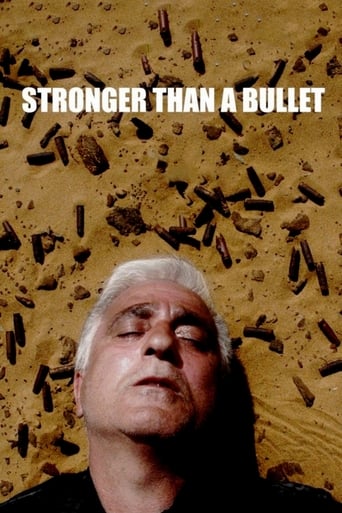
Iran, January 16th, 1979. Shah Mohammad Reza Pahlavi flees after being overthrown. Ayatollah Khomeini returns to Tehran and proclaims the Islamic Republic on April 1st, 1979. In the same year, Saddam Hussein seizes power in Iraq and, after several border skirmishes, attacks Iran on September 22nd, 1980, initiating a cruel war that will last eight years. Since its outbreak, correspondent Saeid Sadeghi documented it from its beginning to its bitter end.
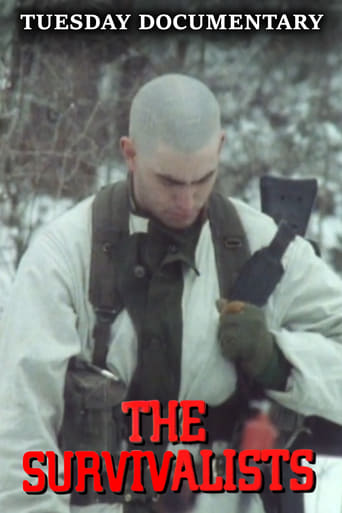
This documentary talks to women training with machine guns, to undergraduates taking courses in How to Stay Alive, to retired generals who run schools for mercenary killers, and to self-appointed clergy who say their native America has "gone soft on the Devil and the Reds" and has become a "Disneyland for Dummies".
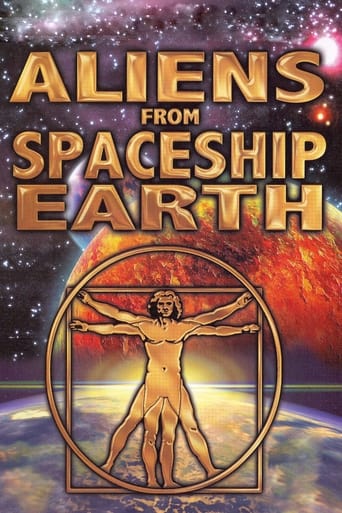
While the aliens in this film may seem to be quite human, one must realize that we're dealing with close encounters of the fourth kind. An inner space journey triggered by the drug culture and rebellion of the 1960s, and the non-violent search for self that continues among people in today's culture. Could this be due to some influence from a higher spiritual consciousness? The world's alien leaders are well represented in this film: Baba Muktananda, Swami Satchidananda, A. C. Bhaktivedanta, Guru Maharaj Ji, Yoga Bhahan, Sri Sathya, Sai Baba, Maharishi Mahesh Yogi, Father Yod, Baba Ram Das, and well-known personalities who present their views on seeking their own terrestrial individuality.
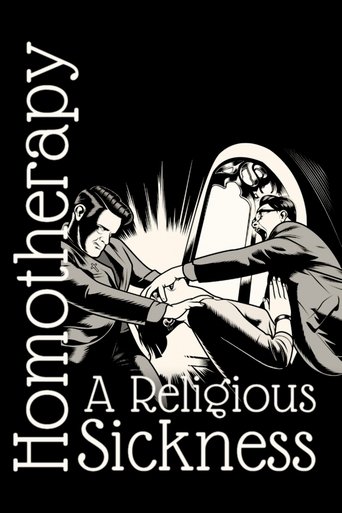
In 2019, some still consider homosexuality as a disease that needs to be cured. Focusing on movements with roots in the United States, which draw on both religion and psychiatry to justify so-called conversion therapies, an investigation into the devastating consequences of certain practices that seem to successfully avoid any control by European public authorities.
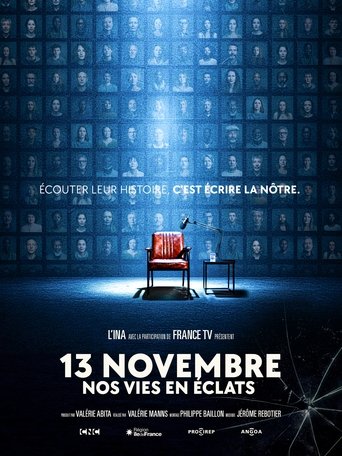
On November 13, 2015, the attacks in Paris and Saint-Denis, carried out by three Islamist commandos and claimed by ISIS, were the deadliest in France since the end of World War II. In the months that followed, the November 13 Program was launched by the CNRS and Inserm to study the construction of individual and collective memory around an event that profoundly marked French society. Today, the testimonies of 27 volunteers—among some 1,000 people—who participated in the study form a mosaic of experiences that shows how trauma extends beyond the immediate circle to permeate the national collective memory.