

Lazebník sevillský
Music
Overview
A popular production from 2021, straight from the historic building of the National Theatre. This star-studded title is directed by experienced director Magdalena Švecová, with soloists, the National Theatre Orchestra and Choir, and conducted by Jaroslav Kyzlink. The Barber of Seville was composed by the then 23-year-old Gioachino Rossini in just three weeks, resulting in a witty and dynamic work that perfectly captures the genre of Italian opera buffa. Rossini based his work on the 1772 play The Barber of Seville, or The Misguided Precaution by French dramatist Pierre-Augustin Caron de Beaumarchais. The two-act opera tells the story of the young love between Rosina and Count Almaviva. However, her guardian Don Bartolo also has his eye on her. Almaviva does not give up and asks the local barber Figaro for help, who comes up with a daring plan to bring the couple to their dream wedding.



Petr Nekoranec
Petr Nekoranec
Count Almaviva
Petr Nekoranec
Count Almaviva
Jiří Sulženko
Jiří Sulženko
Bartolo
Jiří Sulženko
Bartolo
Arnheidur Eiríksdóttir
Arnheidur Eiríksdóttir
Rosina
Arnheidur Eiríksdóttir
Rosina
Adam Plachetka
Adam Plachetka
Figaro
Adam Plachetka
Figaro
Roman Vocel
Roman Vocel
Basilio
Roman Vocel
Basilio
Lucie Hájková
Lucie Hájková
Berta
Lucie Hájková
Berta
Lukáš Bařák
Lukáš Bařák
Fiorello
Lukáš Bařák
Fiorello
Anton Eliaš
Anton Eliaš
Ambrogio
Anton Eliaš
Ambrogio
Jan Líkař
Jan Líkař
Officer
Jan Líkař
Officer
Pavel Vaněk
Pavel Vaněk
Self – Choirmaster
Pavel Vaněk
Self – Choirmaster
Similar Movies
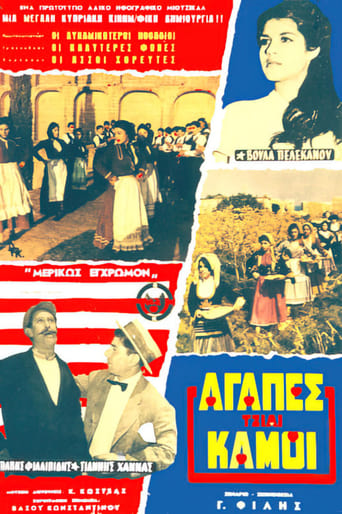
This first film of Cyprus' first director, Giorgios Filis, depicts music and dance customs in the form and style of a folk opera, with traditional Cypriot dances and songs. The film consists of a folkloric inventory based on the folk culture of Cyprus, as well as on similar ritual happenings. The narration and dialogue are entirely in the Cypriot dialect and are characterized by a rhetorical and poetic mood.
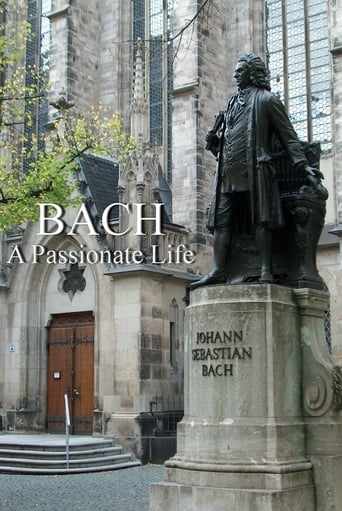
John Eliot Gardiner goes in search of Bach the man and the musician. The famous portrait of Bach portrays a grumpy 62-year-old man in a wig and formal coat, yet his greatest works were composed 20 years earlier in an almost unrivalled blaze of creativity. We reveal a complex and passionate artist; a warm and convivial family man at the same time a rebellious spirit struggling with the hierarchies of state and church who wrote timeless music that is today known world-wide. Gardiner undertakes a 'Bach Tour' of Germany, and sifts the relatively few clues we have - some newly-found. Most of all, he uses the music to reveal the real Bach.
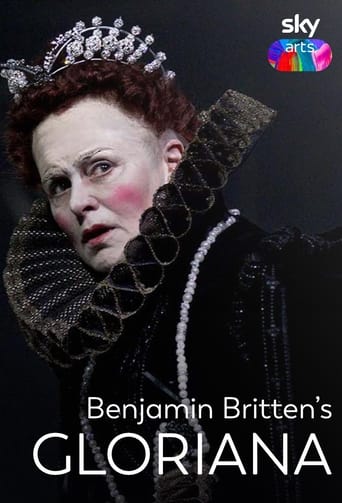
Performed at Madrid's historic Teatro Real in 2018, Ivor Bolton conducts Benjamin Britten's opera based on Lytton Strachey's 1928 Elizabeth and Essex: A Tragic History. In her repeated clashes with the Earl of Essex-a longtime favorite of the queen who was ultimately put to death for treason-Elizabeth I is depicted as flawed and vain, human and sympathetic.

Opera in three acts, a prologue and an epilogue, by Jacques Offenbach (1819-1880), with a libretto in French by Jules Barbier (1825-1901), based on a work that Barbier himself and Michel Carré (1821-1872) had written based on stories by E.T.A. Hoffmann (1776-1822). Approximate duration: 2 h 45 min Recommended for those over 15 years old. The young poet Hoffmann, accompanied by Nicklausse, his alter ego and confidant, is in a tavern next to the theatre where Mozart's Don Giovanni is being performed. During the opera's intermission, some diners arrive at the bar who, upon seeing the poet, encourage him to sing and tell them the story of his famous love affairs. Hoffmann finally gives in and shares with them the stories of Olympia, Antonia and Giulietta. They, absorbed in the poet's stories, remain in the tavern, forgetting about the opera performance.
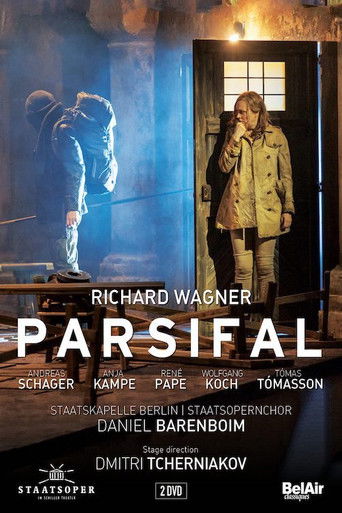
Wagner’s mystic masterpiece Parsifal at the Staatsoper Berlin, staged by Dmitri Tcherniakov and conducted by Daniel Barenboim. Wagner’s last opera, Parsifal is a medieval epic story marked by Christian, Buddhist and esoteric references. It is about redemption and renewal, but this new production by Russian director Dmitri Tcherniakov adds a jarring note : revenge. This “Festival Play for the Consecration of the Stage” is similar to a Medieval epic, a blend of metaphysical dreams and esoteric battles with constant spiritual references. This new production is directed by Dmitri Tcherniakov, conducted by Daniel Barenboim and sung by an international cast of excellent singers: Andreas Schager, Anja Kampe, Wolfgang Koch, René Pape, Tomas Tómasson and Matthias Hölle.
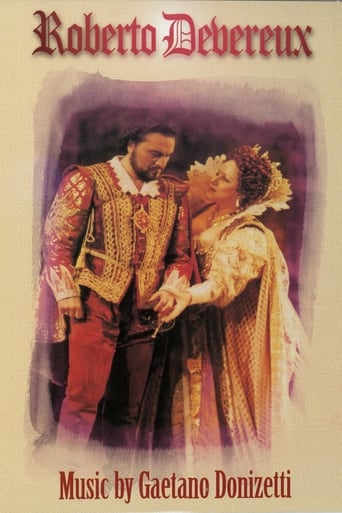
A lyric tragedy in three acts by Gaetano Donizetti, libretto by Salvatore Cammarano. Roberto Devereux was composed in the summer of 1837, the year, according to biographers, in which Donizetti seems to have suffered most, having lost his third son and his adored wife Virginia Vasselli. The opera made its debut at the San Carlo Theatre in Naples on October 28th in the same year and was a great success. The rehearsals of the original performance were postponed for a month due to censorship of the decapitation scene of the leading actor.
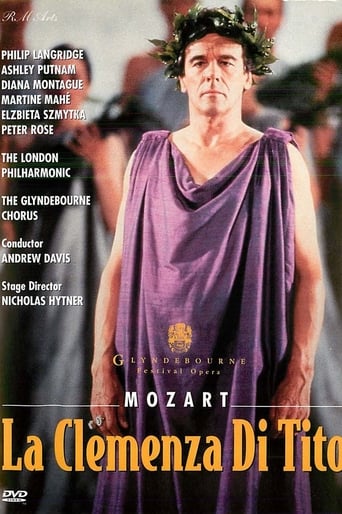
Mozart's La Clemenza Di Tito was originally commissioned to celebrate the coronation of the Emperor Leopold II as King of Bohemia in 1791. This rarely-seen masterpiece was Mozart's last opera. Nicholas Hytner's elegant staging for the Glyndebourne Festival Opera sheds new light on the compelling story of passion that overrides loyalty and integrity that is tested to the extreme.