

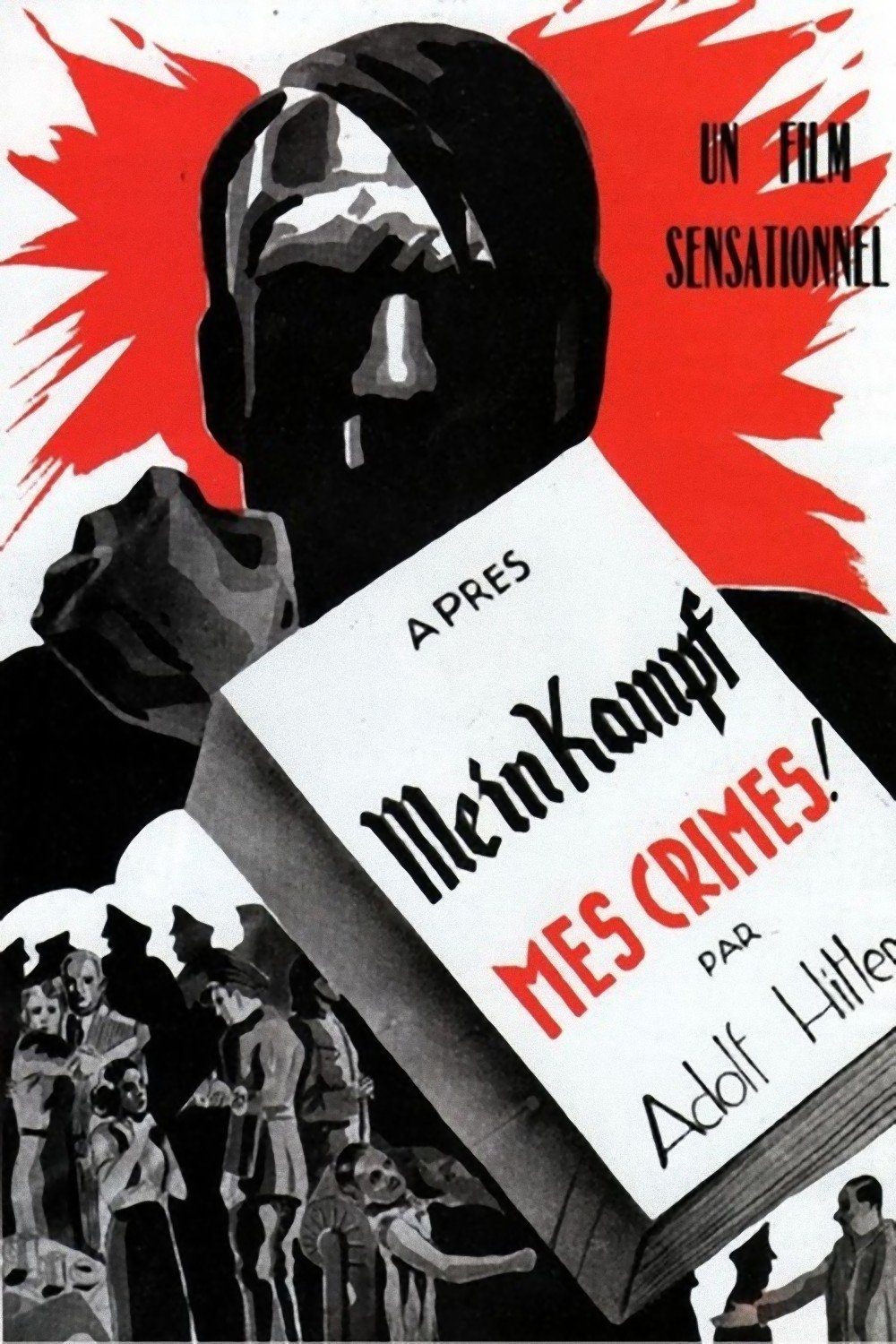
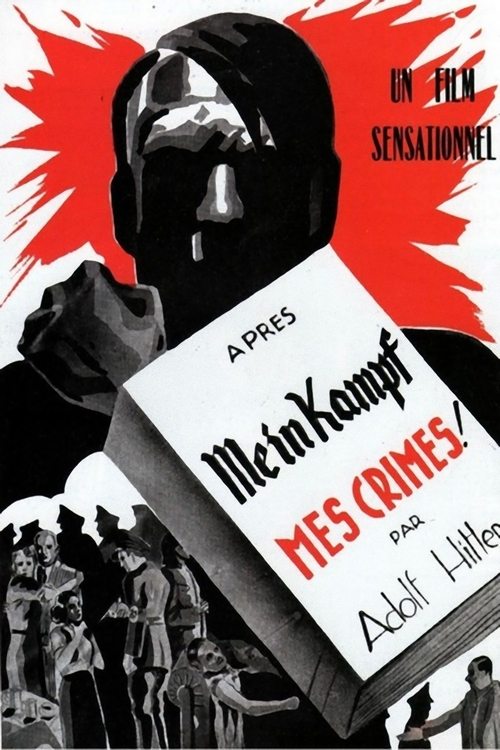
My Crimes After Mein Kampf
Drama · History · War
Overview
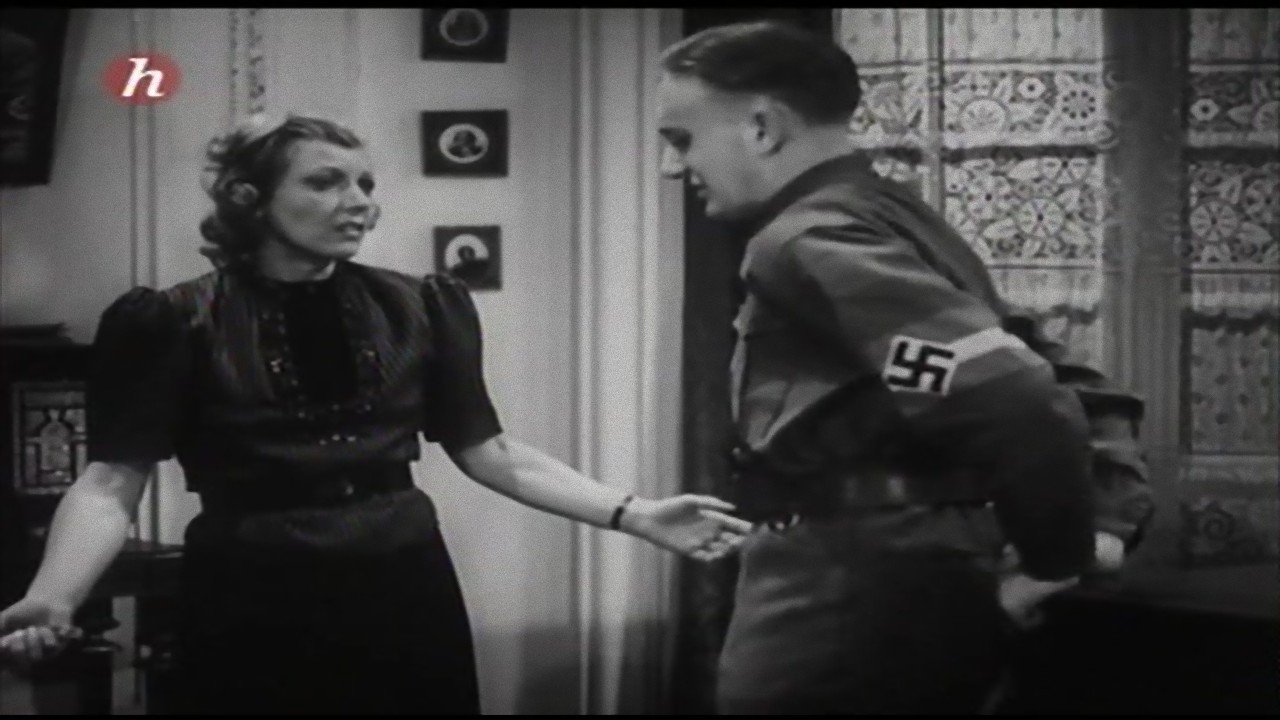
The film shows the seizure of power by the Nazis and Hitler wants a trial, at a time when France has just declared war on Germany (Sept. 3, 1939). Hybrid composition, it alternates originals and reconstructions performed by actors (docudrama). A not-so-subtle condemnation of Hitler, Nazism and Germany by the movie's French film makers, which conveniently makes no mention of how the policies of Great Britain and France created Hitler and allowed him to go as far as he did prior to the beginning of the Second World War.
Top Cast
Roger Karl
Le colonel

Line Noro
Frieda

Alexandre Mihalesco
le tailleur
Jean Heuzé
le capitaine autrichien

Sandra Milovanoff
Madame Schleicher

André Valmy
Ernst
Nicolas Amato
le sous-lieutenant

Simone Bourday
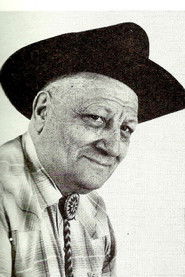
Georges Fronval
Adolf Hitler
Dalmaïs
Engelbert Dollfuss

Alain Cuny
Marinus van der Lubbe (l'incendiaire du Reichstag)
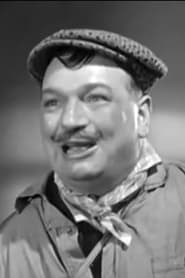
Pierre Labry
Ernst Roehm





Roger Karl
Roger Karl
Le colonel
Roger Karl
Le colonel
Line Noro
Line Noro
Frieda
Line Noro
Frieda
Alexandre Mihalesco
Alexandre Mihalesco
le tailleur
Alexandre Mihalesco
le tailleur
Jean Heuzé
Jean Heuzé
le capitaine autrichien
Jean Heuzé
le capitaine autrichien
Sandra Milovanoff
Sandra Milovanoff
Madame Schleicher
Sandra Milovanoff
Madame Schleicher
André Valmy
André Valmy
Ernst
André Valmy
Ernst
Nicolas Amato
Nicolas Amato
le sous-lieutenant
Nicolas Amato
le sous-lieutenant
Simone Bourday
Simone Bourday
Simone Bourday
Georges Fronval
Georges Fronval
Adolf Hitler
Georges Fronval
Adolf Hitler
Dalmaïs
Dalmaïs
Engelbert Dollfuss
Dalmaïs
Engelbert Dollfuss
Similar Movies
Max is a handsome young man who, after a fateful tryst with a German soldier, is forced to run for his life. Eventually Max is placed in a concentration camp where he pretends to be Jewish because in the eyes of the Nazis, gays are the lowest form of human being. But it takes a relationship with an openly gay prisoner to teach Max that without the love of another, life is not worth living.
In 1943, a group of high school students decide to take action against the Nazi occupying forces. Showing courage and imagination, they manage to blow up the Kommandantur and to release hostages. But after the killing of a German soldier the Nazi police apparatus strikes back. The young resisters are arrested and two of them are condemned to death.
When Ruth's husband dies in New York, in 2000, she imposes strict Jewish mourning, which puzzles her children. A stranger comes to the house - Ruth's cousin - with a picture of Ruth, age 8, in Berlin, with a woman the cousin says helped Ruth escape. Hannah, Ruth's daughter engaged to a gentile, goes to Berlin to find the woman, Lena Fisher, now 90. Posing as a journalist investigating intermarriage, Hannah interviews Lena who tells the story of a week in 1943 when the Jewish husbands of Aryan women were detained in a building on Rosenstrasse. The women gather daily for word of their husbands. The film goes back and forth to tell Ruth and Lena's story. How will it affect Hannah?
Schtonk! is a farce of the actual events of 1983, when Germany's Stern magazine published, with great fanfare, 60 volumes of the alleged diaries of Adolf Hitler – which two weeks later turned out to be entirely fake. Fritz Knobel (based on real-life forger Konrad Kujau) supports himself by faking and selling Nazi memorabilia. When Knobel writes and sells a volume of Hitler's (nonexistent) diaries, he thinks it's just another job. When sleazy journalist Hermann Willié learns of the diaries, however, he quickly realizes their potential value... and Knobel is quickly in over his head. As the pressure builds and Knobel is forced to deliver more and more volumes of the fake diaries, he finds himself acting increasingly like the man whose life he is rewriting. The film is a romping and hilarious satire, poking fun not only at the events and characters involved in the hoax (who are only thinly disguised in the film), but at the discomfort Germany has with its difficult past.
In 1944, in the Belgian - German border, seven German soldiers survive an American attack in the front and lock themselves in a bunker to protect the position. Under siege by the enemy and with little ammunition, they decide to explore underground tunnels to seek supplies and find an escape route. While in the tunnel, weird things happen with the group.
In 1942, the young Jewish girl Misha, her Russian mother Gerusha and her German father Reuven hide from the Germans in a small house in Ardennes, Belgium. Misha is very connected to her mother that advises her that if one day a person comes to her saying "love of my life", she would follow him or her without any question. When her parents are captured by the Nazis, Misha is delivered to a German family and the abusive matriarch gives a bad treatment to the girl. However, she finds support in the family of Ernest and his deranged wife Marthe that supplies groceries to foster family. Misha loves Ernest's dogs and the old man gives a compass to her and tells that her parents have been sent to East to forced labor. When the old couple is denounced for sheltering the girl and arrested by the Germans, Misha flees through the woods heading east. Along her journey seeking out her parents...