

Saskatoon: Land and Growth Control
Documentary
Overview
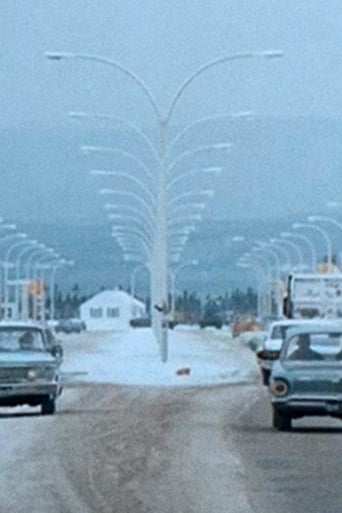
In the city of Saskatoon, Saskatchewan, an effective government policy of controlling land investment prevents speculation, keeps land prices down, and provides a good balance between commercial, residential and public areas.


No cast information.
Similar Movies
Caracas has been changing since the nineteenth century this is a story that tries to explain why the Venezuelan capital is complex, chaotic and fertile. In light of these new evidences, community experiments, social awareness and organization of people, seem to be the necessary ingredients to rescue a metropolis that is not yet completely lost.
Since the end of World War II, one of kind of urban residential development has dominate how cities in North America have grown, the suburbs. In these artificial neighborhoods, there is a sense of careless sprawl in an car dominated culture that ineffectually tries to create the more organically grown older communities. Interspersed with the comments of various experts about the nature of suburbia
Targeted for several failed redevelopment plans dating back to the days of Robert Moses, Willets Point, a gritty area in New York City known as the “Iron Triangle,” is the home of hundreds of immigrant-run, auto repair shops that thrive despite a lack of municipal infrastructure support. During the last year of the Bloomberg Administration, NYC’s government advanced plans for a “dynamic” high-end entertainment district that would completely wipe out this historic industrial core. The year is 2013, and the workers of Willets Point are racing against the clock to forestall their impending eviction. Their story launches an investigation into New York City’s history as the front line of deindustrialization, urban renewal, and gentrification.
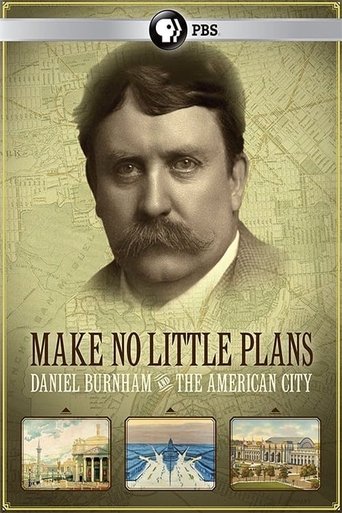
Make No Little Plans: Daniel Burnham and the American City reveals the fascinating life and complex legacy of architect and city planner Daniel Hudson Burnham. In the midst of the late nineteenth century urban disorder, Burnham offered a powerful vision of what a civilized American city could look like, one that provided a compelling framework for Americans to make sense of the world around them. A timely, intriguing story in the American experience, Make No Little Plans explores Burnham's impact on the development of the American city as debate continues today about what urban planning means in a democratic society.

Documentary devoted to the architectural and urban planning designs of Le Corbusier. The architect supports his in-depth reflection on the city and its necessary adaptation to modern life with plans, drawings and images, particularly Paris, whose revolutionary development dreamed of by Le Corbusier is exhibited here. Its first projects will remain at the stage of a model: the modernization plan for the city of Algiers. Some will be created by other architects: Ministry of Education in Rio de Janeiro, UN Palace in New York. From the post-war period in less than 10 years, Le Corbusier created large housing units in Marseille, Nantes, a chapel in Ronchamps, a factory in Saint-Dié, a town in Chandigarh in India. Through diagrams, the architect presents his theory of the "radiant city", the mathematical key modulor of his work as well as his project for reorganizing the countryside, industrial and urban cities into a grouping around a cooperative system.
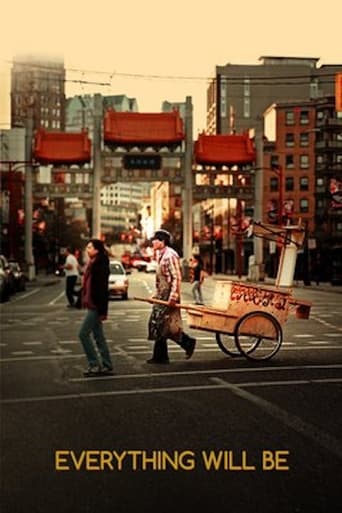
Sundance award-winning director Julia Kwan’s documentary Everything Will Be captures the subtle nuances of a culturally diverse neighbourhood—Vancouver’s once thriving Chinatown—in the midst of transformation. The community’s oldest and newest members offer their intimate perspectives on the shifting landscape as they reflect on change, memory and legacy. Night and day, a neon sign that reads "EVERYTHING IS GOING TO BE ALRIGHT" looms over Chinatown. Everything is going to be alright, indeed, but the big question is for whom?

Jugaad is a Hindi word that can be translated as "innovative or effective solution that bends the rules". It refers to the extreme capacity developed by Mumbai's inhabitants to adapt and get around any type of constraint or obstacle posed by the city's urban structure. In a relatively small piece of land where 21 million people live today, the inhabitants of Mumbai demonstrate great creativity when it comes to managing the spaces (for sale, for prayer, for traffic) and the flows that cross them every day. Without using language, Hong Kong artist Chak Hin Leung brings together in this video a dozen unique situations in which people, animals, vehicles and natural elements intermingle and brush up against each other, without ever colliding.
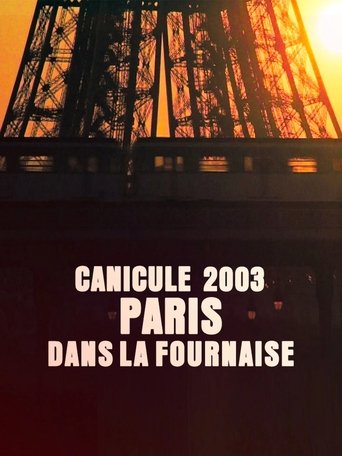
The heatwave of 2003 remains etched in our memories. We remember an angry emergency doctor, crowded hospital corridors, and a health minister in a polo shirt who seemed completely out of touch with reality. Between August 1 and 20, 2003, the heatwave claimed 15,000 lives. One in three victims lived in the Ile-de-France region, which was hardest hit by this deadly heatwave. This tragedy revealed many shortcomings. First, the lack of preparedness of the public authorities to deal with such a health crisis. Second, the way in which the elderly are treated. Climatologists estimate that from 2050 onwards, the summer of 2003 will be the norm. Hyper-urbanization, poor insulation in homes, and a lack of green spaces are all factors that exacerbate the effects of high temperatures.