

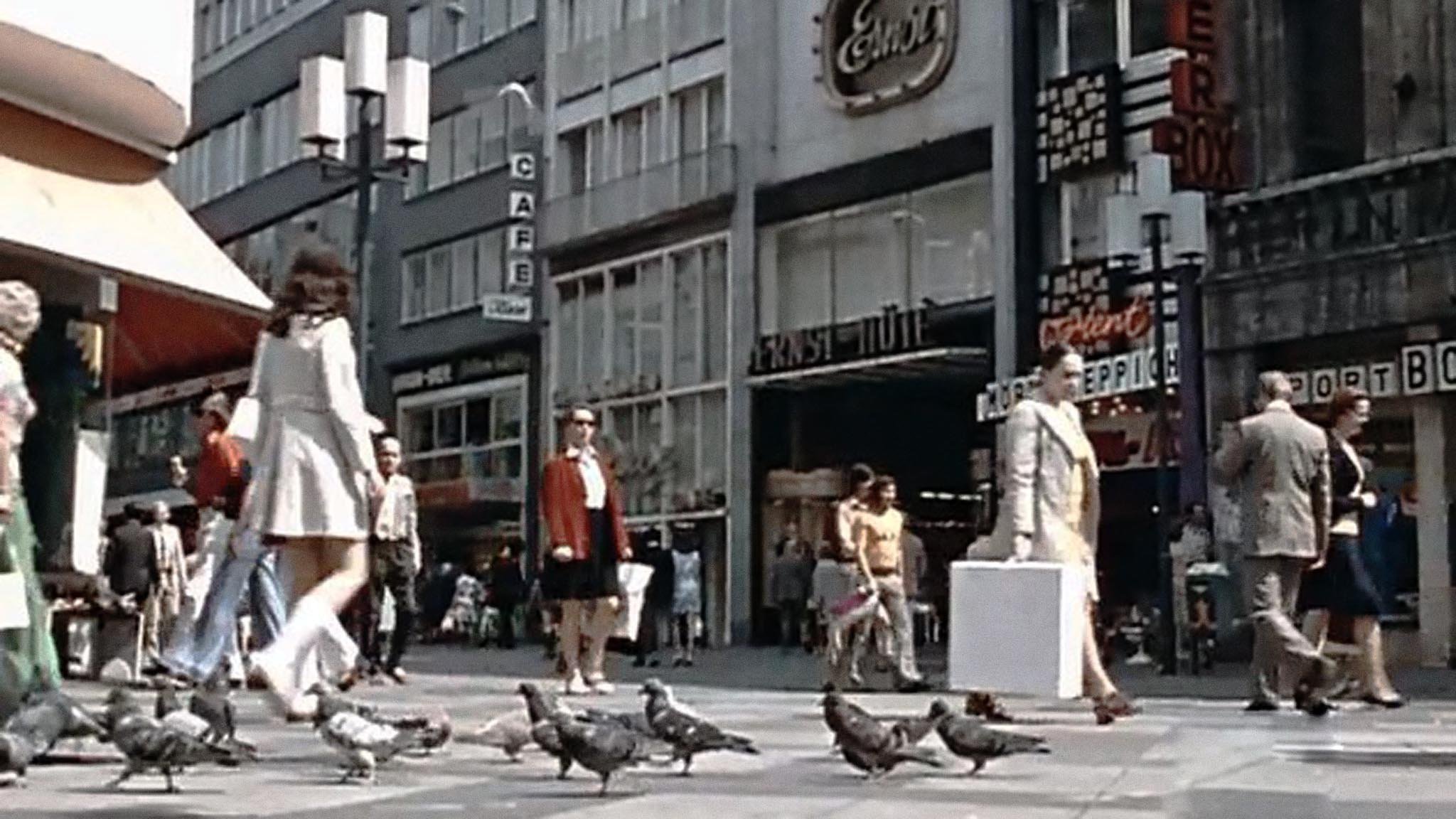
City Center and Pedestrians
Documentary
Overview
This film focuses on the approaches that several cities have taken to one problem. Through various examples, it examines the implications and options for a pedestrian-oriented city core. Ninth in Régnier's ten-film Urba 2,000 series.




No cast information.
Similar Movies
Caracas has been changing since the nineteenth century this is a story that tries to explain why the Venezuelan capital is complex, chaotic and fertile. In light of these new evidences, community experiments, social awareness and organization of people, seem to be the necessary ingredients to rescue a metropolis that is not yet completely lost.
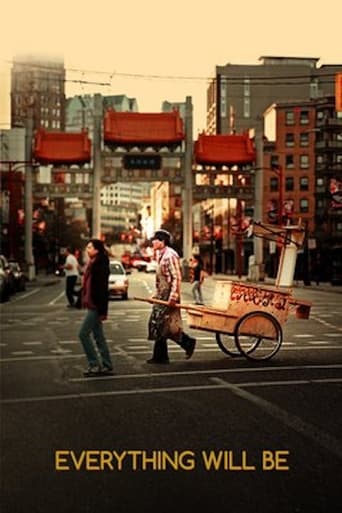
Sundance award-winning director Julia Kwan’s documentary Everything Will Be captures the subtle nuances of a culturally diverse neighbourhood—Vancouver’s once thriving Chinatown—in the midst of transformation. The community’s oldest and newest members offer their intimate perspectives on the shifting landscape as they reflect on change, memory and legacy. Night and day, a neon sign that reads "EVERYTHING IS GOING TO BE ALRIGHT" looms over Chinatown. Everything is going to be alright, indeed, but the big question is for whom?
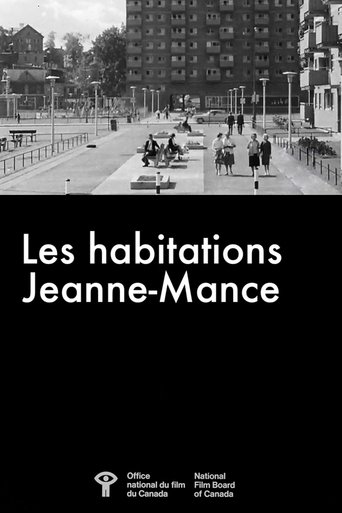
Documentary on the revitalization of a housing complex in a working class neighborhood of Montreal. Modern housing has now replaced the old, sagging and overcrowded houses. There is fresh air, light and hope. Habitations Jeanne-Mance, a bold way to renovate a city: a perfect example of the collaboration that can exist at the federal, provincial and municipal levels.
This short documentary examines the complex range of issues affecting urban transport in developing countries. After examining cost and available technology, as well as the different needs of the industrialized middle class and the urban poor, the film proposes some surprising solutions.
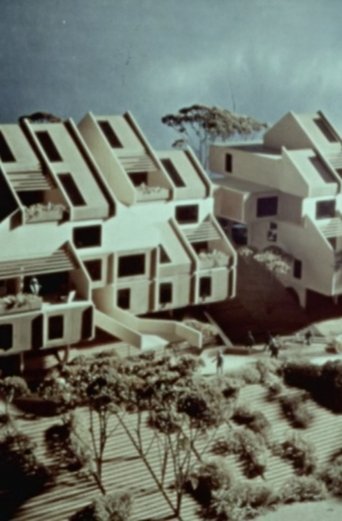
The human side of town planning, as exemplified in Baltimore, Maryland. The Coldspring Project concerned a proposed housing development for lower and upper income levels on a three hundred-acre site adjoining a wildlife sanctuary. The film records the differences aired in meetings of various interest groups that tried to modify the plan according to their views, and the compromise reached, based on plans drawn up by Montréal architect Moshe Safdie.
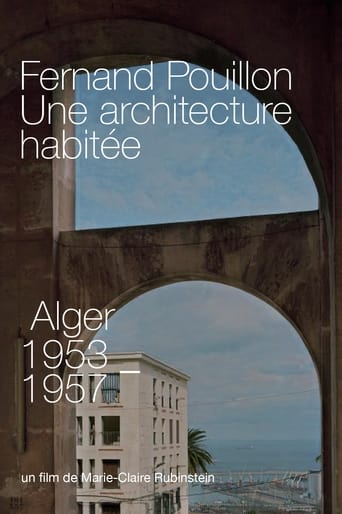
In this documentary, Marie-Claire Rubinstein reveals to us, through the testimonies of the inhabitants who live there, the architectural achievements of the French urban planner Fernand Pouillon in Algiers. In particular the vast complexes of hundreds of social housing units, including the most famous Diar E Saâd (1953), Diar El Mahçoul (1954) and Climat de France (1957). The historical context, during the war of independence is related by the historian Benjamin Stora and Nadir Boumaza. This documentary also evokes the personality of Fernand Pouillon in a post-colonial context.
Documentary devoted to the architectural and urban planning designs of Le Corbusier. The architect supports his in-depth reflection on the city and its necessary adaptation to modern life with plans, drawings and images, particularly Paris, whose revolutionary development dreamed of by Le Corbusier is exhibited here. Its first projects will remain at the stage of a model: the modernization plan for the city of Algiers. Some will be created by other architects: Ministry of Education in Rio de Janeiro, UN Palace in New York. From the post-war period in less than 10 years, Le Corbusier created large housing units in Marseille, Nantes, a chapel in Ronchamps, a factory in Saint-Dié, a town in Chandigarh in India. Through diagrams, the architect presents his theory of the "radiant city", the mathematical key modulor of his work as well as his project for reorganizing the countryside, industrial and urban cities into a grouping around a cooperative system.