

Godard by Godard
Documentary
Overview
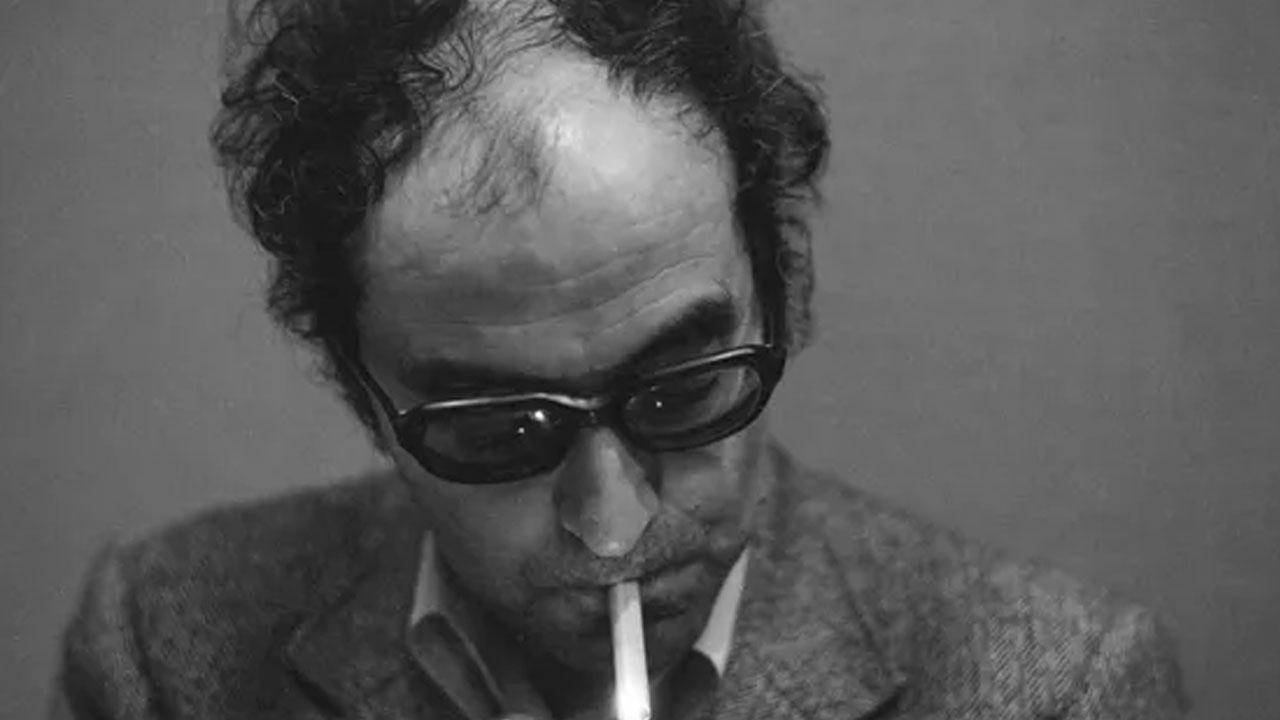
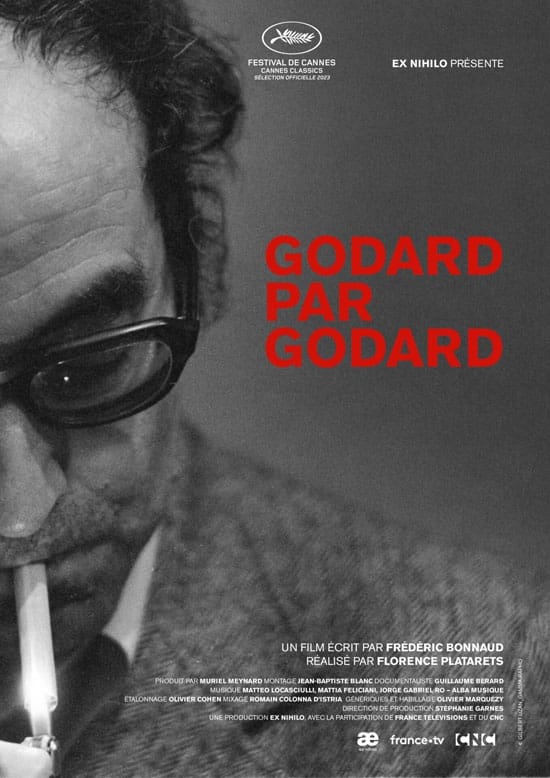
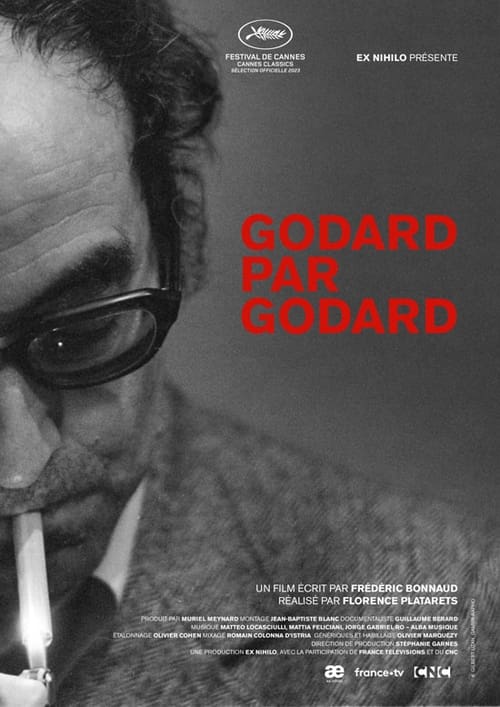
Godard by Godard is an archival self-portrait of Jean-Luc Godard. It retraces the unique and unheard-of path, made up of sudden detours and dramatic returns, of a filmmaker who never looks back on his past, never makes the same film twice, and tirelessly pursues his research, in a truly inexhaustible diversity of inspiration. Through Godard’s words, his gaze and his work, the film tells the story of a life of cinema; that of a man who will always demand a lot of himself and his art, to the point of merging with it.
Top Cast
Jean-Luc Godard
Self (archive footage)
Jean Seberg
Self (archive footage)
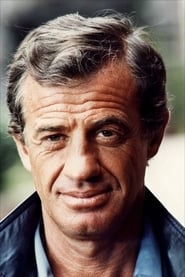
Jean-Paul Belmondo
Self (archive footage)
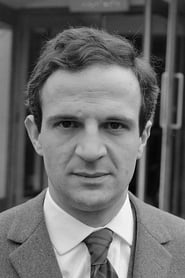
François Truffaut
Self (archive footage)
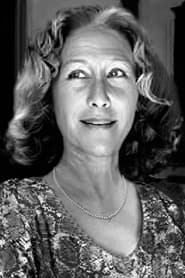
Anne-Marie Miéville
Self (archive footage)
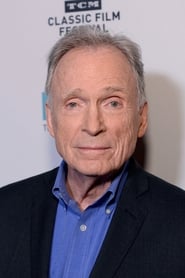
Dick Cavett
Self (archive footage)
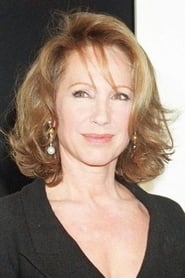
Nathalie Baye
Self (archive footage)
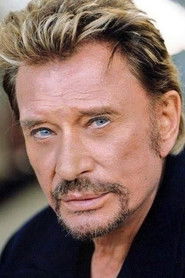
Johnny Hallyday
Self (archive footage)
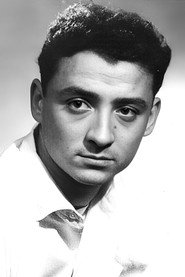
Claude Brasseur
Self (archive footage)
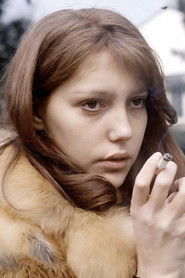
Anne Wiazemsky
Self (archive footage)
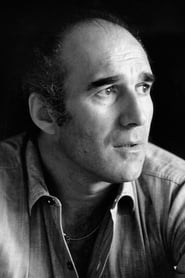
Michel Piccoli
Self (archive footage)

Serge Daney
Self (archive footage)

Jean-Luc Godard
Jean-Luc Godard
Self (archive footage)
Jean-Luc Godard
Self (archive footage)
Jean Seberg
Jean Seberg
Self (archive footage)
Jean Seberg
Self (archive footage)
Jean-Paul Belmondo
Jean-Paul Belmondo
Self (archive footage)
Jean-Paul Belmondo
Self (archive footage)
François Truffaut
François Truffaut
Self (archive footage)
François Truffaut
Self (archive footage)
Anne-Marie Miéville
Anne-Marie Miéville
Self (archive footage)
Anne-Marie Miéville
Self (archive footage)
Dick Cavett
Dick Cavett
Self (archive footage)
Dick Cavett
Self (archive footage)
Nathalie Baye
Nathalie Baye
Self (archive footage)
Nathalie Baye
Self (archive footage)
Johnny Hallyday
Johnny Hallyday
Self (archive footage)
Johnny Hallyday
Self (archive footage)
Claude Brasseur
Claude Brasseur
Self (archive footage)
Claude Brasseur
Self (archive footage)
Anne Wiazemsky
Anne Wiazemsky
Self (archive footage)
Anne Wiazemsky
Self (archive footage)
Similar Movies
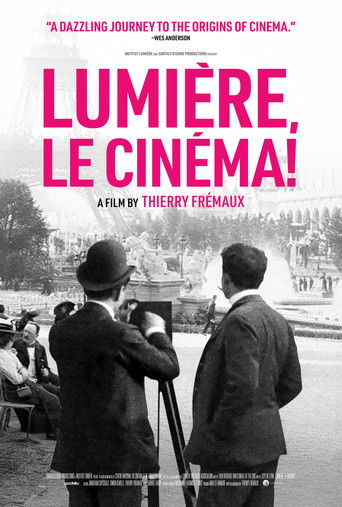
In one of those wonderful coincidences of history, lumière, the French word for “light,” was also the last name of brothers Auguste and Louis, whose brilliant invention, the cinematograph, helped to inaugurate the most beloved art form of the last 130 years. Institute Lumière director Thierry Frémaux uses Lumière, Le Cinema! to guide the viewer through over a hundred shorts—some famous, some forgotten, some never before seen—directed by Lumière and company. In the process, Frémaux illuminates how the brothers employed the camera as a creative instrument as they (and their operators) mastered framing, staging, and subject selection for quotidian and exotic microdocumentaries as well as the first ever fictional motion pictures. The result is not only a glorious re(telling) of the genesis of cinema but a profound meditation on the beautiful world captured—and the mysterious world imagined—by the Lumières.

Claude Lelouch was a Jewish child in occupied France. In this documentary, he talks about the trauma he still feels from that experience, but also how it inspired him to become a filmmaker. The 1940s appear to be a formative period, key to understanding the work and career of this famous director, whose films and life have always been inseparable.
Norwegian researcher Petter Amundsen claims to have deciphered a secret code hidden in legendary playwright William Shakespeare's works that reveals a map leading to the location of certain treasures. British Shakespearean scholar Robert Crumpton embarks on a mission to prove he is spectacularly wrong. (A remake of “Shakespeare: The Hidden Truth,” including new discoveries.)
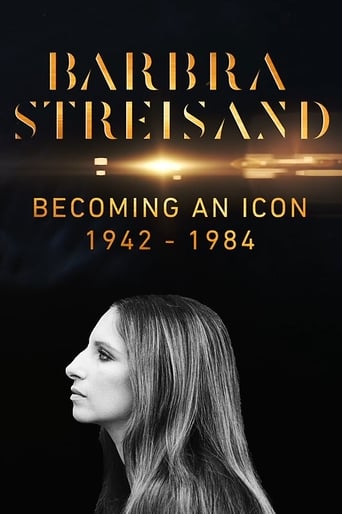
Barbra Streisand grew up in working class Brooklyn, dreaming of escape from her tough childhood. A stellar student, she resisted the pressure to go to college as her sights were firmly set on Broadway. She was determined to become an actress and landed her first role aged 16, but it was two years later, when she started to sing, that her career took off. Subverting stereotypes and breaking glass ceilings, this programme looks at her rise to stardom and the remarkable achievements of her early career.
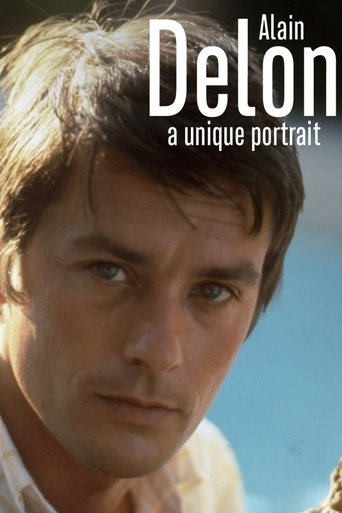
Biography of a star and figure study : This fascinating portrait is for anyone who wants to know more about the man behind the mask. By the end of the film, you will view this famous French icon in a totally different light. Delon speaks in a series of surprising interviews, spanning nearly 50 years.
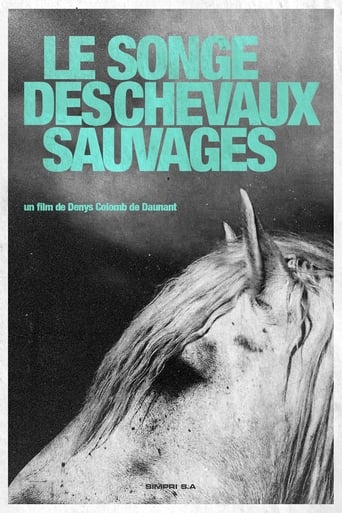
The horses in Denys Colomb Daunant’s dream poem are the white beasts of the marshlands of the Camargue in South West France. Daunant was haunted by these creatures. His obsession was first visualized when he wrote the autobiographical script for Albert Lamorisse’s award-winning 1953 film White Mane. In this short the beauty of the horses is captured with a variety of film techniques and by Jacques Lasry’s beautiful electronic score.