

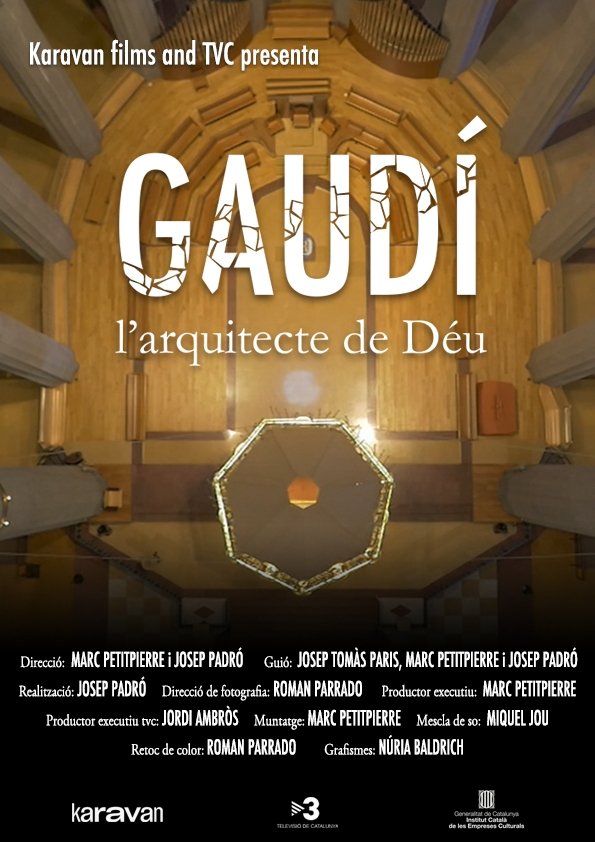
Gaudí, l’arquitecte de Déu
Documentary
Overview
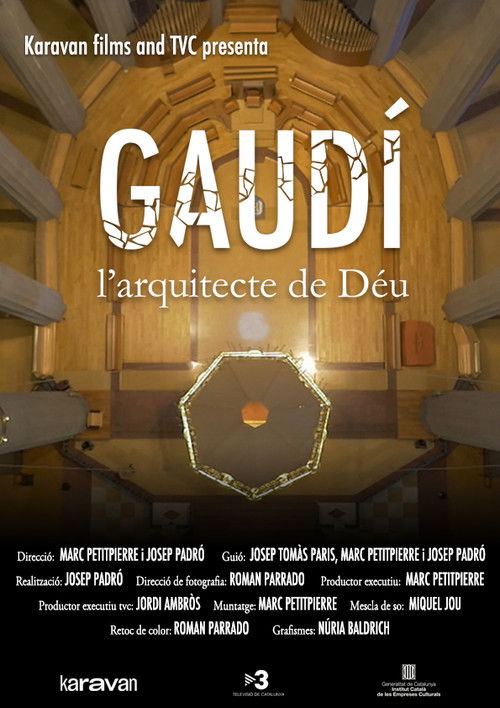
“Gaudí, l’arquitecte de Déu” is a story of faith, of overcoming, about five lay that decided to create an assossiation to demonstrate that Gaudí deserves one of most valuable titles of the Church: beatification. The Pro-Beatification Association of Antoni Gaudí has been working more than 25 years to manage to beatify the architect of Reus, picking up all witnesses and proofs that demonstrate that Gaudi lived like a beatus and, the most difficult part, wiaiting for a miracle to happen attributed do Gaudí himself, an essential condition for his beatification. The documentary will follow this case, showing Gaudi’s life and work from a new outlook, more intimate and linked to spirituality and beliefs of the architect.
Top Cast







José Manuel Almuzara
José Manuel Almuzara
Himself
José Manuel Almuzara
Himself
Josep Maria Tarragona
Josep Maria Tarragona
Himself
Josep Maria Tarragona
Himself
Josep Maria Blanquet
Josep Maria Blanquet
Himself
Josep Maria Blanquet
Himself
Melchor Sánchez de Toca
Melchor Sánchez de Toca
Himself
Melchor Sánchez de Toca
Himself
Valentina Alazraki
Valentina Alazraki
Herself
Valentina Alazraki
Herself
Emiliano Fittipaldi
Emiliano Fittipaldi
Himself
Emiliano Fittipaldi
Himself
Similar Movies
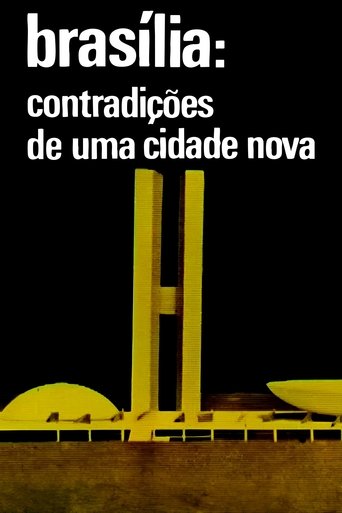
In 1967, de Andrade was invited by the Italian company Olivetti to produce a documentary on the new Brazilian capital city of Brasília. Constructed during the latter half of the 1950s and founded in 1960, the city was part of an effort to populate Brazil’s vast interior region and was to be the embodiment of democratic urban planning, free from the class divisions and inequalities that characterize so many metropolises. Unsurprisingly, Brasília, Contradições de uma Cidade Nova (Brasília, Contradictions of a New City, 1968) revealed Brasília to be utopic only for the wealthy, replicating the same social problems present in every Brazilian city. (Senses of Cinema)
The architectural plans for Berlin from 1938 are used as an example to illustrate the fascist claim to power and its aesthetic effect. The basis for this was the "General Building Inspection" under the direction of Albert Speer, whose enormous projects are illustrated by planning models and archive photographs.
In the United States, there is an active shooter incident every 12 days. In Memoriam shows the wrenching perspective of wounded survivors, grieving relatives, and heroes of the horrific attacks at the Las Vegas Route 91 Harvest Music Festival, the Sutherland Springs Baptist Church in Texas, and the Marjory Stoneman Douglas High School in Parkland, Florida.
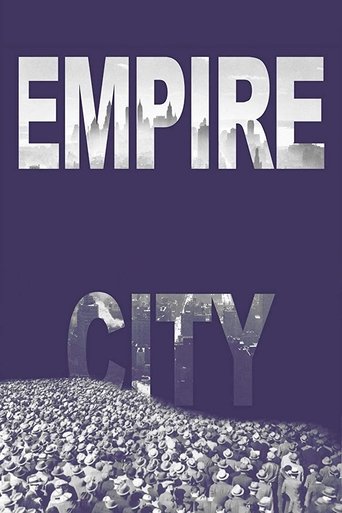
A film essay contrasting the modern metropolis with its "golden age" from 1830-1930, with the participation of some of New York's leading political and cultural figures. Made at a time when the city was experiencing unprecedented real estate development on the one hand and unforeseen displacement of population and deterioration on the other. Empire City is the story of two New Yorks. The film explores the precarious coexistence of the service-based midtown Manhattan corporate headquarters with the peripheral New York of undereducated minorities living in increasing alienation.
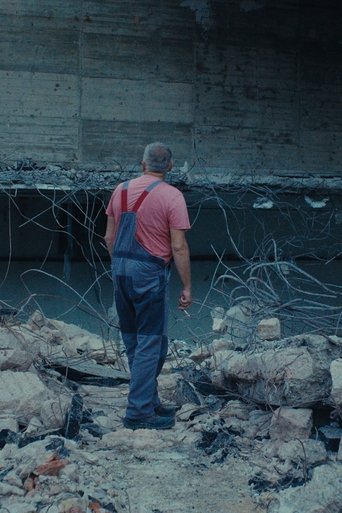
A Berlin street corner is slowly changing: an aging supermarket turns into a construction site and finally a new building. People restock shelves, demolish walls, take breaks and count money. Those who work here participate in the making and unmaking of the place. How does it shape the conditions of their labor? Between supermarket aisles, construction scaffolding and exposed concrete, different versions begin to overlap. Repetitions appear like echoes between worlds, both playful and eerie.
In the West Jutland village of Hanning, there is a small indremissionary community. How everyday life unfolds in such a religious environment is depicted through participation in church services, meetings in the mission house and visits to the villagers. They talk about temptations, their relationship with God and passing on their faith to the next generation.
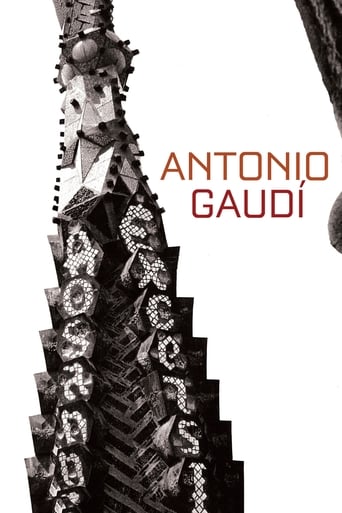
Catalan architect Antonio Gaudí (1852-1926) designed some of the world's most astonishing buildings, interiors, and parks; Japanese director Hiroshi Teshigahara constructed some of the most aesthetically audacious films ever made. With camera work as bold and sensual as the curves of his subject's organic structures, Teshigahara immortalizes Gaudí on film.