

Plató
Documentary · Family














No cast information.
Similar Movies
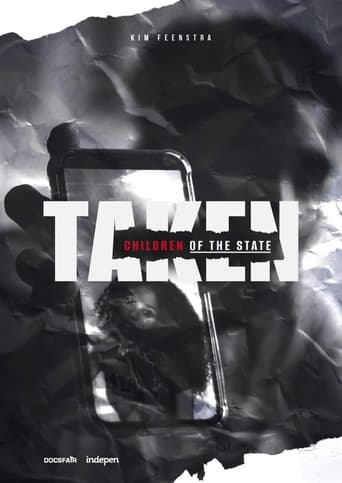
On June 12, 2019, the Committee to Investigate Violence in Youth Care presented its final report. The conclusions were startling. Kim Feenstra set out to find out what progress has been made within the Youth Care system since then and ended up in a circle of grief and pain dominated by money, power and powerlessness. In her search, Kim Feenstra spoke to many people involved. The stories can be described as downright shocking. In many cases Youth Care appears to act as a revenue model that is exploiting parents and children. The complex system has only one entrance, but the exit is obstructed by all stakeholders who want to maintain their revenue model. The people who really matter, the parents and children, encounter a power block of inhuman proportions. A system dominated by money, power and powerlessness.
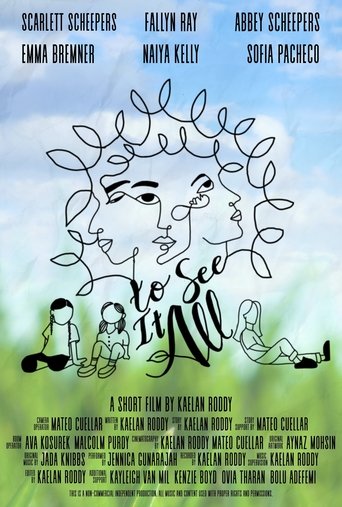
Three girls—Emma, Kenzie, and Kayleigh—spend their childhood and adolescence beneath a beautiful tree. Shifting between memories of the past and a fractured present, secrets are revealed as the girls confront the truth that once held them together, but now threatens to tear them apart. Childhood innocence and the harsh realities of the real world collide in Kaelan Roddy’s "To See It All."

The title of this video, taken from the texts of the architect Kengo Kuma, suggests a way of looking at everything as “interconnected and intertwined” - such as the historical and the present and the tool and the artifact. Images and representations of two structures in the Portland Metropolitan Area that have direct and complicated connections to the Chinookan people who inhabit(ed) the land are woven with audio tapes of one of the last speakers of chinuk wawa, the Chinookan creole. These localities of matter resist their reduction into objects, and call anew for space and time given to wandering as a deliberate act, and the empowerment of shared utility.
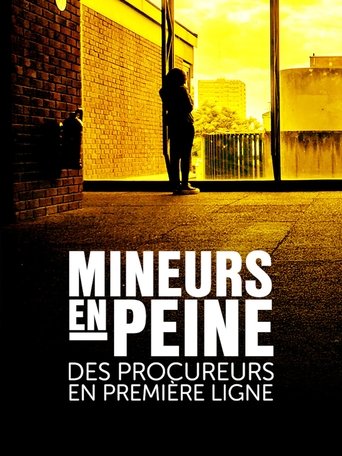
At DIFAJE, the Family and Youth Affairs Division of the Bobigny Court, the duties of young prosecutors are the same, with one exception: they deal with minors who are either victims or perpetrators of crimes. For the latter, the prosecutor is the first person they deal with in the legal system, their first point of contact. He or she is the one who gives society's initial response to a young person whose future is already uncertain. Between prevention and punishment, the magistrate's role is a delicate one. He or she must combine authority with education. He or she must deal with the reality of a complex environment and with the differences and vulnerabilities of each individual.