

Esperanto
Documentary
Overview
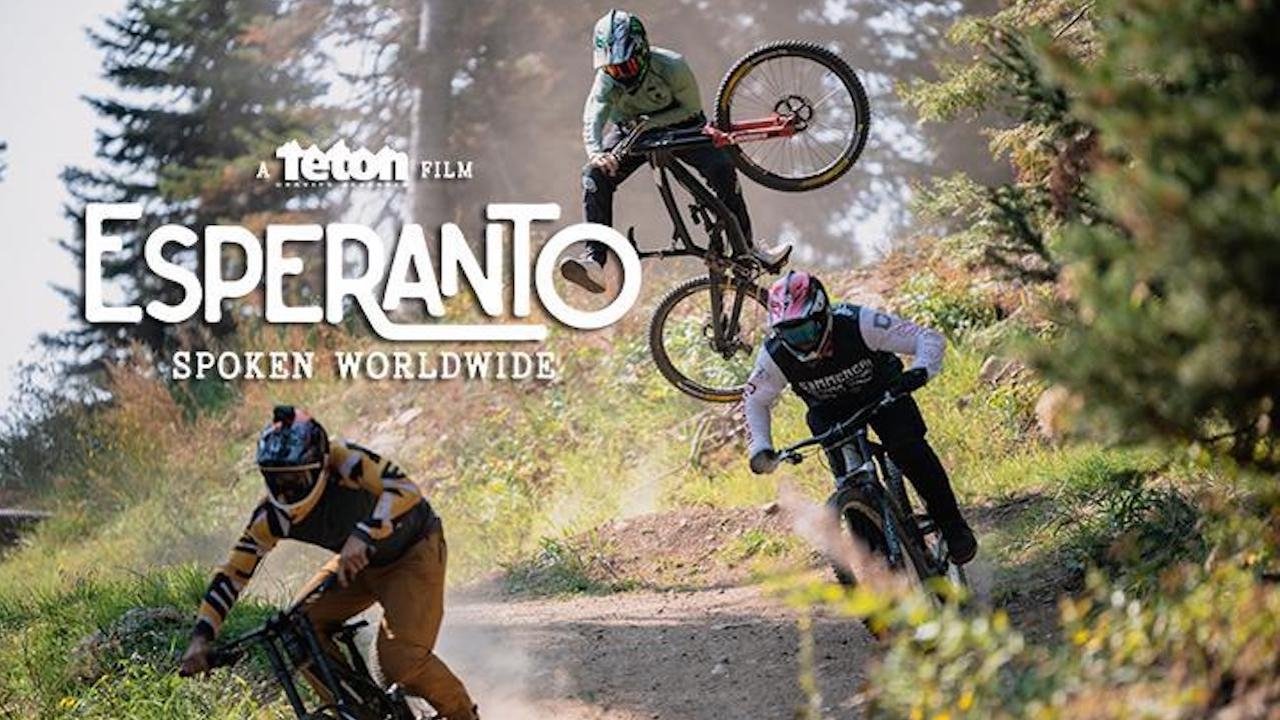
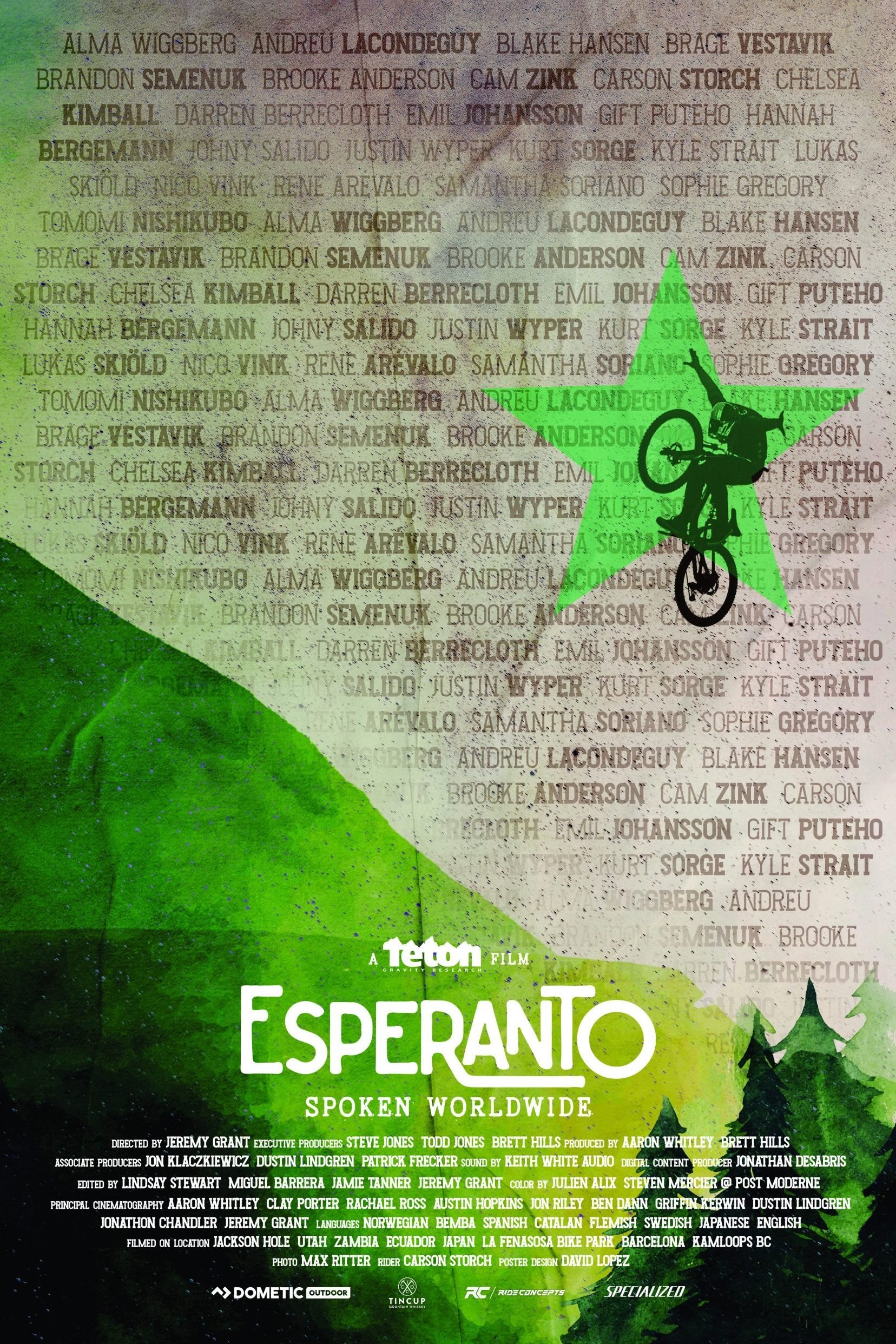
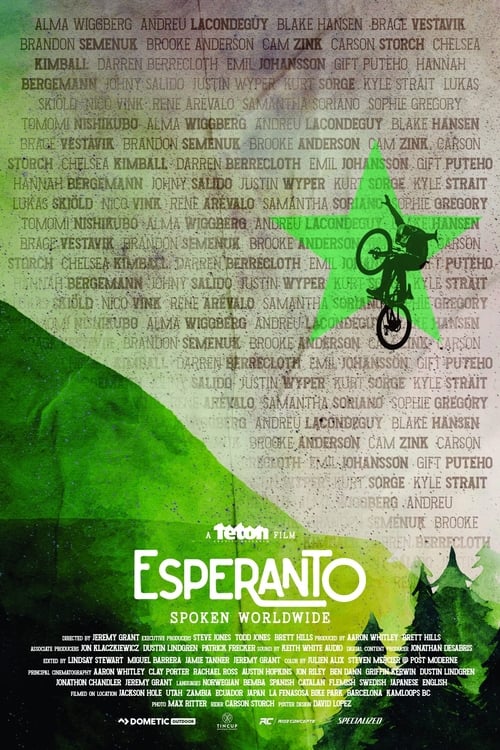
Esperanto is TGR’s latest action-packed mountain bike film with an added twist. Mixing the rock stars of the sport with a cast of unknown and up-and-coming heroes, the film explores how we share our dreams through a universal two-wheeled language no matter what our native tongue may be. The sacred ritual of the ride might sound different all across the world – whether it’s a full-face getting pulled down to drop into a big jump line or wheeling a beat-up bike out of a mud hut to pedal to school – but it’s a universal process no matter what language we speak. There are more than 7000 languages spoken on Earth. In 1887 a Polish-Jewish doctor named L.L. Zamenhof created a new one, a universal second language based on a combination of existing widely-spoken European languages. Its goal, to help bring people together from different ideologies, beliefs, and nations and ultimately to help end war. The language was called Esperanto. Translated into English it means ‘one who hopes.’





Alma Wiggberg
Alma Wiggberg
Self
Alma Wiggberg
Self
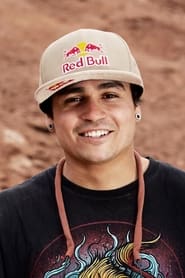
Andreu Lacondeguy
Andreu Lacondeguy
Self
Andreu Lacondeguy
Self
Blake Hansen
Blake Hansen
Self
Blake Hansen
Self
Brage Vestavik
Brage Vestavik
Self
Brage Vestavik
Self

Brandon Semenuk
Brandon Semenuk
Self
Brandon Semenuk
Self
Brooke Anderson
Brooke Anderson
Self
Brooke Anderson
Self
Cam Zink
Cam Zink
Self
Cam Zink
Self
Carson Storch
Carson Storch
Self
Carson Storch
Self
Chelsea Kimball
Chelsea Kimball
Self
Chelsea Kimball
Self
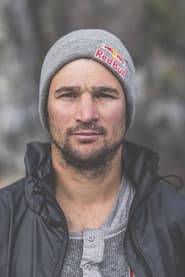
Darren Berrecloth
Darren Berrecloth
Self
Darren Berrecloth
Self
Similar Movies
Faced with a traumatic injury that renders you permanently disabled; how would you reinvent yourself? Full Circle tells the story of Trevor Kennison and Barry Corbet’s shared resiliency and refusal to let their passion for life be limited by Spinal Cord Injury. It is an unblinking examination of the challenges of Spinal Cord Injury, and a celebration of the growth that such tragedy can catalyze.
Skier Kai Jones shattered both his legs in a fall from a cliff. The teenager experiences a brutal rescue operation, a difficult operation and life-threatening anemia. The movie shows Kai Jones' fight for survival. It is a story about adversity and how it strengthens one's own resilience.
Universally recognized as the greatest female skier ever, Lindsey Vonn went on a remarkable journey that was defined by unexpected twists and turns and dramatic peaks and valleys in its final chapter. LINDSEY VONN: THE FINAL SEASON intimately recounts the iconic skier’s last competitive campaign while looking back on her transcendent career, from child prodigy to decorated Olympian to global superstar.
On a winter weekend, Oslo has much to offer, from skiing trips and cabins in the surrounding forests to urban nightlife in the city center // Oslofilm was a series of public information films about life in and around Oslo, produced between 1940 and 1980. Funded by the state, the films offer valuable insight into postwar Norwegian society. A wide range of Norwegian filmmakers contributed to the productions, resulting in a rich variety of styles and expressions. Several of the films also possess notable cinematic qualities, standing out as more than just informational material. The Oslofilms represent a unique and important chapter in Norwegian film history.
Film about the 10th Olympic Games in Grenoble in 1968. Using a subjective camera, Ertaud and Languepin take the pulse of the Games, cutting out the eyes and slowing down the movement when necessary. The dominant figure at the Grenoble Winter Games is Frenchman Jean-Claude Killy, whose three gold medals matched Toni Sailer's 1956 feat. The filmmakers bet on his winning streak, and include commentary from him as he prepares for each race. Another athlete, Marielle Goitschel, is treated insightfully on screen and wins the women's slalom. Ice dancing fans will appreciate the coverage of winner Oleg Protopopov and his partner Ludmila Belousova. President Charles De Gaulle was present for the spectacular Opening Ceremony.
Ever since the ice age, skis have been an irreplaceable tool for humans, but due to global tendencies skiing has changed a lot taking us to – urban skiing. The main character reflects the events that skiers have to face in their quest for adventure, overcoming the boundaries and stereotypes set in society. The film is a peculiar mixture of genres, which allows the boundaries of reality and fiction to merge. Storyline is dominated in two sides – a space where the main character lives and the other 50 locations over Latvia and Estonia. Movie surprises the viewer with breath-taking urban skiing action. The filming is done under challenging circumstances - pedestrians, police...., and the operators mostly have only one chance to capture the frame.
Adventuring to undiscovered peaks together, plotting midnight-raids on inner-city handrails, lapping your home run until that last ray of sunshine disappears behind a distant ridge - Skiing is Collective. Some call it a tribe mentality, others call it a shared sense of purpose. This film is our definition, written by a diverse team, each with their own ideas, their own forms of expression. "The Collective" is more than a sum of its parts. No matter who you are or where you come from - it feels good to be part of something special.
Nikolai and Vegard were childhood friends who spent their free time on the ski slopes. Now, Nikolai has become a professional skier, while Vegard lives in caves and trains obsessively to complete a perilous and physically demanding ski tour. This is a story about friendship and setting ambitious goals.
The mountain reveals honesty to oneself like nothing else. Dopamine, inner peace, or simply being unreachable are all understandable reasons why someone seeks the summit. With personal stories and individual connections to the mountains, "Sariri" brings together five protagonists from Switzerland, Austria, Bolivia, and Peru. Descending steep walls on skis in the Andes at over 6,000 meters pushes the group to their limits. With a first descent of the 6074-meter high "Chachacomani" in Bolivia, the mountaineers consciously take certain risks. The invisible power of altitude presents a significant obstacle to overcome. The film explores the question of why mountains play such an important role in some lives and why these cloud-catchers made of stone, snow, and ice are the closest place to heaven. The willingness to undertake long journeys and the mountain itself are what shapes "Sariri."