

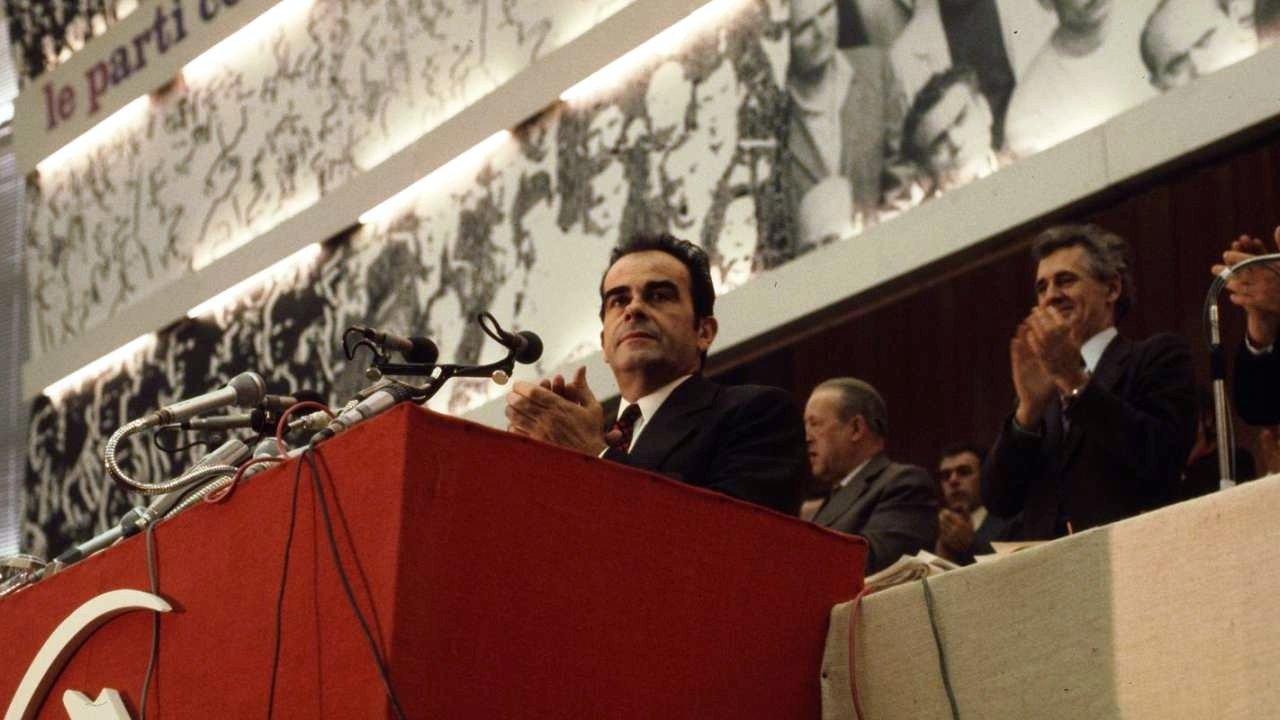
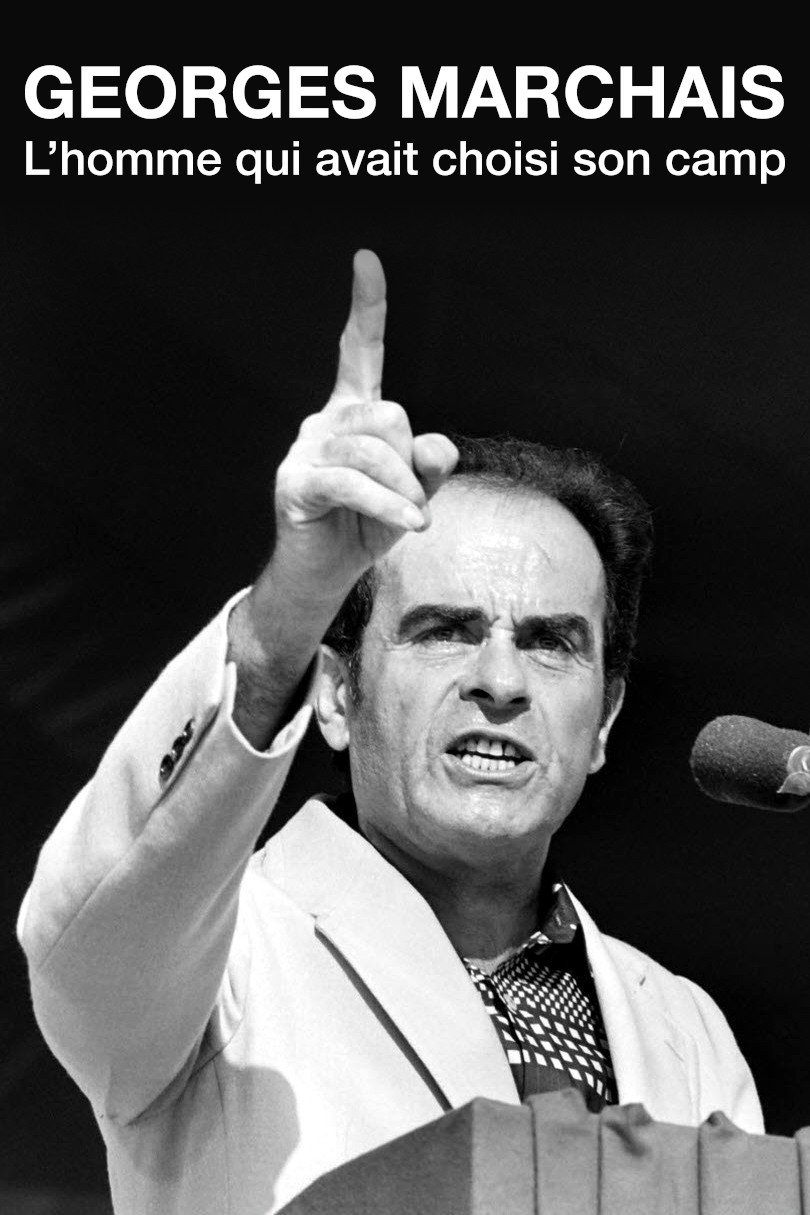
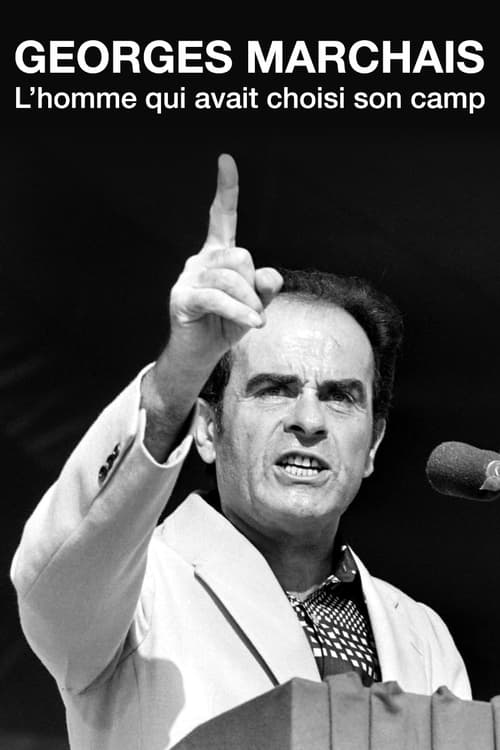
Georges Marchais, l’homme qui avait choisi son camp
Documentary · TV Movie · History
Overview
Both a political narrative and a psychological reflection, this documentary explores the personal journey of a quarry worker’s son from Calvados who rose to become the last great figure of the French Communist Party. It delves into the logic that shaped his path and his lasting impact on France’s history.









Gérard Miller
Gérard Miller
Narrator (voice)
Gérard Miller
Narrator (voice)
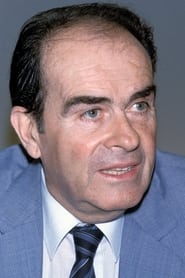
Georges Marchais
Georges Marchais
Self (archive footage)
Georges Marchais
Self (archive footage)
Michèle Guion
Michèle Guion
Self
Michèle Guion
Self
Olivier Marchais
Olivier Marchais
Self
Olivier Marchais
Self
Monique Léri
Monique Léri
Self
Monique Léri
Self
Thomas Hofnung
Thomas Hofnung
Self
Thomas Hofnung
Self
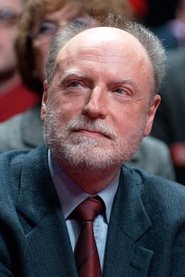
Francis Wurtz
Francis Wurtz
Self
Francis Wurtz
Self
Jean-François Gau
Jean-François Gau
Self
Jean-François Gau
Self
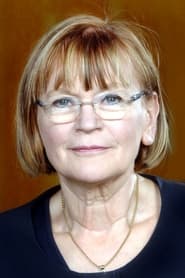
Marie-George Buffet
Marie-George Buffet
Self
Marie-George Buffet
Self
Julian Mischi
Julian Mischi
Self
Julian Mischi
Self
Similar Movies
On the outskirts of Augusta lives Orazio: a mechanic by vocation. Due to countless misadventures he cannot open a workshop. To give vent to his anger, he transforms mopeds and scooters into “glittered motorized umbrellas.” Glitter helmets and hyper-colored decorations dress him up; thus begins his passion for “light” understood as a superior force.
The Spanish journalist Manuel Chaves Nogales (1897-1944) was always there where the news broke out: in the fratricidal Spain of 1936, in Bolshevik Russia, in Fascist Italy, in Nazi Germany, in occupied Paris or in the bombed London of World War II; because his job was to walk, see and tell stories, and thus fight against tyrants, at a time when it was necessary to take sides in order not to be left alone; but he, a man of integrity to the bitter end, never did so.
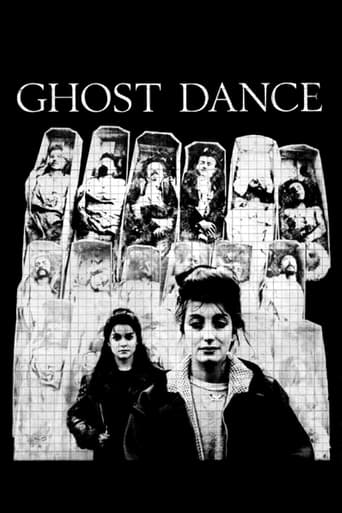
Through the experiences of two women in Paris and London, Ghost Dance offers an analysis of the complexity of our conceptions of ghosts, memory and the past. The film focuses on the French philosopher Jacques Derrida, who observes, 'I think cinema, when it's not boring, is the art of letting ghosts come back.' He also says that 'memory is the past that has never had the form of the present.'
A film about the historical uprising of the seamen in Kiel: During the Russian October Revolution of 1917, German and Russian soldiers start to solidarize with each other. By disarming the officers, machinist Henne Lonke and stoker Jens Kasten prevent the attack on a Russian freighter. When German admiralty gives out orders for operation "Nibelungen", which would lead the German fleet into a suicidal attack against England and quell the revolutionary spirit, seamen and soldiers from different political backgrounds unite in protest.
Assigned to oversee the development of the atomic bomb, Gen. Leslie Groves is a stern military man determined to have the project go according to plan. He selects J. Robert Oppenheimer as the key scientist on the top-secret operation, but the two men clash fiercely on a number of issues. Despite their frequent conflicts, Groves and Oppenheimer ultimately push ahead with two bomb designs — the bigger "Fat Man" and the more streamlined "Little Boy."