

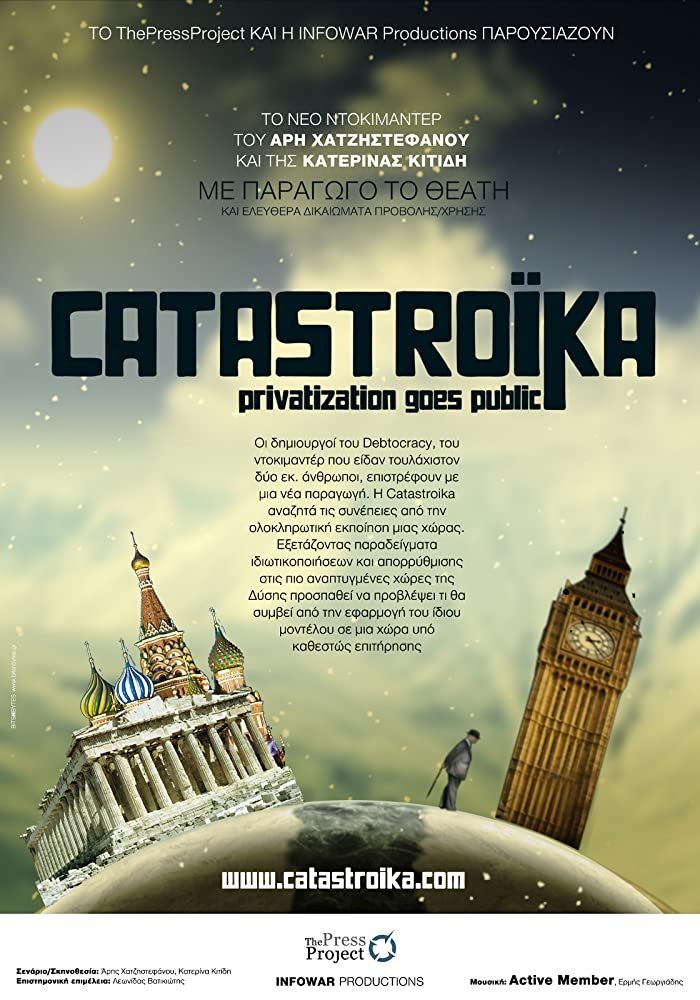
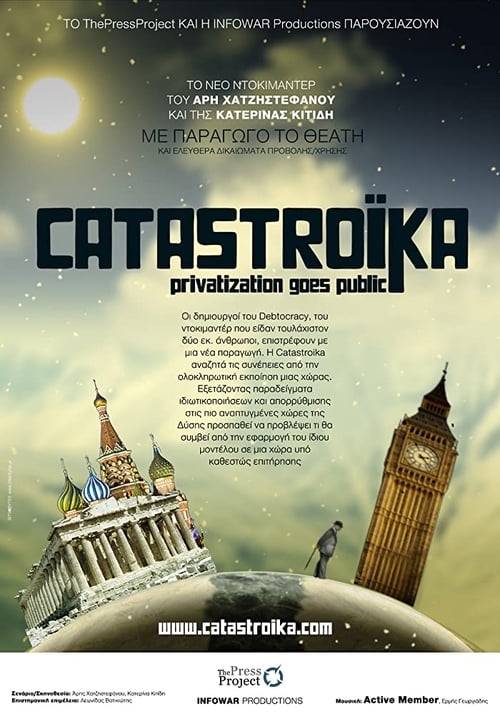
Catastroika
Documentary
Overview
The creators of Debtocracy, analyze the shifting of state assets to private hands. They travel round the world gathering data on privatization and search for clues on the day after Greece's massive privatization program.
Dean Baker
Dean Baker
Self
Dean Baker
Self
Alex Callinicos
Alex Callinicos
Self
Alex Callinicos
Self
Costas Douzinas
Costas Douzinas
Self
Costas Douzinas
Self
Ben Fine
Ben Fine
Self
Ben Fine
Self
Naomi Klein
Naomi Klein
Self
Naomi Klein
Self
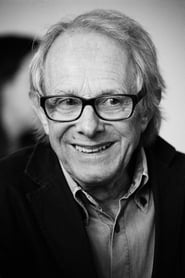
Ken Loach
Ken Loach
Self
Ken Loach
Self
Greg Palast
Greg Palast
Self
Greg Palast
Self
Dani Rodrik
Dani Rodrik
Self
Dani Rodrik
Self
Luis Sepulveda
Luis Sepulveda
Self
Luis Sepulveda
Self

Slavoj Žižek
Slavoj Žižek
Self
Slavoj Žižek
Self
Similar Movies
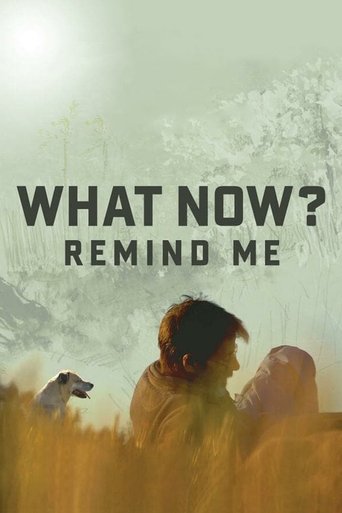
Joaquim Pinto has been living with HIV and VHC for almost twenty years. “What now? Remind Me” is the notebook of a year of clinical studies with toxic, mind altering drugs as yet unapproved. An open and eclectic reflection on time and memory, on epidemics and globalization, on survival beyond all expectations, on dissent and absolute love. In a to-and-fro between present and past memories, the film is also a tribute to friends departed and those who remain.
Study of the relationship between observer and landscape in the contemplative experience. The view building the landscape from the necessary distance. The delimitation of its borders against the total continuum of nature. The observer immersed in the path of his gaze across the landscape. Resting the gaze in the details that make the globallity. The view selecting the space included as a landscape.
A documentary portrait of Tiit Pääsuke, the most prominent painter in contemporary Estonia. Artist per excellence, creator of the imaginary picture-landscapes, a charming person, adorer of the woman’s beauty, gentleman and a colonel in local whisky club - Tallinn Uisge Beatha Club. “When painting, I compose the details of my pictures, my human models not as traditional painter, but more like film or theatre director works with actors, my compositions are as performances, theatrical happenings”. - Tiit Pääsuke

In 1931 the rains stopped and the "black blizzards" began. Powerful dust storms carrying millions of tons of stinging, blinding black dirt swept across the Southern Plains — the panhandles of Texas and Oklahoma, western Kansas, and the eastern portions of Colorado and New Mexico. Topsoil that had taken a thousand years per inch to build suddenly blew away in only minutes. One journalist traveling through the devastated region dubbed it the "Dust Bowl." This American Experience film presents the remarkable story of the determined people who clung to their homes and way of life, enduring drought, dust, disease — even death — for nearly a decade. Less well-known than those who sought refuge in California, typified by the Joad family in John Steinbeck's "The Grapes of Wrath," the Dust Bowlers who stayed overcame an almost unbelievable series of calamities and disasters.
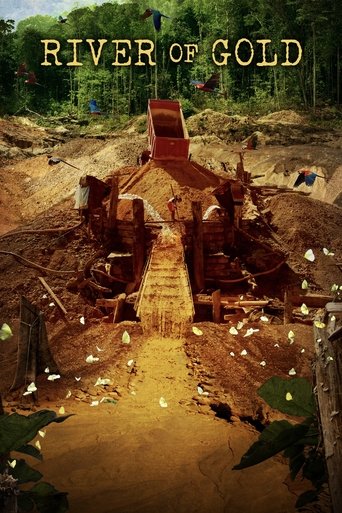
Narrated by Academy Award winners Sissy Spacek and Herbie Hancock, River of Gold is the disturbing account of a clandestine journey into Peru's Amazon rainforest to uncover the savage unraveling of pristine jungle. What will be the fate of this critical region of priceless biodiversity as these extraordinarily beautiful forests are turned into a hellish wasteland?
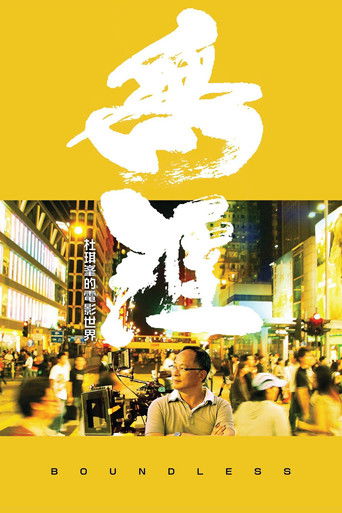
As Hong Kong's foremost filmmaker, Johnnie To himself becomes the protagonist of this painstaking documentary exploring him and his Boundless world of film. A film student from Beijing and avid Johnnie To fan, Ferris Lin boldly approached To with a proposal to document the master director for his graduation thesis. To agreed immediately and Lin's camera closely followed him for over two years, capturing the man behind the movies and the myths. The result is Boundless, a candid profile of one of Hong Kong's greatest directors and a heartfelt love letter to Hong Kong cinema.
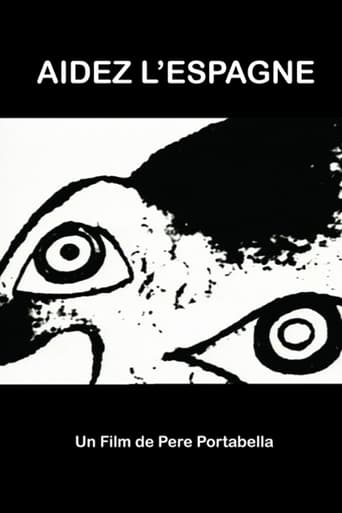
The Colegio de Arquitectos de Catalunya commissioned Pere Portabella to make this film for the Joan Miró retrospective exhibit in 1969. There were heated discussions on whether it would be prudent to screen the film during the exhibit. Portabella took the following stance: "either both films are screened or they don't screen any" and, finally, both Miro l'Altre and Aidez l'Espagne were shown. The film was made by combining newsreels and film material from the Spanish Civil War with prints by Miró from the series "Barcelona" (1939-1944). The film ends with the painter's "pochoir" known as Aidez l'Espagne.