

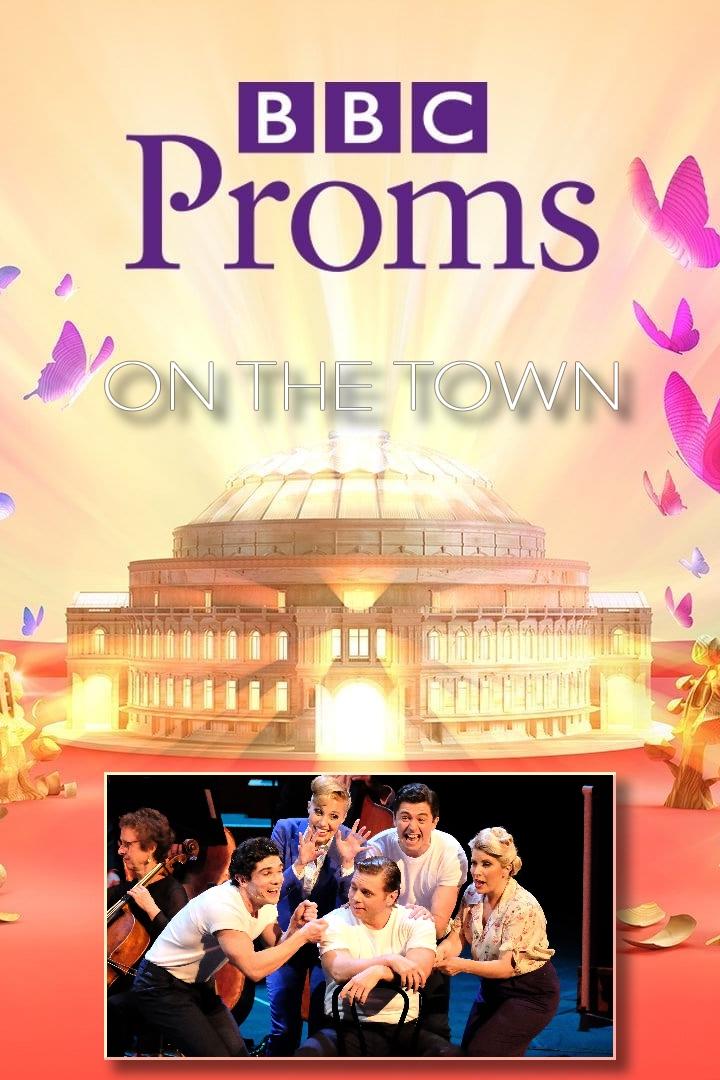
BBC Proms: Bernstein's On the Town
Music · Drama · Comedy
Overview
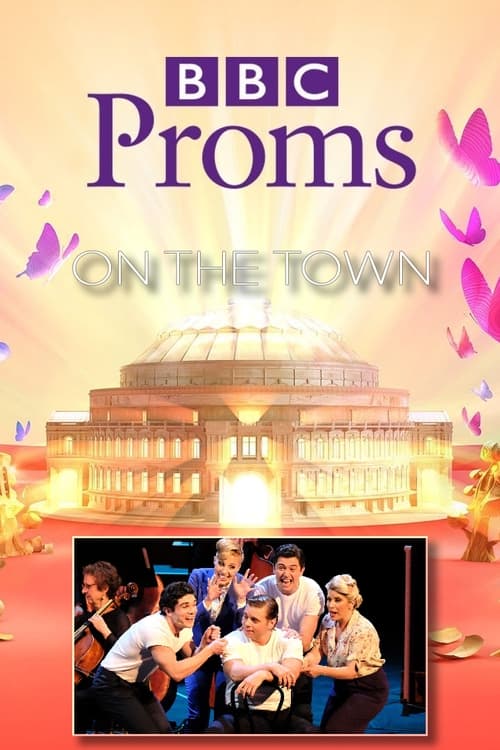
John Wilson and the London Symphony Orchestra present the hit Broadway musical On the Town live from the Royal Albert Hall. With classic numbers such as New York, New York and l Can Cook Too and a star-studded line-up of singers including Nathaniel Hackmann and Louise Dearman, this concert performance launches a packed bank holiday weekend of Proms tributes to the late composer and conductor Leonard Bernstein, who would have been 100 years old on 25 August 2018. Katie Derham presents, with special guest Clarke Peters.
Top Cast
Nathaniel Hackmann
Gabey
Louise Dearman
Hildy
Nadim Naaman
Ozzie

Celinde Schoenmaker
Claire de Loone
Barnaby Rea
Judge Pitkin / First Workman / Miss Turnstiles Announcer

Fra Fee
Chip

Siena Kelly
Ivy Smith
Claire Moore
Madame Dilly

Casey Al-Shaqsy
Diana Dream / Dolores Dolores / Solo Girl (Diamond Eddie’s)
Nadia Johnson
Lucy Schmeeler
Shem Hamilton
Rajah Bimmy





Nathaniel Hackmann
Nathaniel Hackmann
Gabey
Nathaniel Hackmann
Gabey
Louise Dearman
Louise Dearman
Hildy
Louise Dearman
Hildy
Nadim Naaman
Nadim Naaman
Ozzie
Nadim Naaman
Ozzie
Celinde Schoenmaker
Celinde Schoenmaker
Claire de Loone
Celinde Schoenmaker
Claire de Loone
Barnaby Rea
Barnaby Rea
Judge Pitkin / First Workman / Miss Turnstiles Announcer
Barnaby Rea
Judge Pitkin / First Workman / Miss Turnstiles Announcer
Fra Fee
Fra Fee
Chip
Fra Fee
Chip
Siena Kelly
Siena Kelly
Ivy Smith
Siena Kelly
Ivy Smith
Claire Moore
Claire Moore
Madame Dilly
Claire Moore
Madame Dilly
Casey Al-Shaqsy
Casey Al-Shaqsy
Diana Dream / Dolores Dolores / Solo Girl (Diamond Eddie’s)
Casey Al-Shaqsy
Diana Dream / Dolores Dolores / Solo Girl (Diamond Eddie’s)
Nadia Johnson
Nadia Johnson
Lucy Schmeeler
Nadia Johnson
Lucy Schmeeler
Similar Movies
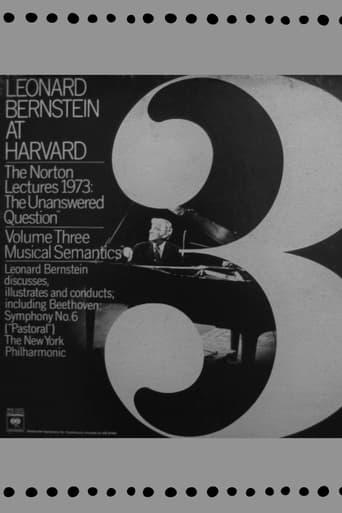
This series comprised six lectures on music, which cumulatively took the title of a work by Charles Ives, The Unanswered Question. Bernstein drew analogies to other disciplines, such as poetry, aesthetics, and especially linguistics, hoping to make these lectures accessible to an audience with limited or no musical experience, while maintaining an intelligent level of discourse:Semantics is the study of meaning in language, and Bernstein's third lecture, "musical semantics", accordingly, is Bernstein's first attempt to explain meaning in music. Although Bernstein defines musical semantics as "meaning, both musical and extramusical" this lecture focuses exclusively on the "musical" version of meaning.
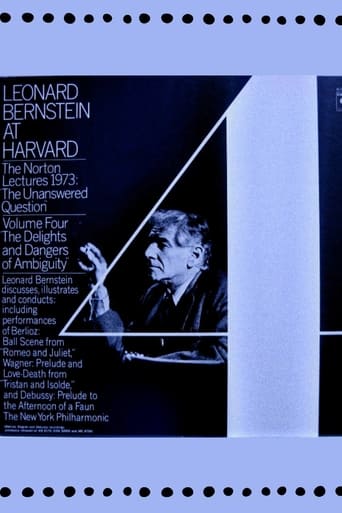
This series comprised six lectures on music, which cumulatively took the title of a work by Charles Ives, The Unanswered Question. Bernstein drew analogies to other disciplines, such as poetry, aesthetics, and especially linguistics, hoping to make these lectures accessible to an audience with limited or no musical experience, while maintaining an intelligent level of discourse: Bernstein provides two distinct meanings of the term ambiguity. The first is "doubtful or uncertain" and the second, "capable of being understood in two or more possible senses"

This series comprised six lectures on music, which cumulatively took the title of a work by Charles Ives, The Unanswered Question. Bernstein drew analogies to other disciplines, such as poetry, aesthetics, and especially linguistics, hoping to make these lectures accessible to an audience with limited or no musical experience, while maintaining an intelligent level of discourse: Lecture 5 picks up at the early twentieth century with an oncoming crisis in Western Music. As these lectures have traced the gradual increase and oversaturation of ambiguity, Bernstein now designates a point in history that took ambiguity too far.
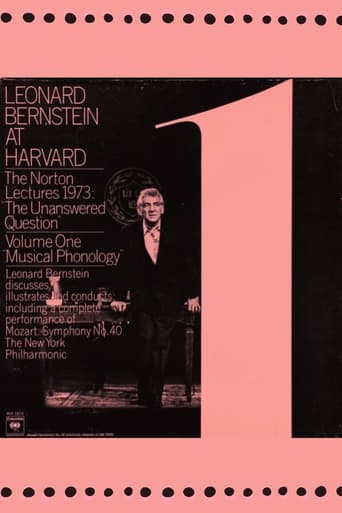
This series comprised six lectures on music, which cumulatively took the title of a work by Charles Ives, The Unanswered Question. Bernstein drew analogies to other disciplines, such as poetry, aesthetics, and especially linguistics, hoping to make these lectures accessible to an audience with limited or no musical experience, while maintaining an intelligent level of discourse: Phonology is the linguistic study of sounds, or phonemes. Bernstein's application of this term to music results in what he calls "musical phonology".
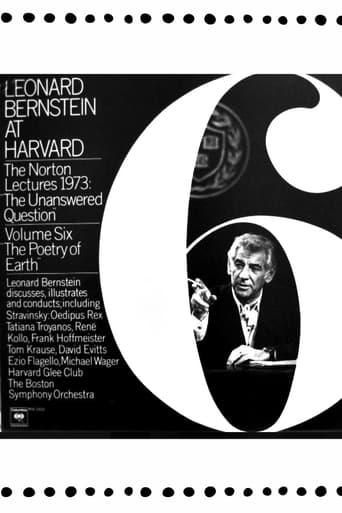
This series comprised six lectures on music, which cumulatively took the title of a work by Charles Ives, The Unanswered Question. Bernstein drew analogies to other disciplines, such as poetry, aesthetics, and especially linguistics, hoping to make these lectures accessible to an audience with limited or no musical experience, while maintaining an intelligent level of discourse: This lecture takes its name from a line in John Keats' poem, "On the Grasshopper and Cricket". Bernstein does not discuss Keats' poem directly in this chapter, but he provides his own definition of the poetry of earth, which is tonality. Tonality is the poetry of earth because of the phonological universals discussed in lecture 1. This lecture discusses predominantly Stravinsky, whom Bernstein considers the poet of earth.
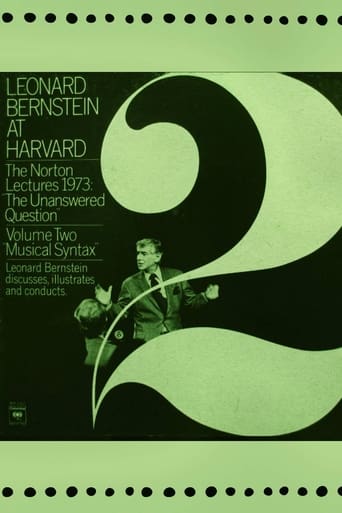
This series comprised six lectures on music, which cumulatively took the title of a work by Charles Ives, The Unanswered Question. Bernstein drew analogies to other disciplines, such as poetry, aesthetics, and especially linguistics, hoping to make these lectures accessible to an audience with limited or no musical experience, while maintaining an intelligent level of discourse: Syntax refers to the study of the structural organization of a sentence, or as Bernstein summarizes, "the actual structures that arise from that phonological stuff."
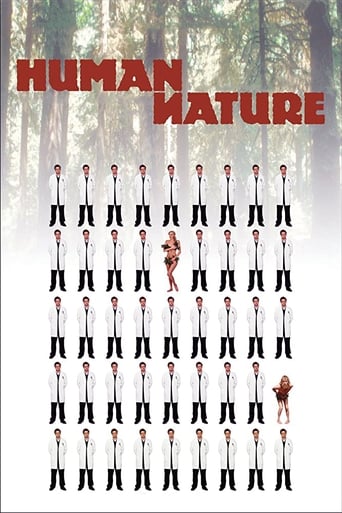
Obsessive scientist Nathan and his lover, the naturalist Lila, discover Puff: a man born and raised in the wild. As Nathan trains the wild man in the civilized ways of the world, Lila fights to preserve the man’s natural state. In the power struggle that ensues, an unusual love triangle emerges.