

Nani Ma
Documentary · History
Overview
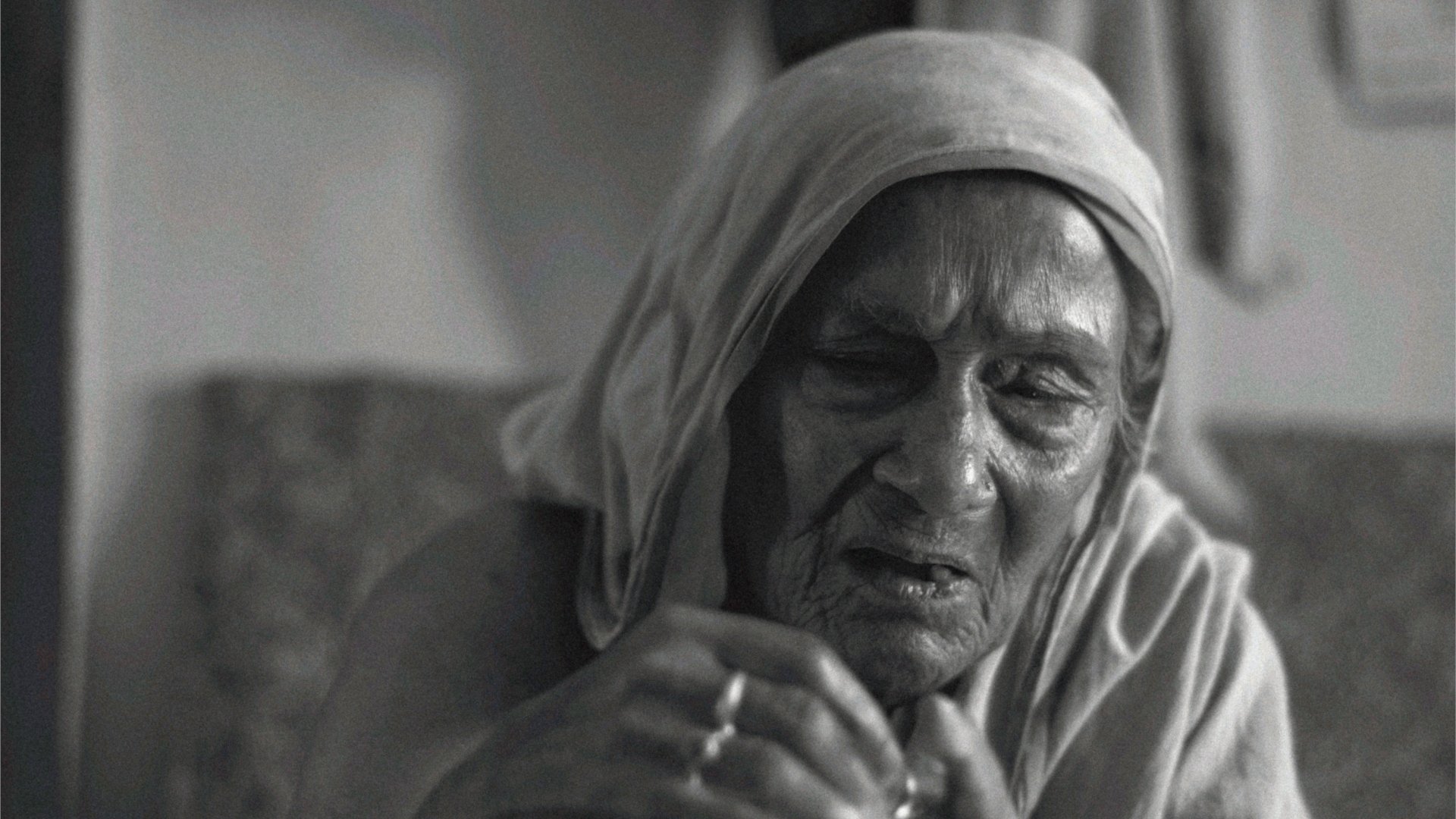
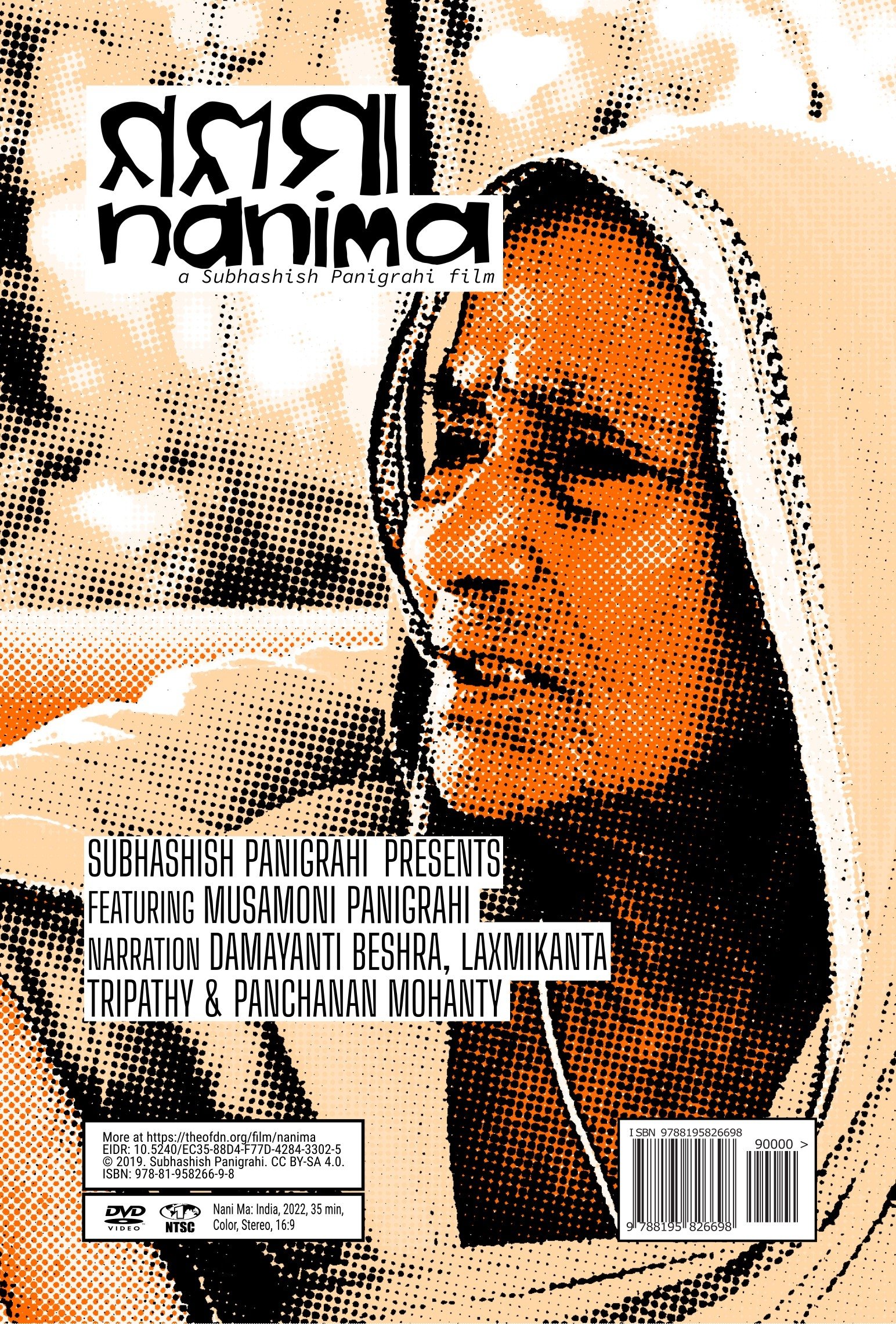
Musamoni Panigrahi (1920s–2017), fondly called “Nani Ma” by her neighbours, appears in the centre of this first film in the Baleswari dialect of India's Odia language. The story revolves around folklore and folk songs narrated by Nani Ma. Born in the 1920s in pre-independent rural India in a coastal village in the Balasore district of Odisha, she never got to go beyond the first few days of school. The film is an alternate history of a society broken through colonization, Brahminical patriarchy and a post-famine (Orissa famine of 1866, killing nearly 5 million people, one-third of the population), and the dominance of formal writing over spoken tongues. Three academics -- Damayanti Beshra, PhD (recipient of India’s fourth civilian award, “Padma Shri”), Panchanan Mohanty, PhD (noted linguist), and Laxmikanta Tripathy, PhD, DLitt (anthropologist and author) -- also appear in the film to provide contextual commentary on patriarchy, oral history and the sociolinguistic diversity.
Top Cast









Musamoni Panigrahi
Musamoni Panigrahi
Self
Musamoni Panigrahi
Self
Damayanti Beshra
Damayanti Beshra
(Self - Voice)
Damayanti Beshra
(Self - Voice)
Laxmikanta Tripathy
Laxmikanta Tripathy
(Self - Voice)
Laxmikanta Tripathy
(Self - Voice)
Panchanan Mohanty
Panchanan Mohanty
(Self - Voice)
Panchanan Mohanty
(Self - Voice)
Similar Movies
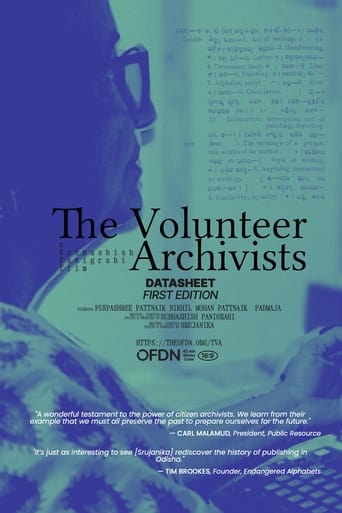
The Volunteer Archivists tells the story of Srujanika, a volunteer-led collective in the Indian state of Odisha that archived some of the rarest printer publications published in the last 200 years. The archive — Odia Bibhaba — now houses over 10,000 books and hundreds of magazines, newspapers, and dictionaries that otherwise would have been lost forever due to collective negligence and the poor state of digitization by the state archives.
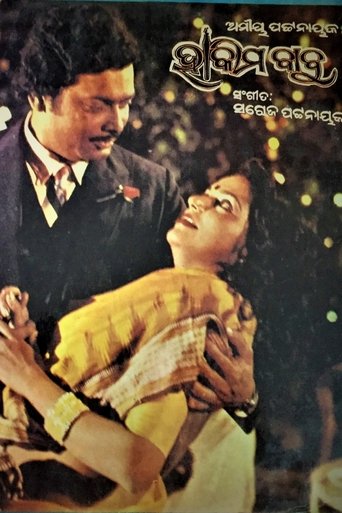
A man from lower social background qualifies and gets an administration job and to match his higher social occupation, he leaves his family, friends, and fiance. But gradually he understands his mistake and returns for his people. Finally he finds his wrong decision for the mining in his village has lead to the destruction and down fall of his people and everyone lives the village and him behind alone.
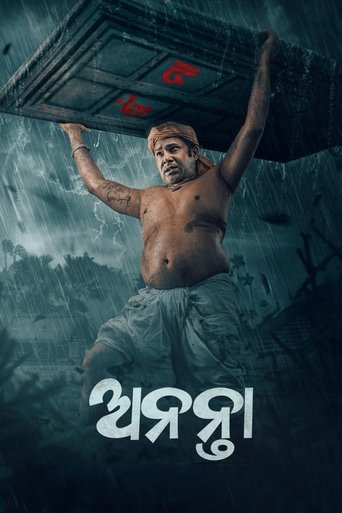
"Randi Pua Ananta" follows the journey of Ananta, a notorious troublemaker who undergoes a remarkable transformation into a selfless hero. When a devastating flood threatens his village, Ananta makes the ultimate sacrifice to save his people, proving that redemption can come in the most unexpected ways.
In every family, there is a guiding force, the Murabi. This Odia feature film explores the collision and convergence of two contrasting philosophies: one rooted in discipline and control, the other in joy and freedom. As life brings these worlds together, the story unfolds into a heartwarming journey that challenges, inspires, and ultimately redefines the true meaning of family, love, and togetherness.
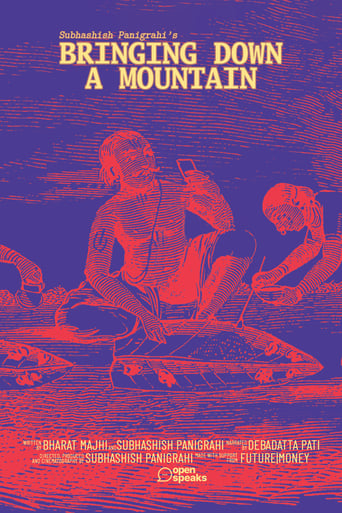
A rural village never wanted to be a city’s landfill or a distant blur in Reels but rather home to new imaginations. Bringing Down a Mountain dissects the intersecting themes of access, abolition and caste through the experiences of residents of a rural village and that of a hyper-urban city. The film follows the village residents’ dreams—of mobile data, digital payment and relief from menial work. What happens when the landfill is full, and dreams want to break free?

A critique of liquid love through sarcasm and crude humor. With the desire that the viewer empathize with the protagonists and reflect on the ephemerality of sexual-affective relationships in modern society. At the end of the short film, the transformation of people into mere consumer goods will be clear, which, once they have been used, are discarded