

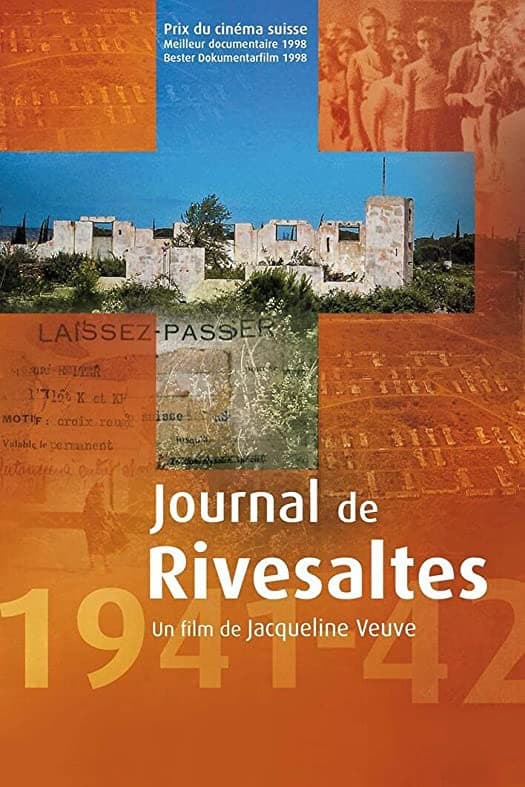
Journal de Rivesaltes 1941-42
Documentary · Drama
Overview
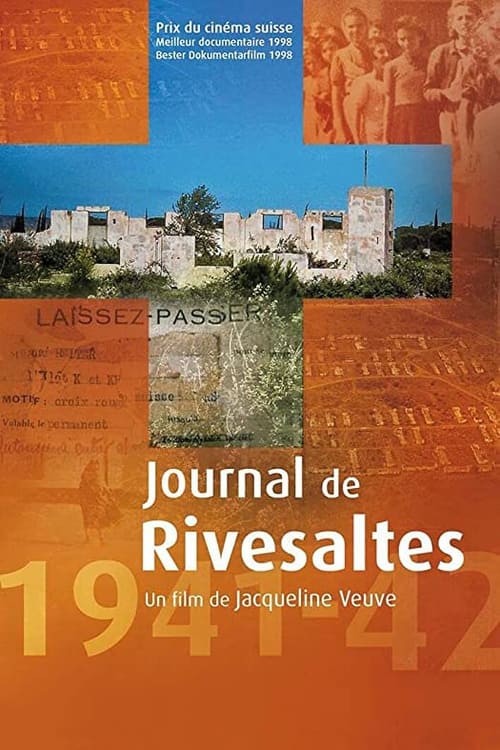
From August to October 1942, over 2250 Jews were deported from the internment camp of Rivesaltes to Auschwitz by way of Drancy. Among them were 110 children. Friedel Bohny-Reiter, a nurse with the Swiss Aid to Children, worked in this camp in the South of France. Like many others in the formerly unoccupied zone, it was run by the French. Once a military camp, it had been converted in 1941 into a transit camp regrouping Jewish, Gypsy and Spanish people living in the area or who had fled to the free zone as refugees. Thanks to the young nurse from Basel, many children were probably saved from certain death. The film follows the nurse on a visit to that still intact site as well as through the pages of the journal she wrote in those dark days, published by Editions Zoë, Geneva in 1993.




No cast information.
Similar Movies

Switzerland still carries out special flights, where passengers, dressed in diapers and helmets, are chained to their seats for 40 hours at worst. They are accompanied by police officers and immigration officials. The passengers are flown to their native countries, where they haven't set foot in in up to twenty years, and where their lives might be in danger. Children, wives and work are left behind in Switzerland. Near Geneva, in Frambois prison, live 25 illegal immigrants waiting for deportation. They are offered an opportunity to say goodbye to their families and return to their native countries on a regular flight, escorted by plain-clothes police officers. If they refuse this offer, the special flight is arranged fast and unexpectedly. The stories behind the locked cells are truly heartbreaking.

Satellite dish salesman Gus experiences some life-altering changes when he meets performance artist Lucy in this visually poetic fantasy. After Lucy vanishes, leaving a puzzling note, Gus goes on a quest for the mysterious woman. Moving from his meticulous life in a technologically advanced world into the spontaneity of nature, Gus learns some important lessons and begins to trust his own instincts.
In May of 1982 Julio Cortázar, the Argentinean writer and his companion in life, Carol Dunlop set out in their VW bus on a journey along the highway from Paris to Marseille that, for each of them, was to be their final one. Twenty-five years later, Océane Madelaine and Jocelyn Bonnerave set out to undertake the journey again.
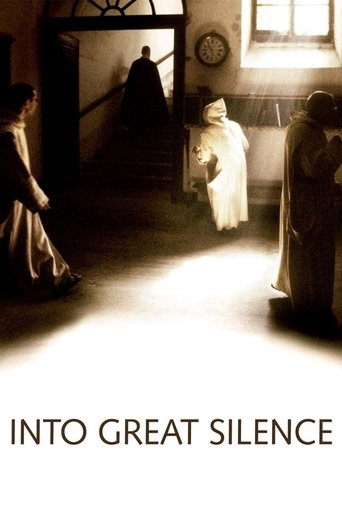
An intimate portrayal of the everyday lives of Carthusian monks of the Grande Chartreuse, high in the French Alps (Chartreuse Mountains). The idea for the film was proposed to the monks in 1984, but the Carthusians said they wanted time to think about it. The Carthusians finally contacted Gröning 16 years later to say they were now willing to permit Gröning to shoot the movie, if he was still interested.
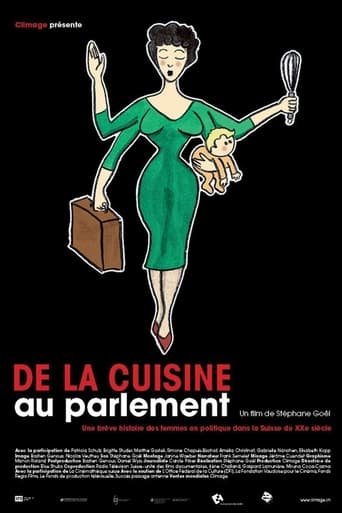
Switzerland was one of the last countries in the world to grant women the right to vote. This film guides us through a century of Swiss history, tracing the imprint left by the women who fought for the right to leave hearth and home – and by the men who did everything they could to send them back – until they gained legal equality, whose implementation seems to be in question still today.
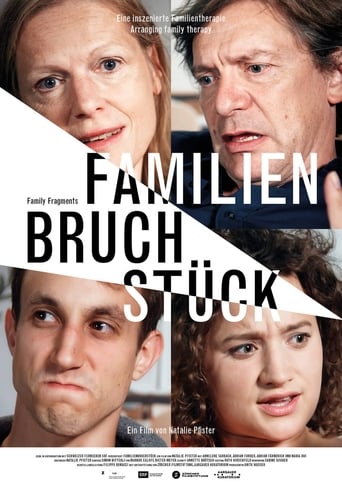
The film reconstructs the memories of a divorced family with empathy yet merciless precision. An intimate family story emerges during the investigation into the reasons for the separation. Hinging on the subtle and touching testimonies of the family members, the film delves into complex interrelationships. Actors bring the family's memories alive as if they were their own. The result is a chronicle of a family drama, which the real protagonists complement and comment on – a reflection on the mechanisms and dynamics shaping and directing their family life over the years.