

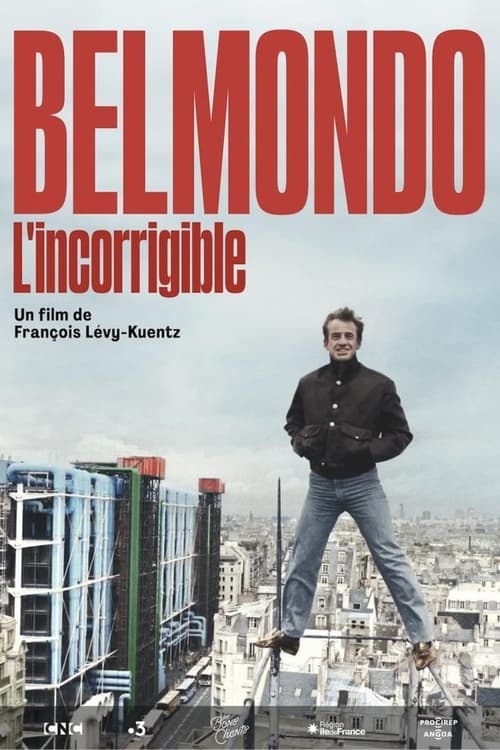
Belmondo: The Incorrigible
Documentary
Overview
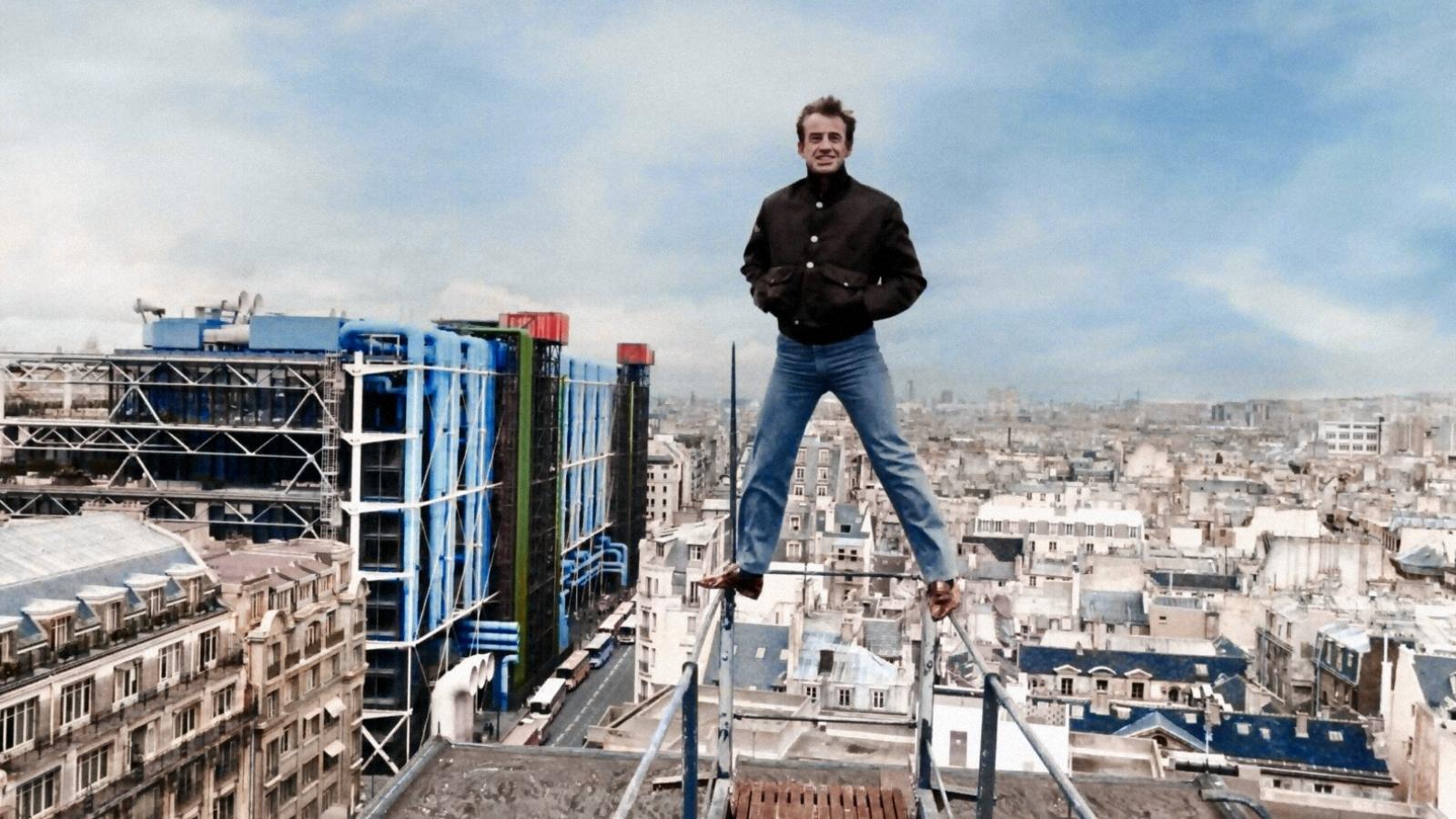
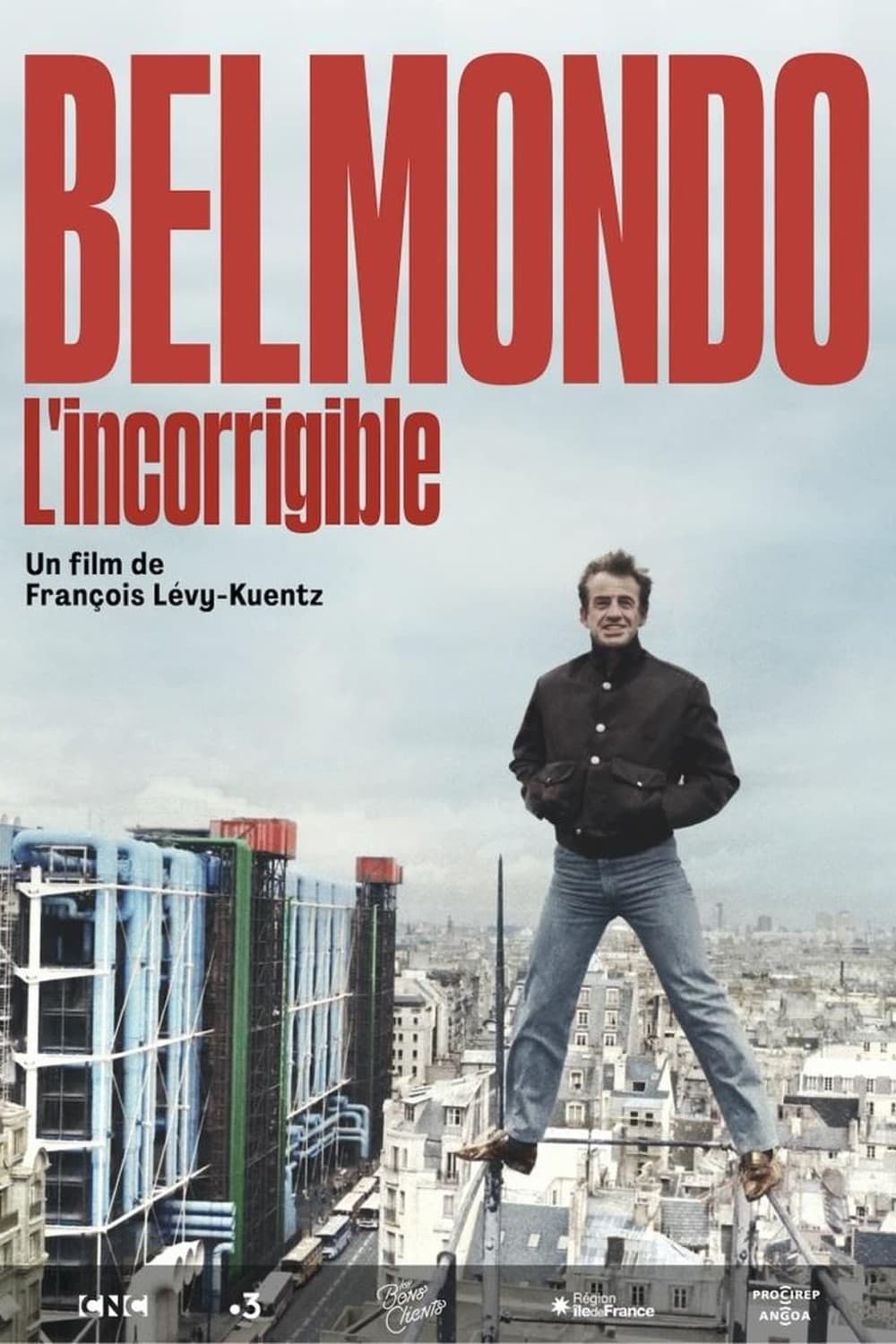
Charismatic and resourceful, seducer and daredevil, Jean-Paul Belmondo has always played his roles as he lived, at a thousand miles an hour. He had only one passion: to entertain the public with his smile, his naturalness, his energy, his stunts. But contrary to appearances, his destiny was full of pitfalls. This film lifts the veil on a founding childhood that allowed him to overcome many obstacles throughout his life thanks to the tutelary figures of his father and mother. Told from the inside with the help of his autobiography, interviews and unpublished archives, this epic story traces the career of this turbulent young actor who launched the New Wave in Breathless before becoming the popular Bebel, an indestructible and provocative vigilante. From film to film, this documentary paints an intimate portrait of a man who built himself up to reach the top: his triumphs but also his trials, his doubts, his secrets, his angers, his clowning, his disappointments or his personal dramas.




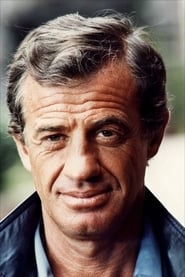
Jean-Paul Belmondo
Jean-Paul Belmondo
Self
Jean-Paul Belmondo
Self
Richard Anconina
Richard Anconina
Richard Anconina
Ursula Andress
Ursula Andress
Ursula Andress
Laura Antonelli
Laura Antonelli
Laura Antonelli
Arletty
Arletty
Arletty
Michel Audiard
Michel Audiard
Michel Audiard
Brigitte Bardot
Brigitte Bardot
Brigitte Bardot
Michel Beaune
Michel Beaune
Michel Beaune
Xavier Beauvois
Xavier Beauvois
Xavier Beauvois
Guy Bedos
Guy Bedos
Guy Bedos
Similar Movies
Homo Cinematographicus is a human species whose unit of measurement and point of reference is the cinema and its derivative, television. Filmed at the 1998 Cannes Film Festival, the film offers an unspecified number of statements, talking about memories and a thousand fragments of stories, titles and film scenes, the warp of a gigantic collective Chanson de geste.
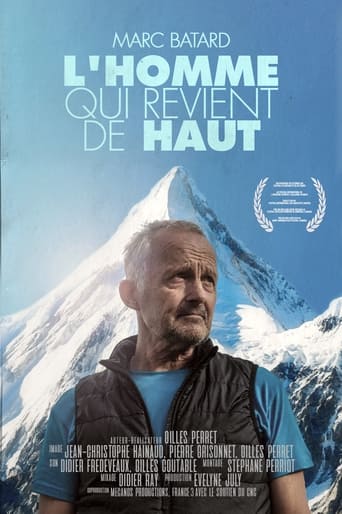
What compels a man to push the limits of what is attainable ever higher? After thirty years of relentless struggle with the highest peaks on earth, Marc Batard has finally found the answers to these questions. He had to reach the summit of Everest twice, once shattering the record for fastest time in 24 hours without oxygen, and climb the most difficult faces of the Alps to glimpse the path to inner healing. It was through physical suffering that he was able to confront the pain of his soul. He was finally able to talk about the violence of his childhood, the shock he carried like a ball and chain for decades. Having completed his summit therapy, Marc Batard tells his story in this documentary by Gilles Perret.
Conceptual visual artist Ján Mančuška died in 2011. However, in his short 39 years of existence, he managed to create a number of remarkable works, many of which have been exhibited in renowned galleries around the world – including the Centre Pompidou in Paris and MoMA in New York. In his homeland, however, his work reflecting everyday life, social reality or the meaning of language has never achieved comparable fame. Together with the children of an artist who was not afraid to confront the public with the question of the meaning of art, the director embarks on a journey that aims not only to get closer to Mančuška, but also to reveal him in hitherto unrecognised shades, thus filling in the gaps that are increasingly appearing in the context of the fading memory of his personality.
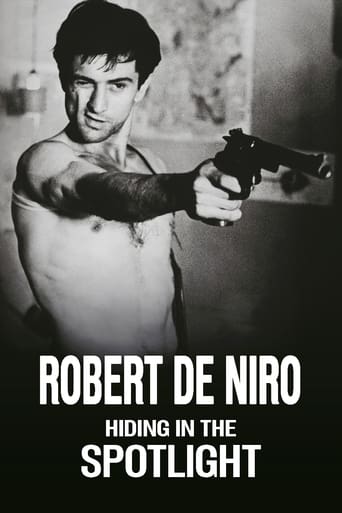
Robert De Niro is famous for his award-winning portrayals of gangsters, criminals and socially disturbed men who show surprising traces of vulnerability. By analyzing his astonishing roles in iconic films through the years, the documentary reveal the complex actor behind these extreme characters. Because the public knows little about the man who is largely silent about his own life and emotions, this film tries to unwraps one of the most fascinating and enigmatic American actors of all time for the audience. For this the filmakers use clips from his feature films, archive footage of his sparse interviews and probe into his background to illustrate De Niro’s methods for becoming the characters he plays and the reasons he’s able to do so. All of this culminates in a rare exposé of the genesis of the hidden pain that enables the masterful actor to bring such intensity to the big screen.
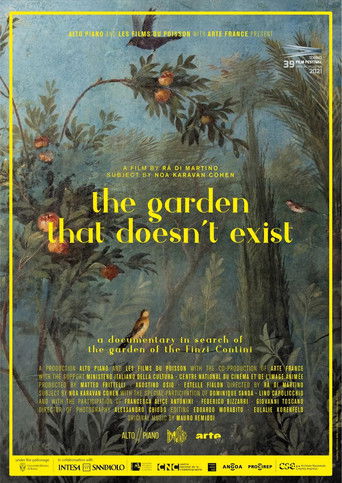
Once upon a time there was a garden, a refuge, a safe haven - 'The Garden of the Finzi Continis'. It came to life in Giorgio Bassani's 1962 semi-autobiographical novel recounting an unfulfilled love story between two young Jews in Ferrara, while fascism was raging in Italy in the late 1930's. In 1972, Vittorio De Sica's film adaptation of the book won the Oscar for Best Foreign Language Film. Since then, the fictional space of the garden became so tangible that people from all over the world come to Ferrara to look for it. Fifty years after winning the Oscar, reality and fiction come together once more, as we walk through an imaginary garden and bring to life the book, its author, its main protagonists, history, love, friendships and betrayals.