

Signatures of the Soul
Documentary
Overview
Tattooing — "the world's oldest skin game" — is the subject of this iconic documentary. Writer/director Geoff Steven scored a major coup by signing Easy Rider legend Peter Fonda as his presenter. Travelling to Aotearoa, Samoa, Japan and the United States, the doco traces key developments in tattooing, including its importance in the Pacific, prison-inspired styles, and the influence of 1960s counterculture. Legendary tattooists feature (including Americans Ed Hardy and Jack Rudy), while the closing credits parade some eye-opening full body tattoos.






Peter Fonda
Peter Fonda
Presenter
Peter Fonda
Presenter
Lyle Tuttle
Lyle Tuttle
Self
Lyle Tuttle
Self
Similar Movies
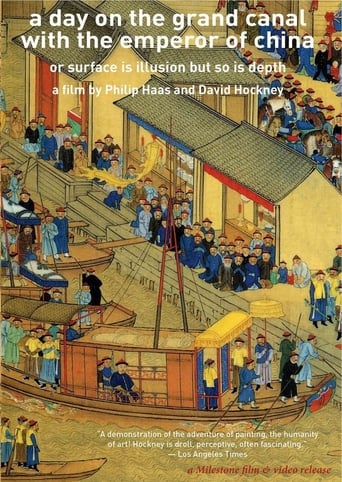
Director Philip Haas and artist David Hockney invite you to join them on a magical journey through China via a marvelous 72-foot long 17th-century Chinese scroll entitled The Kangxi Emperor's Southern Inspection Tour (1691-1698), scroll seven . As Hockney unrolls the beautiful and minutely detailed work of art, he traces the Emperor Kangxi’s second tour of his southern empire in 1689.
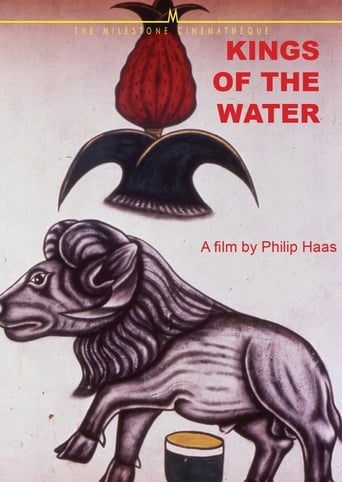
Cyprien Tokoudagba is from the city of Abomey in the Benin Republic of West Africa, where he paints the religious houses of the vodun. Haas and his film crew follow Cyprien as he first paints and then takes part in the ceremony to open a new temple. The paintings include three vodun figures and several emblems, including a pipe and a duck. Cyprien explains his work in the context of the religion and takes the crew to film two other local ceremonies, one where the dead are believed to come back to instruct the living through wild dancing and, another, where women warriors perform their war dances.

Rare documents and details of the film's story. From its initial option to its critical reception and legacy. Director David Weisman, who also produced "Kiss of the Spider Woman", comes off as rightful creative force behind the production, as it was his true passion. Very detailed comments from all the participants, from the author of the book to the lawyer for the production company, the actors, director, writers, producer, and crew members.
A group of elders spends their weekdays in a retirement home in Sandim, in the north of Portugal, where they talk, do arts and crafts, practice yoga and pray. We follow them between October 2012 and March 2013, when an economic crisis overshadowed Portuguese society and unemployment rates reached record levels. Meanwhile, arrangements are made for the Carnival ball. Will they bring the first place home this time?
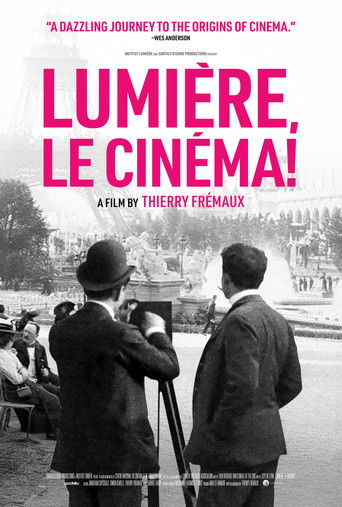
In one of those wonderful coincidences of history, lumière, the French word for “light,” was also the last name of brothers Auguste and Louis, whose brilliant invention, the cinematograph, helped to inaugurate the most beloved art form of the last 130 years. Institute Lumière director Thierry Frémaux uses Lumière, Le Cinema! to guide the viewer through over a hundred shorts—some famous, some forgotten, some never before seen—directed by Lumière and company. In the process, Frémaux illuminates how the brothers employed the camera as a creative instrument as they (and their operators) mastered framing, staging, and subject selection for quotidian and exotic microdocumentaries as well as the first ever fictional motion pictures. The result is not only a glorious re(telling) of the genesis of cinema but a profound meditation on the beautiful world captured—and the mysterious world imagined—by the Lumières.
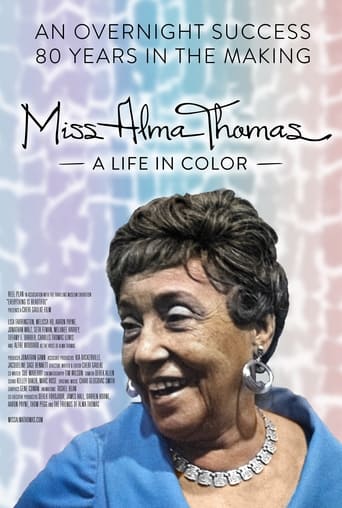
Alma W. Thomas lived a life of firsts: the first Fine Arts graduate of Howard University (1924), the first Black woman to mount a retrospective at the Whitney Museum of American Art (1972), and the first Black woman to have her paintings exhibited in the White House (2009). Yet she did not receive national attention until she was 80.